
Last updated November 21, 2026
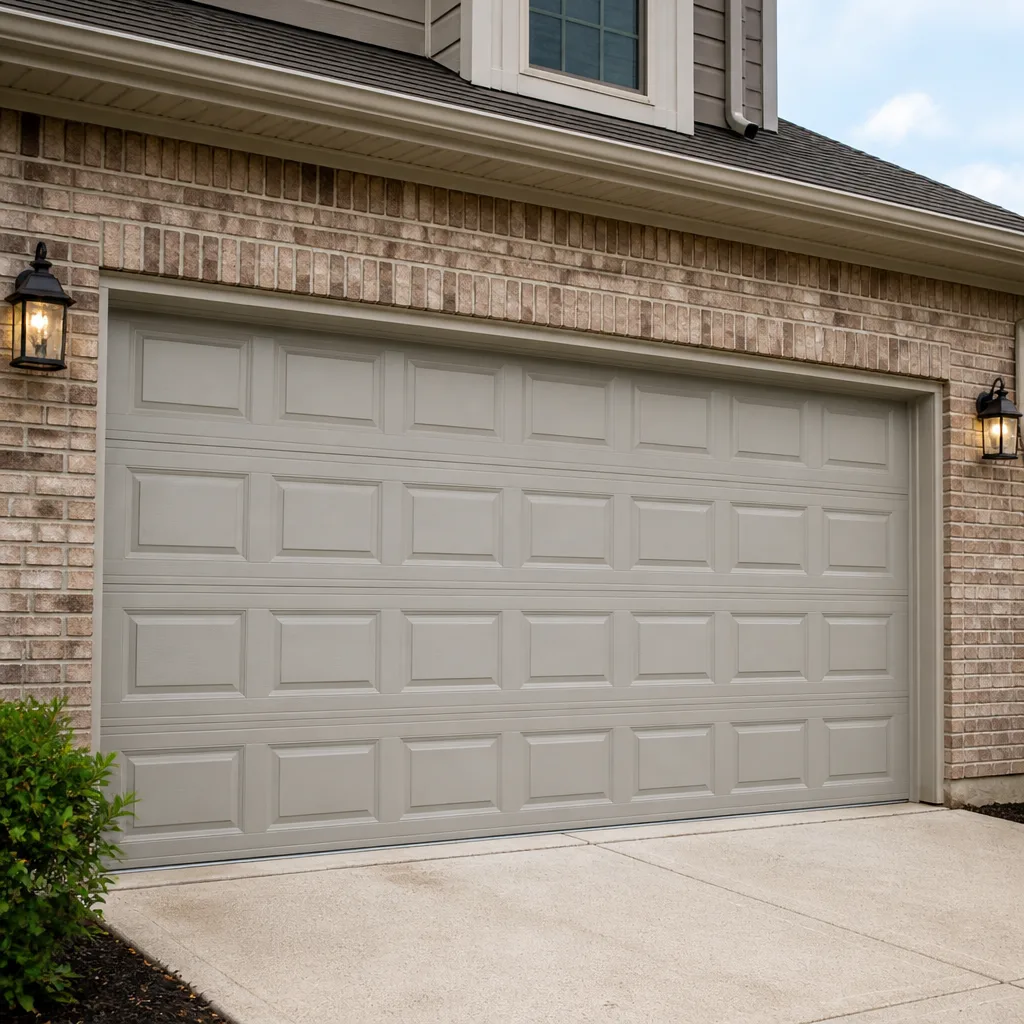 Raised-panel steel
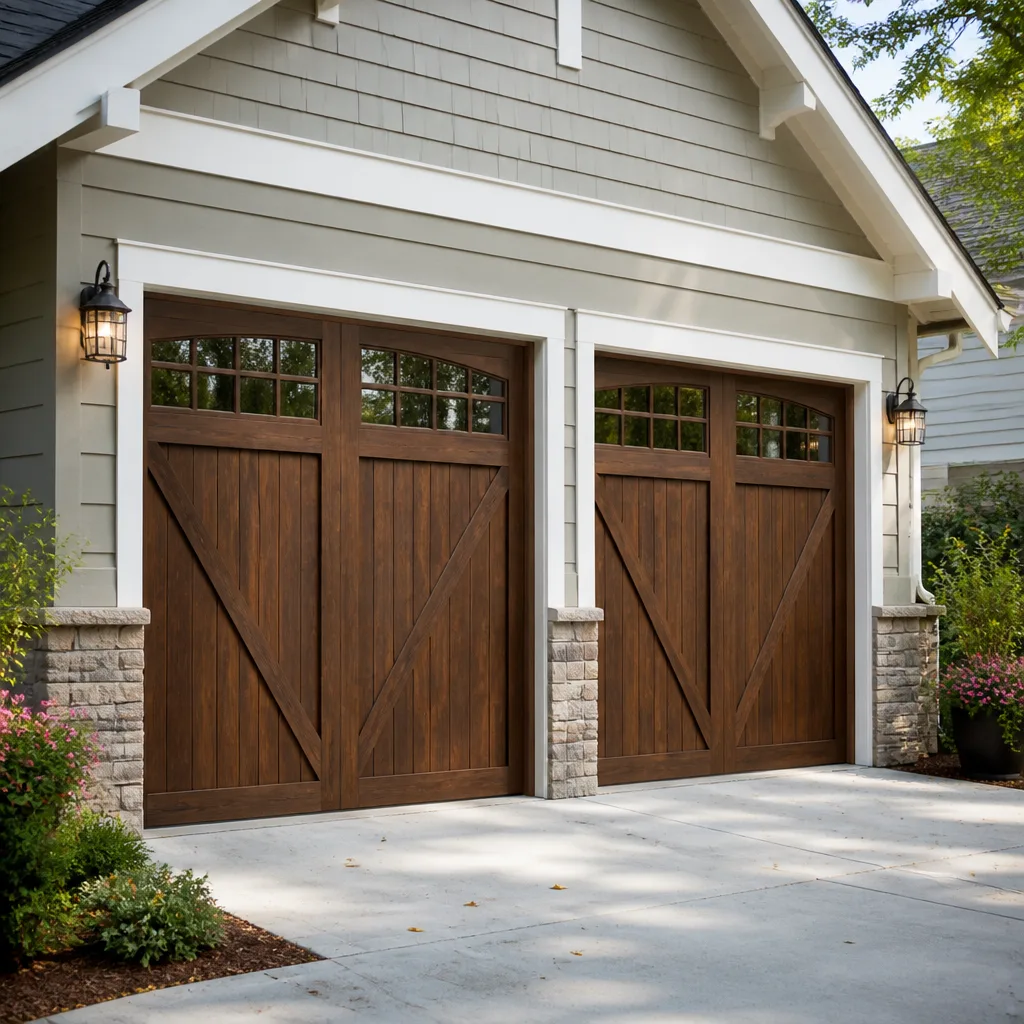 Carriage house
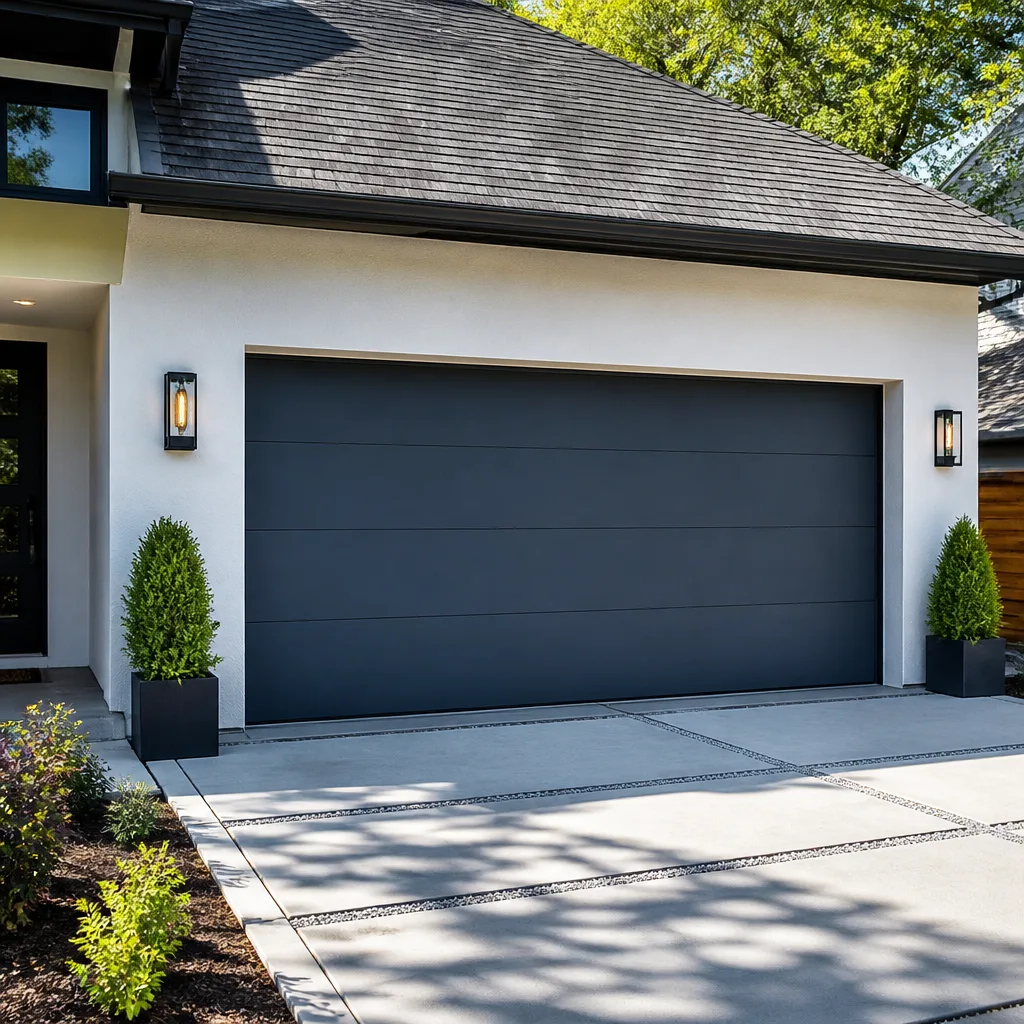 Modern flush
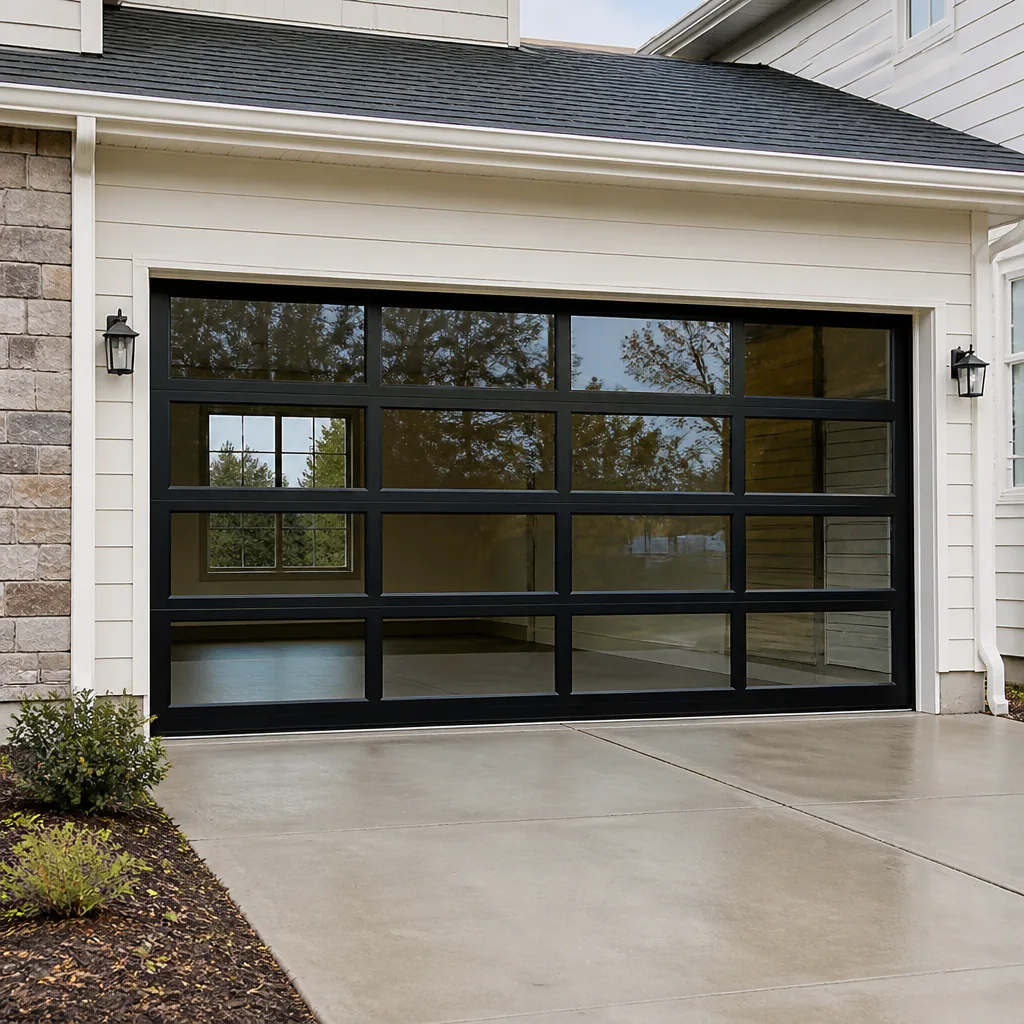 Full-view glass
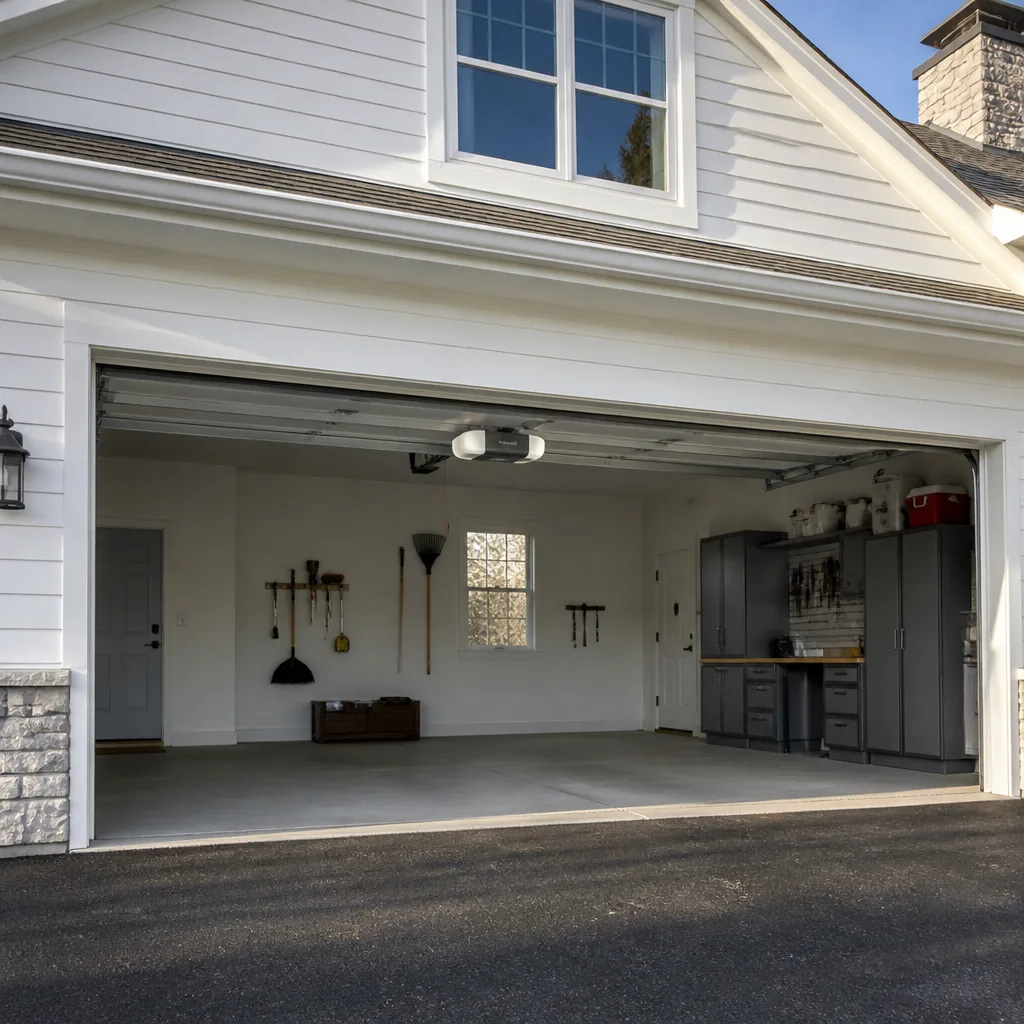 LiftMaster openers
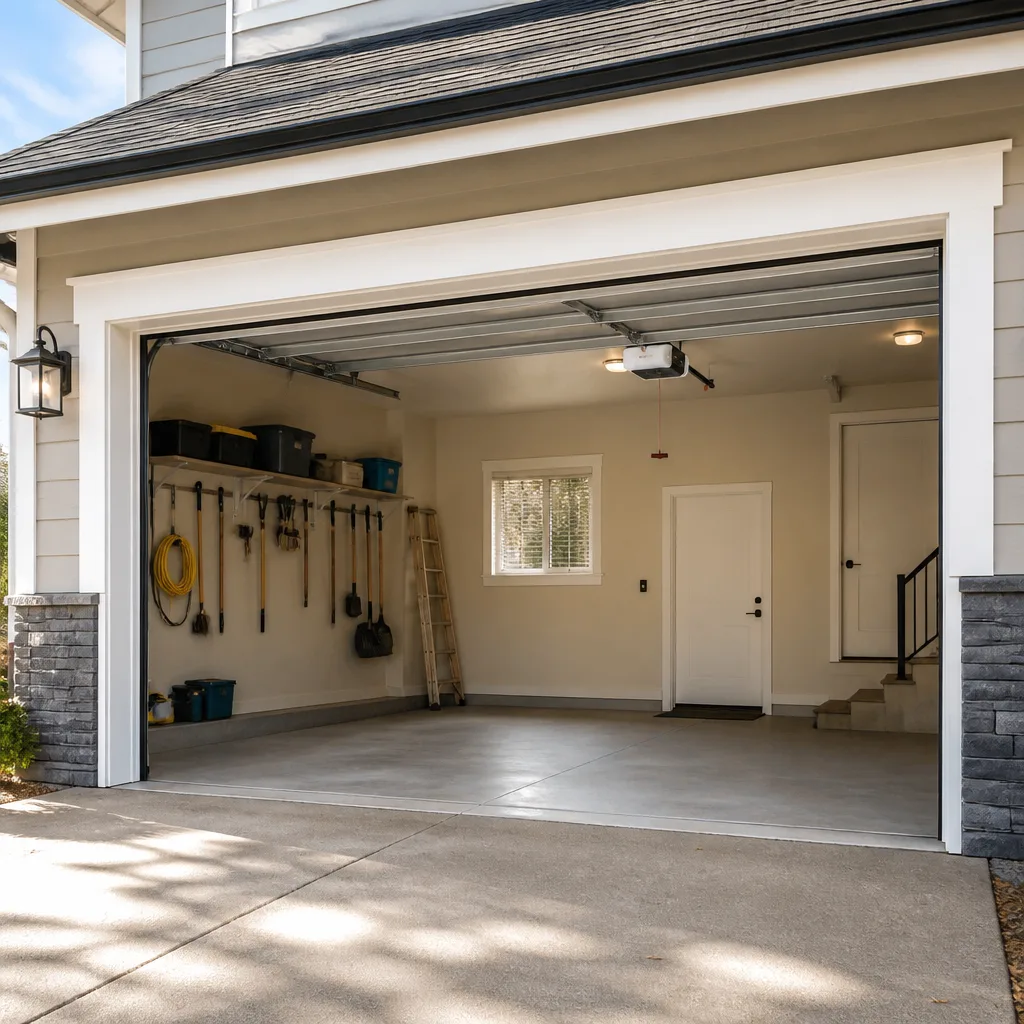 Chamberlain openers
Full 25-point door and opener safety check with every visit - springs, cables, rollers, tracks, and your LiftMaster or Chamberlain opener included
You get a price before we start. It does not change when the pro arrives.
Get your free estimateThe Complete Guide to Garage Doors in Far Rockaway
Most garage door guides are written for a suburb in Ohio. If you live a few blocks from the Atlantic on the Rockaway Peninsula, that advice will cost you a premature replacement. The mix of salt air, storm surge exposure, and year-round humidity here stresses doors and hardware in ways that inland Queens never sees, and it changes which materials make sense, which repairs come up first, and how long a door really lasts. This guide treats your location as a technical variable, not an afterthought. You’ll learn how the local climate attacks springs, tracks, and openers, how flood zone designations shape door choice, and what the full lifecycle cost of a Far Rockaway garage door looks like.
Quick Answer
A garage door in Far Rockaway should be chosen and maintained for a wet, salt-laden, storm-exposed environment: aluminum or fiberglass doors on hot-dip galvanized or stainless hardware hold up best, springs and hinges need periodic lubrication and early replacement, and doors in flood zones must be selected and installed with flood venting and breakaway considerations in mind. Budget for more frequent hardware and spring service than an inland homeowner, and get a written estimate before any work starts.
Styles & brands we work with
- Raised-panel steel
- Carriage house
- Modern flush
- Full-view glass
- LiftMaster openers
- Chamberlain openers
Table of Contents
- Why Far Rockaway Doors Age Differently
- How Salt Air Attacks Springs, Tracks, and Hardware
- Door Materials Ranked for Lifespan in Coastal Queens
- Flood Zones AE and VE: What They Mean for Your Door
- The Full Lifecycle Cost of a Far Rockaway Door
- Which Repairs Come Up First and Most Often Here
- How to Choose an Installer for a Coastal Home
- A Year-Round Maintenance Routine That Actually Fits
Why Far Rockaway Doors Age Differently
A garage door in Far Rockaway lives in a harsher environment than the same door twenty miles inland. That difference shows up in the parts that matter most: torsion and extension springs, hinges, rollers, track, and the bottom brackets that hold the whole assembly together. Humidity keeps metal damp longer after rain, salt particles settle on any surface exposed to outside air, and temperature swings that are moderated by the ocean still produce enough condensation to matter. A door that would last a decade or more in a dry climate can show real hardware wear in Far Rockaway well before that.
The practical effect isn’t that every component fails faster. Some parts are barely affected. Others, especially springs and any steel hardware that isn’t properly coated or galvanized, wear noticeably sooner. Knowing which is which is the difference between a door that needs a small service every year and one that needs a full hardware replacement you didn’t plan for.
Neighborhood placement matters too. Doors a few blocks from the beach in Edgemere or Arverne see more airborne salt than ones further up toward Far Rockaway’s inland blocks near Mott Avenue, but the peninsula is exposed enough that humidity and storm cycles affect almost everyone. We treat the whole area as coastal when we look at hardware condition.
If something on your current door is already grinding, sticking, or sagging, it’s worth having it looked at rather than waiting. Our garage door repair service handles the small fixes before they become structural ones. Call (877) 492-1997 and we’ll walk through what’s happening.
How Salt Air Attacks Springs, Tracks, and Hardware
Salt air doesn’t attack every part equally. Understanding what corrodes and why tells you where to spend maintenance money and where to save it.
Springs
Torsion and extension springs are the highest-stress parts on any door, and they’re typically oil-tempered or galvanized steel. In a coastal environment, the surface of the wire starts to pit from airborne salt. Each pit is a stress point, and each cycle of the door adds a little more fatigue at those points. The result is that springs in Far Rockaway often fail at the pit rather than at a clean break, which can also slightly shorten their expected service life compared to a dry inland setting. This is one of the reasons we treat spring work as its own dedicated job rather than a side task.
Tracks and Rollers
Steel tracks and their rollers are prone to surface rust right at the points where rollers travel. If you notice your door getting noisier or running less smoothly, roller corrosion is often the first thing to check. Nylon rollers resist this better than steel ones in a coastal moisture environment and are usually the more sensible choice on the peninsula.
Hinges, Brackets, and Fasteners
Standard zinc-plated hinges and fasteners will show rust within a few seasons in Far Rockaway. Galvanized or stainless versions cost more but last considerably longer. It’s a small line item during installation and a much bigger one when you have to redo it.
Openers and Electronics
Humidity is harder on electronics than on metal. Circuit boards and photo-eye sensors in a garage near the water can intermittently misbehave in ways that look like a mechanical fault but aren’t. LiftMaster and Genie openers are common on the peninsula, and knowing how their diagnostics work makes this easier to sort out. See our garage door opener repair page if your opener is acting up.
Door Materials Ranked for Lifespan in Coastal Queens
Here’s how the main door materials tend to hold up when the environment is Far Rockaway’s – high humidity, salt exposure, and storm cycles. Lifespan figures are general guidance, not a promise, and finish quality matters as much as material choice.
Aluminum
Aluminum is the material we most often recommend for a coastal installation. It doesn’t rust, it’s light, and the finish resists the wet environment far better than steel. The trade-off is dent resistance, since aluminum is softer than a heavy steel door. For most residential applications on the peninsula it’s the strongest all-around choice.
Fiberglass
Fiberglass doors share aluminum’s corrosion resistance and can be a great option if you want a wood-look finish without the upkeep. They can crack on a hard impact, but under normal use they hold up well in a Far Rockaway setting. Fiberglass is a good pick for anyone who wants minimal long-term maintenance.
Steel (Gauge Matters)
Steel doors are the most common across the industry, and they’re fine in Far Rockaway as long as the finish and hardware are chosen with the coast in mind. A 24-gauge steel door is lighter and more damage-prone; a 25- or 27-gauge door on a well-glued, pre-painted sandwich panel with a good bottom seal handles the environment better. The failure point is almost always the fasteners, hinges, and bottom edge rather than the panels, so spec the hardware carefully. Clopay and Amarr offer steel doors in gauge and finish variations that work here if the install is done right.
Wood
Wood is beautiful and needs constant attention in this environment. It absorbs moisture, needs regular refinishing, and can warp or swell with the humidity swings. If you love the look, use wood as a custom accent rather than a full field of wood panels, and budget for the upkeep.
Comparing the Options
- Aluminum – best overall for Far Rockaway; no rust, good finish durability, moderate dent resistance.
- Fiberglass – corrosion-proof, low maintenance, cracks on heavy impacts.
- Galvanized steel, 25-27 gauge – durable when hardware and finish are coastal-appropriate.
- Lightweight steel, 24 gauge – workable but more damage-prone; skip the cheapest hardware.
- Wood – beautiful, high maintenance, not a fit for low-effort coastal life.
When you’re ready to price a replacement, our garage door installation team can walk you through material samples and options for your specific door opening. Estimates are free.
Flood Zones AE and VE: What They Mean for Your Door
Far Rockaway includes areas mapped into AE and VE flood zones, and those designations matter for your garage door in ways an inland buyer never has to consider. AE zones are subject to base flood depths; VE zones are coastal high-hazard areas with wave action on top of the flooding. Both can affect how a door should be chosen and installed, especially on a ground-level garage opening that faces the water side of the property.
Two things matter most in practice:
- Flood venting. In an enclosed garage, automatic flood vents (also called engineered flood openings) allow water to flow through rather than build up pressure against the door and walls. If your property has an enclosed lower level in an AE or VE zone, ask your city’s building department whether your setup requires them and what equivalent opening dimensions apply.
- Breakaway and impact considerations. In VE zones, wave action can impose significant lateral force on any door or panel facing the open coastal side. Sometimes the right answer is a lighter, breakaway-capable door, or a design where the structure of the garage absorbs the force rather than the door panels.
Flood zone questions are ultimately answered by your local code official, and we strongly recommend a direct conversation with the city building department about your specific property and any recent elevation certificate before ordering. We can help you understand which door types and mounting options make the installation fit what your code official will require, but the rules themselves are set by your municipality and, in some cases, your mortgage or flood insurance carrier.
Also worth stating plainly: don’t take door-selection flood zone advice from a generic sales page. Every property is different, and the safe move is to have the specifics confirmed by the people who enforce them.
The Full Lifecycle Cost of a Far Rockaway Door
Purchase price is only part of what a Far Rockaway door will cost you. The lifecycle number matters more: how often you’ll service the hardware, when the springs need replacing, whether the opener needs care beyond the door hardware, and how many years the door itself will carry you before panels or finish fade out. When we quote a job, we treat the estimate as binding – the written estimate sets the final price – and the number reflects real parts and labor for this environment, not inland assumptions.
Here’s a general range for services and installations in Far Rockaway. These are typical estimated ranges, not exact quotes. Prices are set per job by the written estimate.
Typical Estimated Pricing
| Service | Typical Estimated Range |
|---|---|
| Torsion or extension spring replacement (one spring) | $180 – $340 |
| Matched spring pair (both replaced together) | About twice the single-spring price |
| Opener repair | $120 – $260 |
| New opener installation | $350 – $700, depending on brand and unit |
| Panel replacement (per panel) | $150 – $400, depending on material |
| Full new door installation (standard single door) | $1,200 – $3,000+, depending on material and size |
| Roller and hinge hardware refresh | $150 – $350 |
Over a ten-year span in this environment, plan for one to two spring services, at least one hardware refresh, and probably one opener repair or replacement. Add those to the initial install and you have a realistic lifecycle number. A metal door with a good finish and coastal hardware will land at the lower end of that range; a wood door that needs refinishing every few years will land higher.
If your current door needs service before you decide on replacement, call (877) 492-1997 for a free estimate. We’ll lay out what a repair costs versus what a replacement realistically runs, and you decide.
Which Repairs Come Up First and Most Often Here
Across Far Rockaway, the same repairs show up earlier than they do inland. In our experience, the top call categories are:
- Spring failure. The most common emergency call. If you hear a loud snap and the door becomes very heavy or won’t stay up, the spring has failed. Springs are dangerous – they’re under high tension and can cause serious injury if handled with the wrong tools or without training. Call a professional.
- Roller and hinge wear. Grinding, squealing, or a door that runs rough. Coastal moisture is usually the accelerant here. Nylon rollers and galvanized or stainless hardware are the fix.
- Opener faults. Door reverses at random, remote doesn’t respond, or the opener motor runs but the door doesn’t move. Often electronic rather than mechanical in this humidity. Chamberlain and Genie units are commonly serviced here.
- Track alignment. Impact damage during storm cleanup or a door that drifted out of track after a cold snap. Not usually corrosion on its own, but corroded rollers make misalignment more likely.
- Bottom seal failure. The bottom seal is the first thing to see standing water during heavy rain. When it fails, water enters the garage and the bottom panel starts to rust from the inside out.
If your door fails on a Saturday, we’re closed that day. Call us anyway – we answer 24/7 – and we’ll book you for Sunday. For truly urgent failures (a door stuck open overnight, a spring that’s let go), emergency garage door service is a real option. Fast dispatch from 7am to 7pm, Sunday through Friday. See our Far Rockaway Garage Door Repair home page for the full lineup of services.
How to Choose an Installer for a Coastal Home
Not every installer thinks about the coast, so the questions you ask matter. Use this as a checklist when you’re getting quotes:
- Ask what hardware they’re using. If the answer is “standard,” ask for specifics. Galvanized or stainless hinges and fasteners cost a little more and last far longer here.
- Ask about material choice for humidity. An installer who recommends steel for every door hasn’t thought about the environment. A good installer will talk through aluminum, fiberglass, and which steel gauges and finishes make sense.
- Ask how they’ll handle flood zone requirements. They don’t have to be flood zone experts, but they should know what to ask your building department and be willing to work with what the code official requires.
- Ask for the written estimate before any work starts. The price is quoted and agreed before work begins, and it’s the estimate that sets the final price. You should never get a surprise invoice.
- Ask about the brand. Ask whether they’ve installed the brand you’re considering. Clopay and Amarr both make doors suited to this environment when specified right. A specialist who’s familiar with the major brands – LiftMaster, Chamberlain, Genie, Clopay, Amarr, Wayne Dalton, Craftsman, and Raynor – will know the model line, the parts, and the common fit issues on your opening.
- Ask about the opener. Door and opener are one system. Make sure whoever installs the door can also set up and diagnose the opener.
The right installer is the one who treats Far Rockaway as a technical fact, not a marketing word.
A Year-Round Maintenance Routine That Actually Fits
You don’t need to be a garage door hobbyist to keep a coastal door healthy. A few habits, done two or three times a year, go far in this environment.
- Listen to the door every time. A door that grinds, squeals, or pauses mid-travel is telling you something. Note the pattern and describe it when you call.
- Wipe down the tracks and spray with a silicone-based lubricant – not grease. Grease traps grit and makes things worse. A light silicone spray on rollers and hinges a few times a year is enough.
- Check your bottom seal. Run your hand along the bottom edge after heavy rain. If it’s wet, it’s not sealing. Replace it early; it protects the whole bottom panel.
- Watch the hardware for rust. A few spots are normal. Full orange rust on hinges and brackets means they need replacing before they fail.
- Test the safety reverse once a month. Place a solid object in the door’s path and check that it reverses on contact. It’s a quick test and it’s the difference between a working safety feature and a disabled one.
- Get an annual inspection. A trained eye catches spring fatigue early, before failure. Catching a spring in the “near end of life” stage saves you a Sunday morning emergency call.
Our technicians have up to 11 years of experience across these doors and openers, and we’ve built our service around this exact environment.
Common Mistakes to Avoid
- Choosing the cheapest steel door without checking gauge. A 24-gauge door is fine for inland homes, but with this humidity and salt, a lighter gauge without a good finish wears faster. The savings won’t last long.
- Lubricating with grease. Grease collects grit and salt in this environment and accelerates wear on rollers and tracks. Use silicone spray instead.
- Ignoring the bottom seal. The bottom seal is your first line of defense against rain and standing water. It’s cheap to replace and expensive to skip.
- Assuming flood zone rules don’t apply to the garage door. In AE and VE zones, venting and breakaway considerations are part of the structure. Ask your building department rather than assuming.
- Letting a spring run to failure. Springs are the highest-risk part on the whole assembly in Far Rockaway, and a worn spring that fails suddenly is more expensive and dangerous than a scheduled replacement.
- Hiring an installer who quotes “standard” hardware everywhere. A coastal installation needs coastal hardware. Ask for specifics before you sign.
- Calling only a handyman for a spring repair or opener fault. Springs require specialized tools and training. A generalist can put you in danger. Garage door springs and openers are a specialist’s job.
See the difference
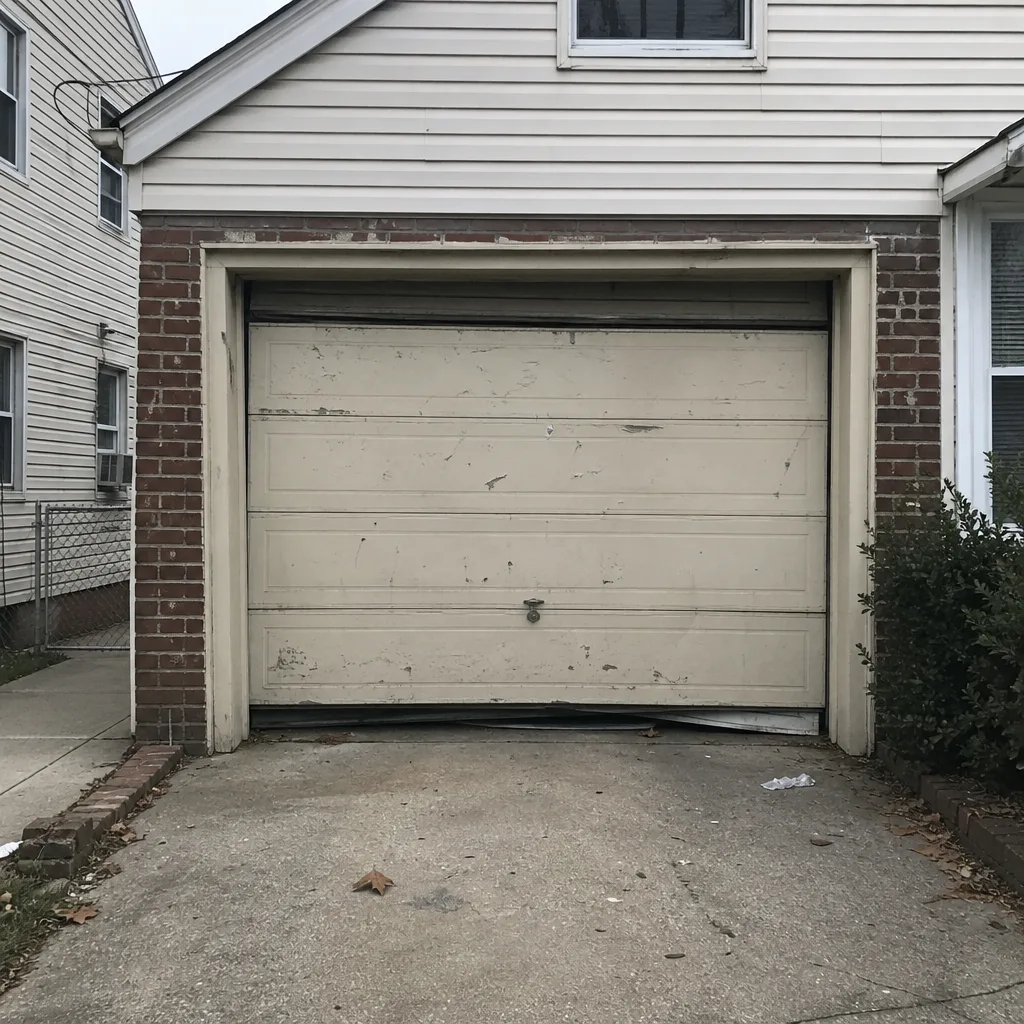 Before
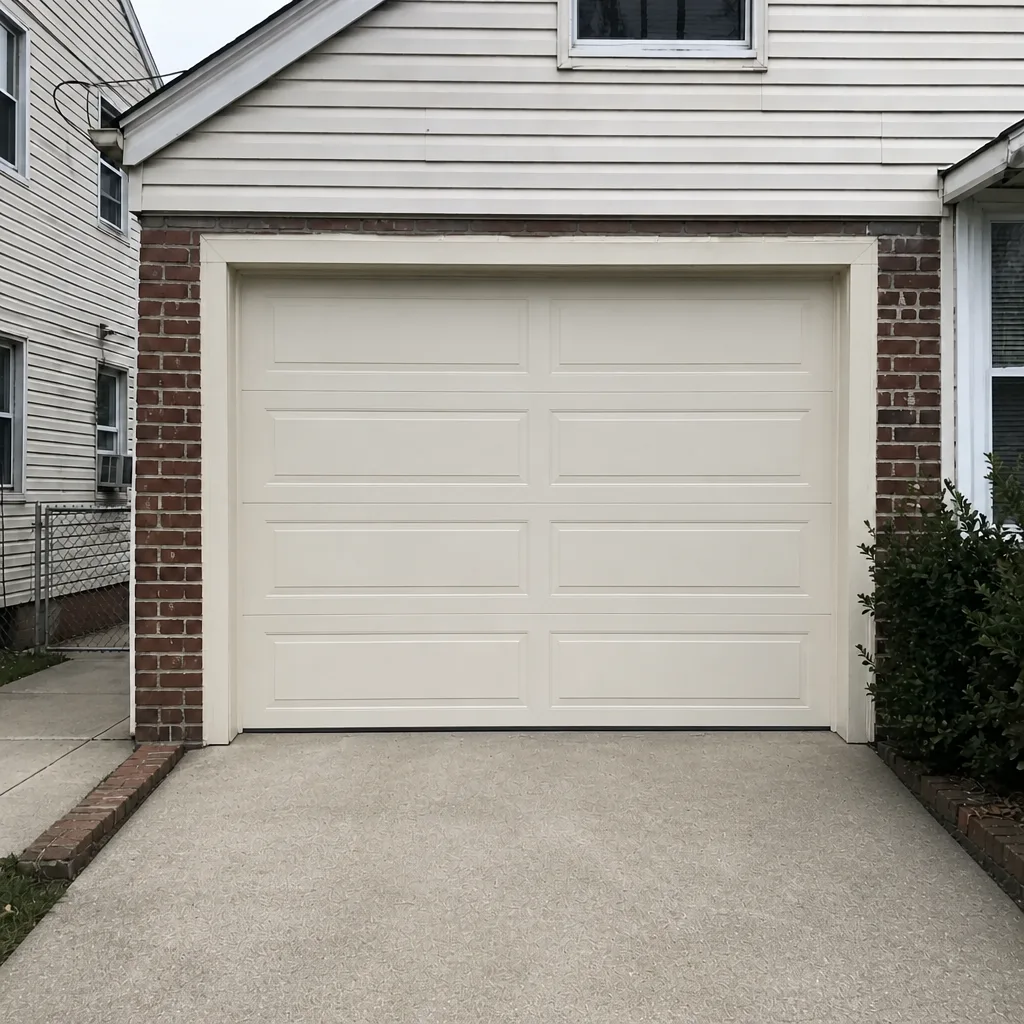 After
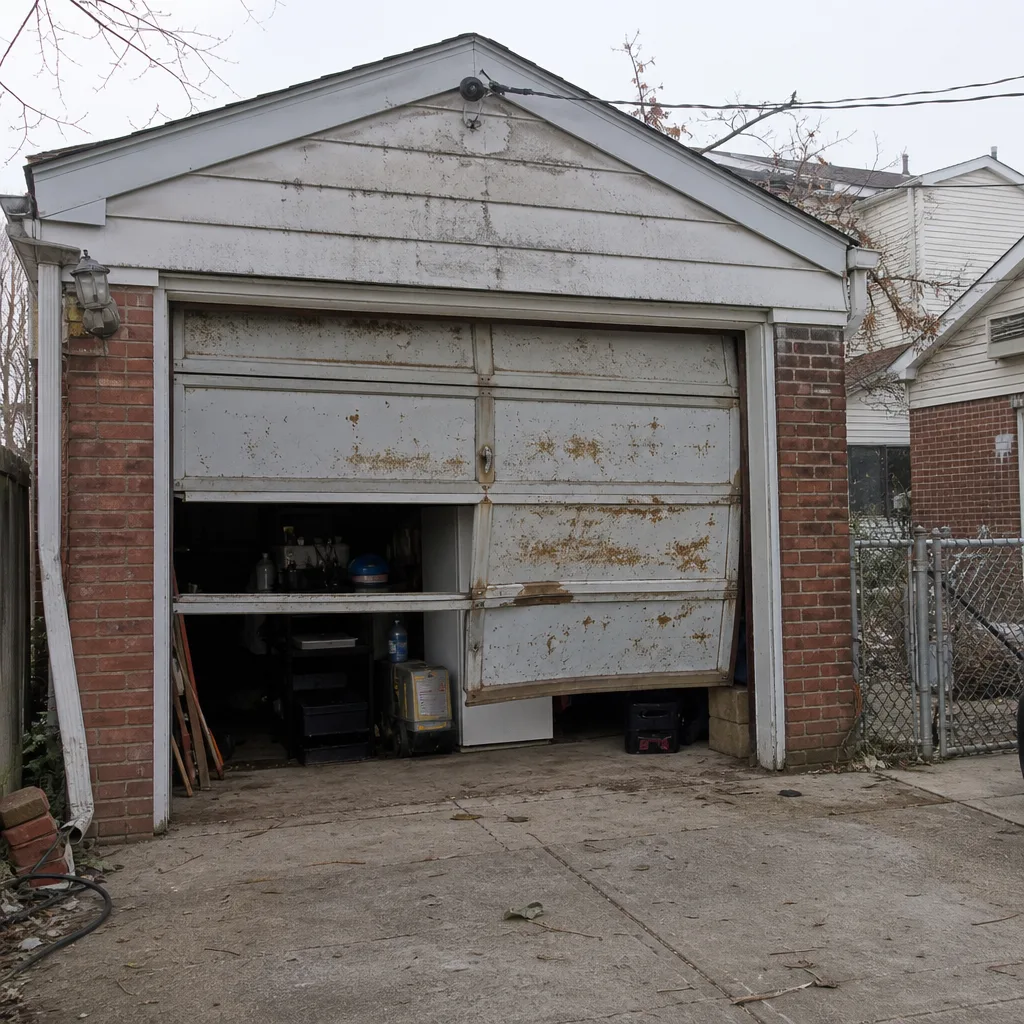 Before
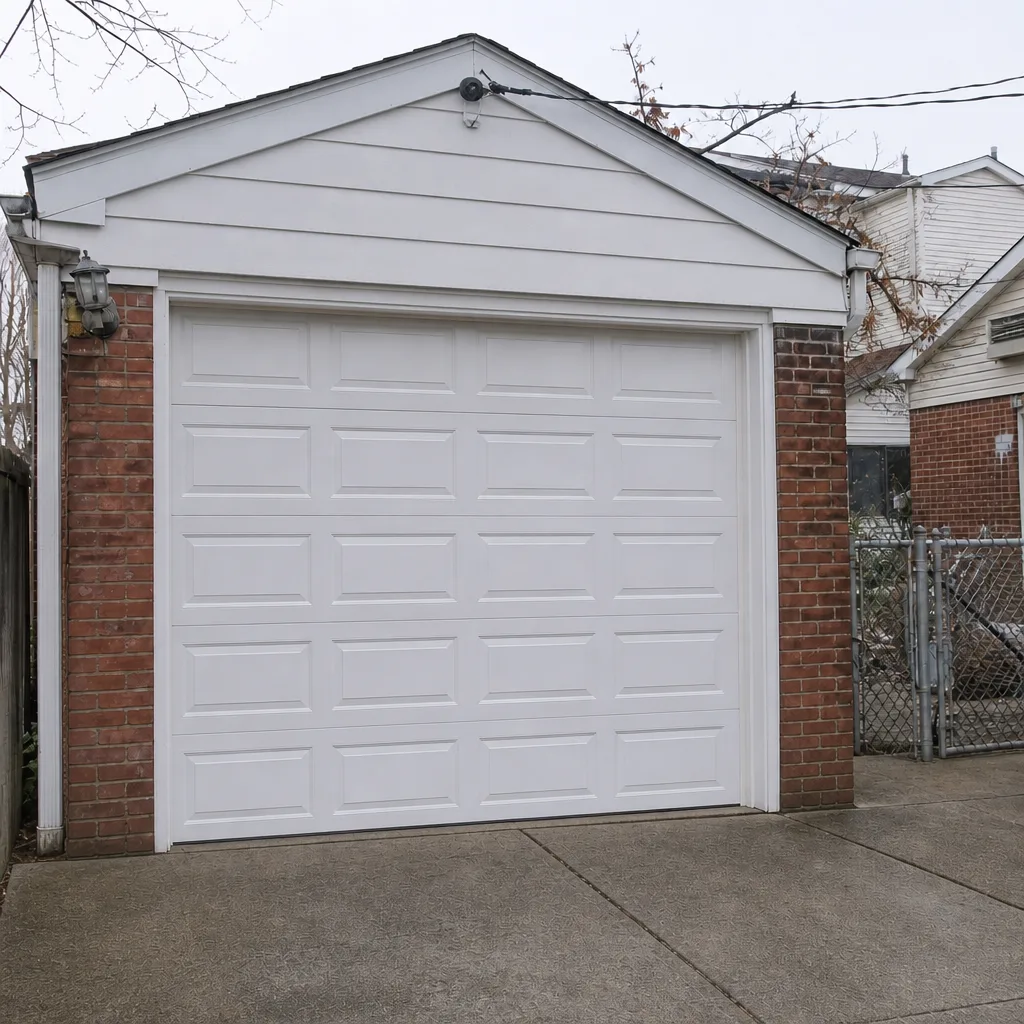 After
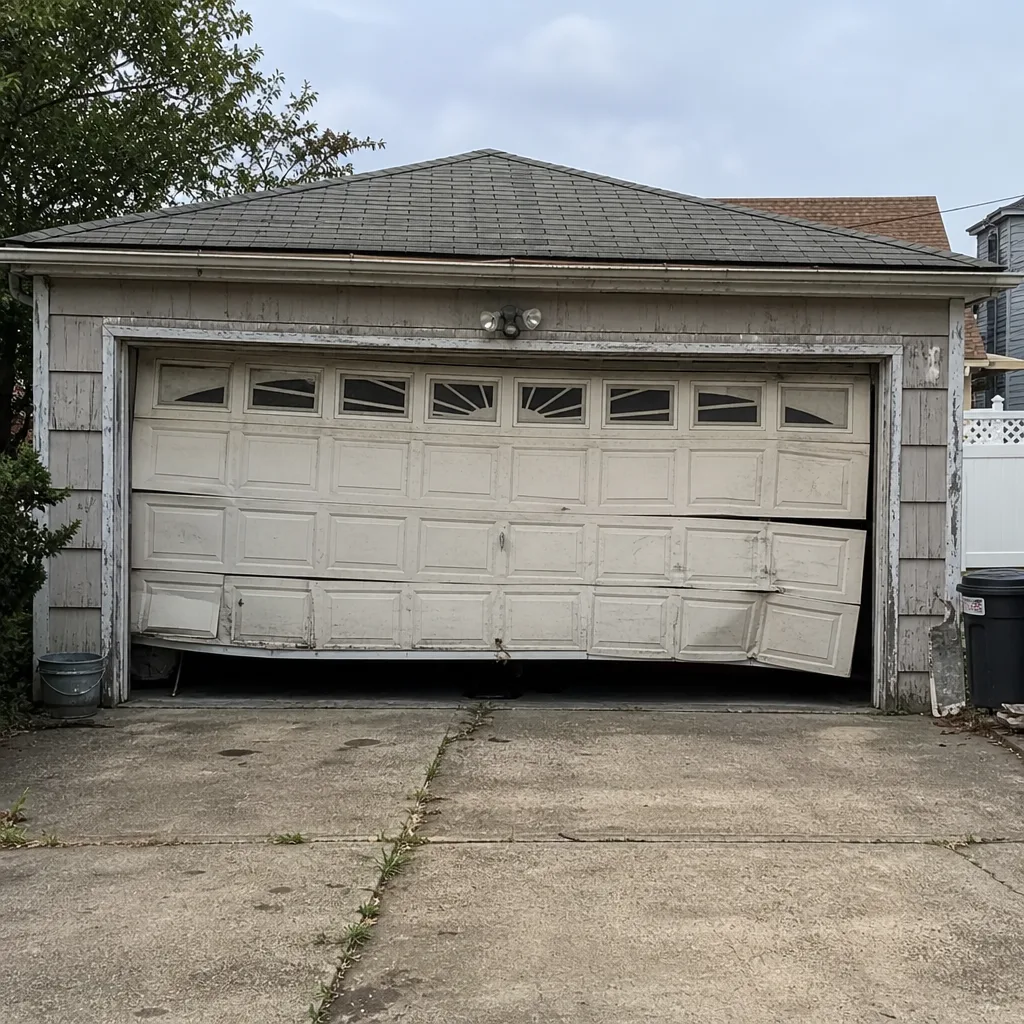 Before
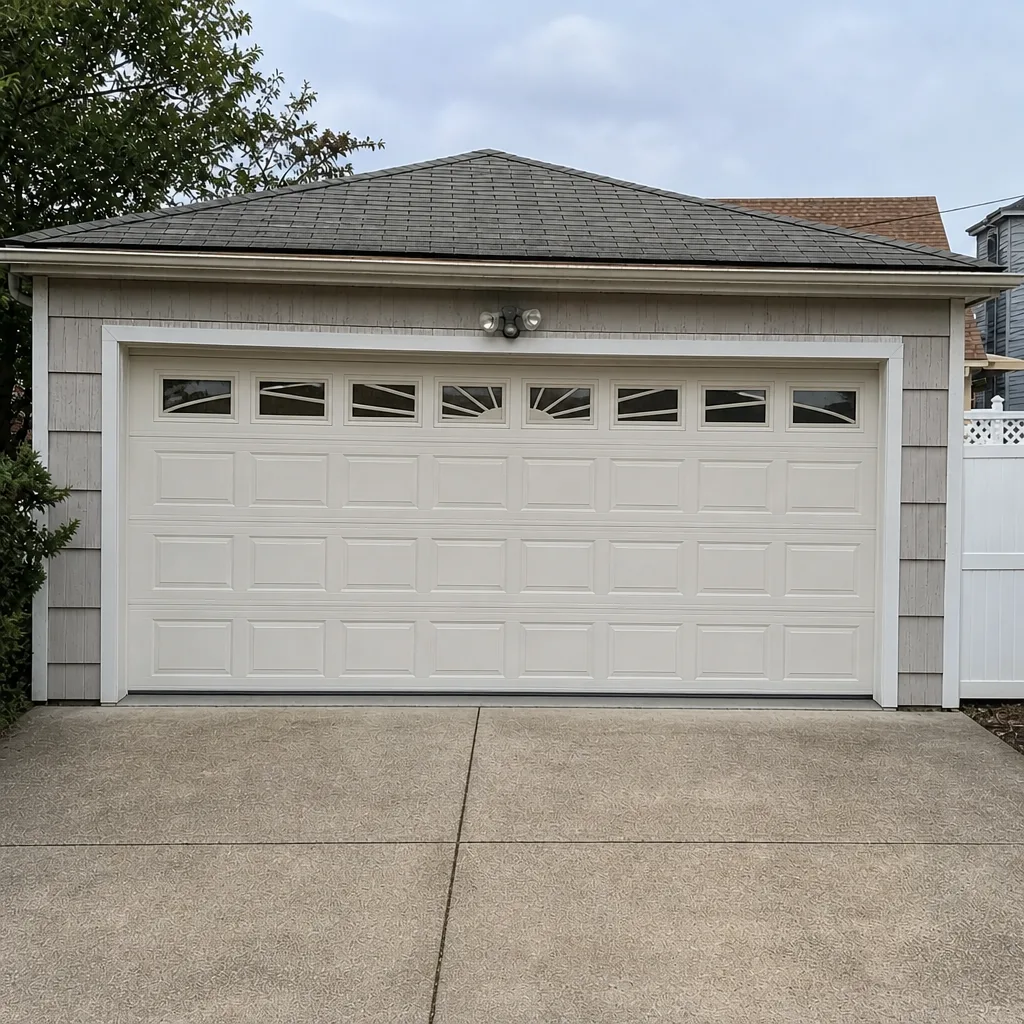 After
When to Call a Professional
You should call a professional when the door won’t stay up, won’t stay down, makes a loud snap, reverses on its own, or won’t move when the opener runs. You should also call when the door stops responding to the remote, when the bottom edge is wet after rain, or when you see full rust on any moving part. Springs, torsion systems, and electrical work are genuinely dangerous – a door that’s over you and any kids or pets is not the place for DIY steps.
Far Rockaway Garage Door Repair offers free estimates in Far Rockaway – call (877) 492-1997. We answer 24/7. Fast dispatch from 7am to 7pm, Sunday through Friday, and the written estimate sets the final price.
Frequently Asked Questions
Spring repair in Far Rockaway typically runs $180 – $340 for a single spring, and a matched pair replaced together costs about twice that. Springs are replaced as matched pairs when they’re the same age, so ask for both figures on the estimate. Call (877) 492-1997 for an exact quote – estimates are free.
Aluminum and fiberglass doors hold up best in Far Rockaway’s humidity and salt air because neither rusts. Steel doors can work too when the gauge and finish are selected with the coast in mind and the hinges and fasteners are galvanized or stainless. Wood is the highest-maintenance option here.
You do if your property sits in an AE or VE flood zone and your garage is an enclosed lower level. Flood venting and breakaway design can matter in those cases, and the rules are set by your local building department and, sometimes, your insurer. Ask the city building department directly about your property before ordering.
Yes. A door that won’t close is a same-day emergency priority, and emergency garage door service is a core part of what we do. Call (877) 492-1997. We answer 24/7. Fast dispatch from 7am to 7pm, Sunday through Friday, and outside those hours the call is booked into the next opening.
No. The price is quoted and agreed before any work starts, and the written estimate sets the final price. If we open something up and find a bigger problem than expected, we stop and talk it through with you before anything else is done.
The local professionals we connect you with are licensed and insured as their state requires. Our technicians have up to 11 years of experience working on the major brands – LiftMaster, Chamberlain, Genie, Clopay, Amarr, Wayne Dalton, Craftsman, and Raynor. Call (877) 492-1997 for a free estimate.
The Bottom Line
A garage door in Far Rockaway faces more than a door anywhere inland. Salt air and humidity wear springs and hardware faster, storm exposure and flood zone designations shape which doors make sense, and the lifecycle cost has to include more servicing than the sticker price suggests. Choose aluminum, fiberglass, or a well-specified steel door with coastal hardware. Watch your springs, seal, and hinges. Get a written estimate from an installer who treats your zip code as a technical fact. And when something does go, get a real specialist rather than a generalist. That’s how you avoid paying for a replacement sooner than you should.
Call (877) 492-1997 for a free estimate. We answer 24/7. Fast dispatch from 7am to 7pm, Sunday through Friday. You can read more about our garage door repair, garage door opener repair, and garage door installation services, or start at our Far Rockaway Garage Door Repair home page.
Written by the team at Far Rockaway Garage Door Repair.