
Last updated November 21, 2026
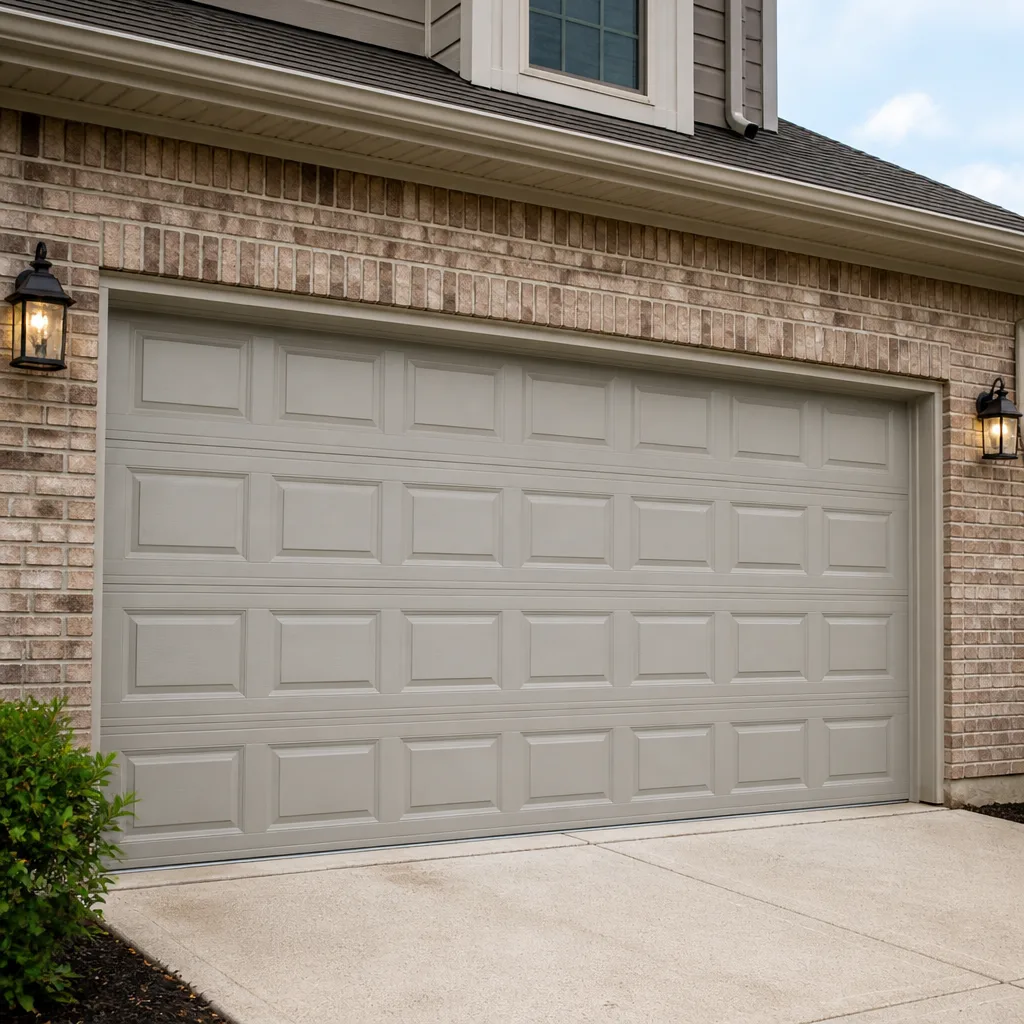 Raised-panel steel
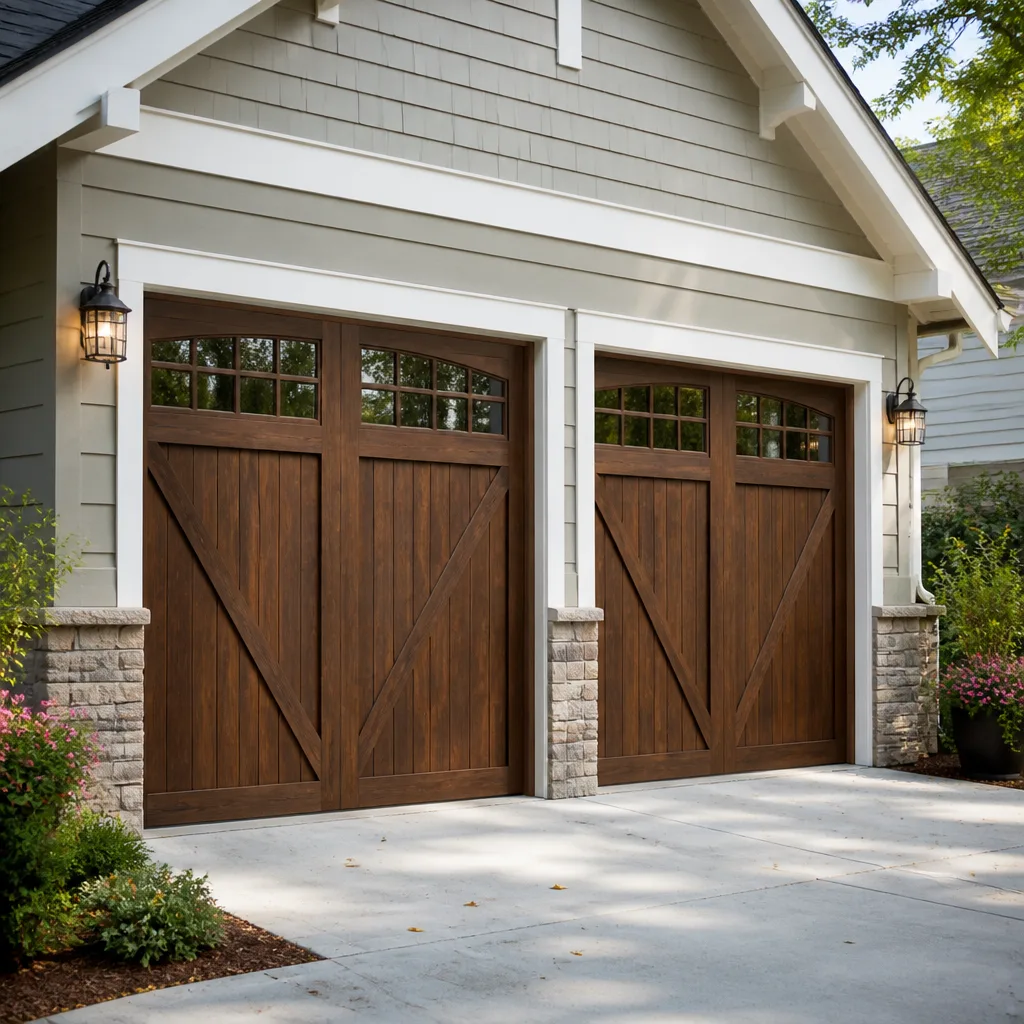 Carriage house
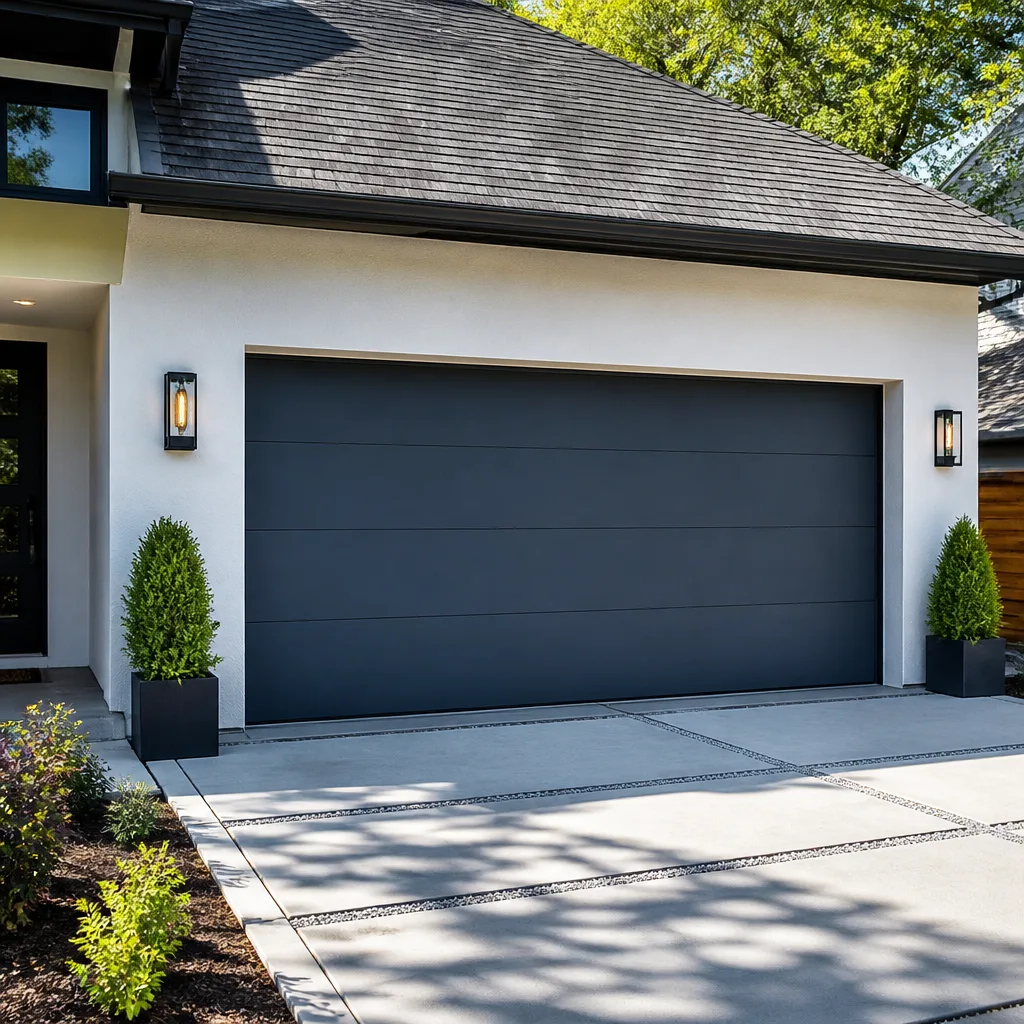 Modern flush
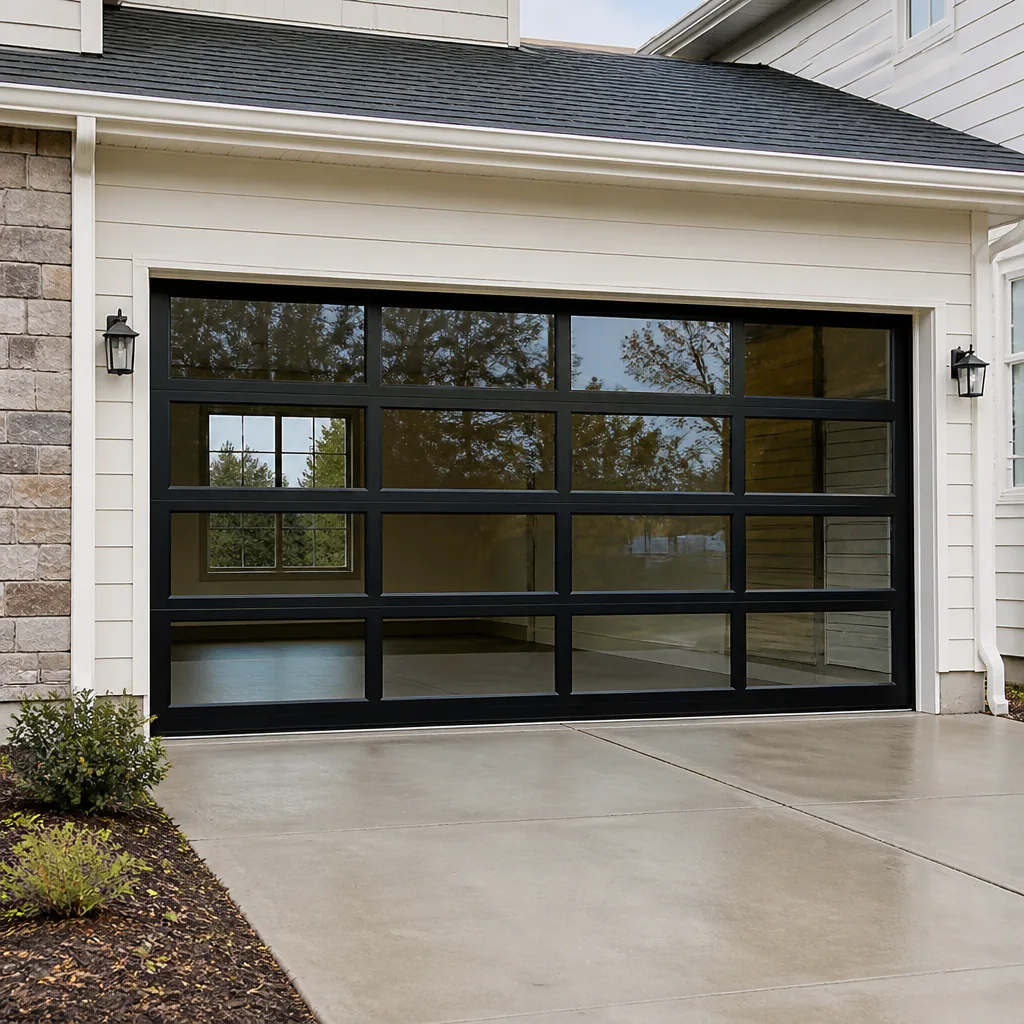 Full-view glass
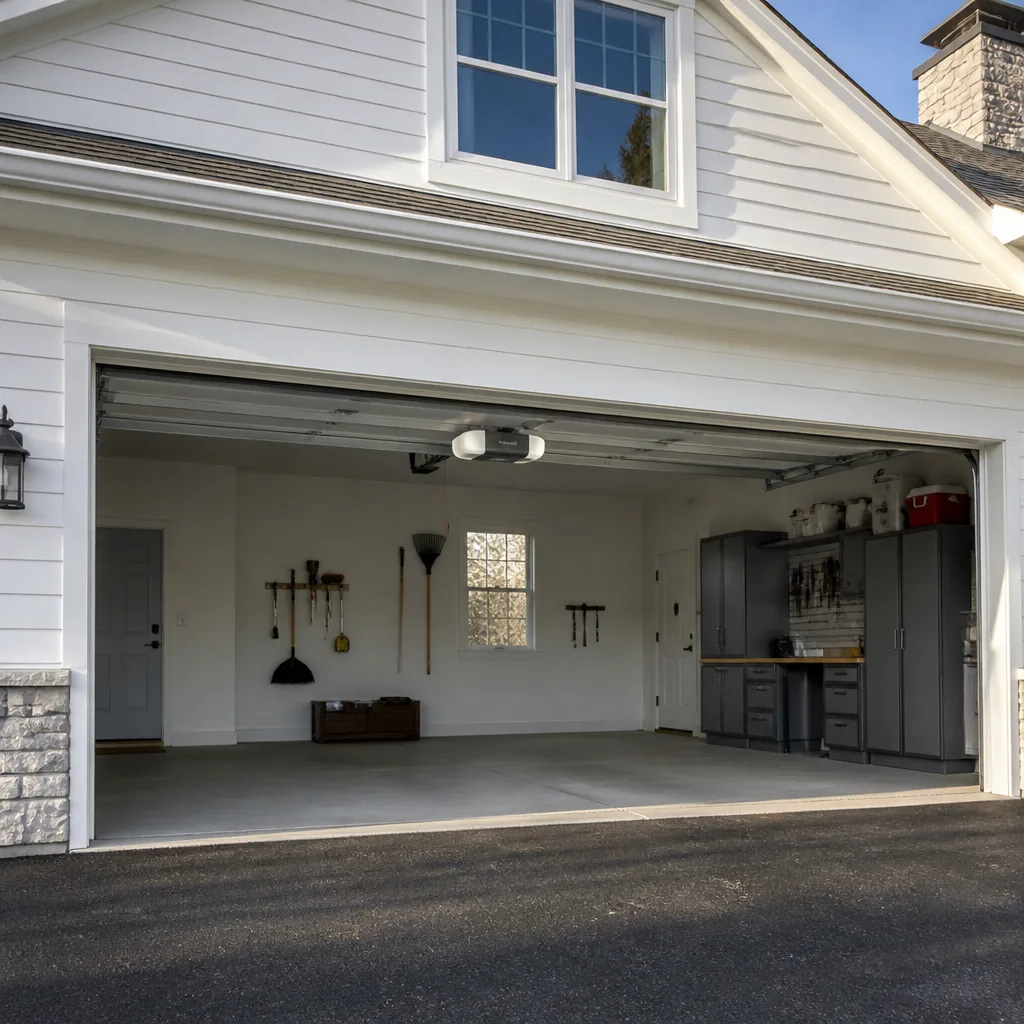 LiftMaster openers
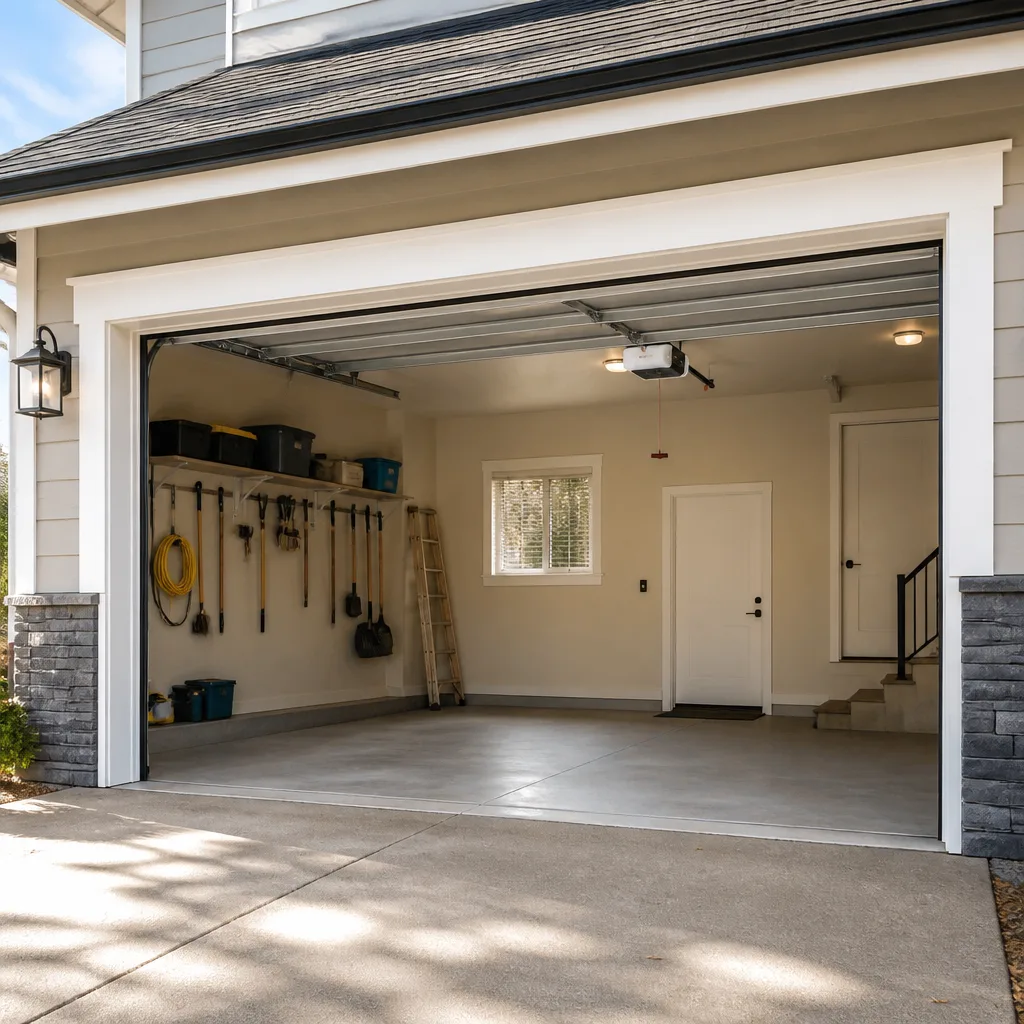 Chamberlain openers
Full 25-point door and opener safety check with every visit - springs, cables, rollers, tracks, and your LiftMaster or Chamberlain opener included
You get a price before we start. It does not change when the pro arrives.
Get your free estimateDIY vs Professional Garage Door: The Far Rockaway Homeowner’s Decision Guide
Torsion springs store enough energy to cause permanent injury when released unexpectedly. That’s not a scare tactic. It’s physics, and it’s the reason the DIY-or-call question has a different answer for a garage door than it does for a leaky faucet. The part costs around $150. The risk behind it is measured in fingers, wrists and worse. Still, that doesn’t mean every garage door job belongs to a professional. Plenty of them are simple, safe and worth doing yourself on a free afternoon.
This guide draws the line precisely: which tasks you can handle, which you should never touch, and where the hidden costs of a failed DIY attempt show up later. We’ll also cover what makes a Far Rockaway garage door behave differently from one upstate, and how to use the installation videos online without following them into the dangerous step. By the end you’ll know exactly where your door’s problem sits on that line.
Quick Answer
In Far Rockaway, roughly three out of four garage door jobs split cleanly: sensor alignment, weather stripping, remote programming and manual lubrication are safe to DIY, while springs, cables, bottom brackets and any track or panel work under tension are not. The dividing line isn’t your skill level. It’s whether the component holds stored mechanical energy that can hurt you the moment a bolt loosens. If the job involves a spring, cable or bracket, call a professional.
Styles & brands we work with
- Raised-panel steel
- Carriage house
- Modern flush
- Full-view glass
- LiftMaster openers
- Chamberlain openers
Table of Contents
- Where the DIY Line Falls: Energy, Not Skill
- Safe DIY Tasks in Far Rockaway
- The Tasks You Should Never DIY
- The Hidden Cost of a DIY Mistake
- Why Far Rockaway Hardware Fights Back
- When a DIY Repair Triggers a Permit
- How to Use Manufacturer Videos Correctly
- DIY vs Professional: The Real Cost Comparison
Where the DIY Line Falls: Energy, Not Skill
The garage door is the largest moving object in most homes, and it’s held in balance by springs under enormous tension. A standard torsion spring on a residential door is wound to hundreds of pounds of force when the door closes. That energy doesn’t disappear when a bolt slips. It releases outward, usually toward whoever is standing in front of it. No amount of handiness changes that.
So the right question isn’t “am I capable?” It’s “does this part store energy that will hurt me if it moves wrong?” Two categories follow from that:
- Low-energy tasks: sensors, remotes, weather stripping, lubrication, visual inspection, minor panel wiping. These involve no stored tension and no serious injury risk.
- High-energy tasks: torsion springs, extension springs, cables, bottom brackets, drums, and anything holding a panel in a track while the door is under spring load.
The distinction matters in Far Rockaway because the housing stock is a mix: older bungalows and capes with extension-spring doors sitting right next to newer builds with torsion systems. Both types store energy. Extension springs run along the horizontal tracks above the door and snap when they fail. Torsion springs sit on a shaft above the opening and release with a violent twist. Either way, the release is fast and the injury is real.
We handle spring repair as a dedicated service for exactly this reason. It’s not a job a generalist picks up on the side. Springs need the correct winding bars, an understanding of how the door’s weight is balanced, and a habit of never standing inside the spring’s release path. If you remember one rule from this guide, make it this one: springs and cables are professional work.
Safe DIY Tasks in Far Rockaway
Most of what goes wrong with a garage door in Far Rockaway is not a spring failure. It’s a safety sensor knocked out of alignment, a remote that stopped talking to the opener, or weather stripping chewed away by a season of wet winters. These are the jobs worth doing yourself. They cost almost nothing and won’t put you at risk.
- Realign the safety sensors. The two small sensors at the bottom of each track need to point at each other. If the door reverses partway down, or won’t close at all, wipe the lenses and check that the indicator lights on each unit are lit. A gently bumped bracket is the usual culprit.
- Reprogram the remote. A dead battery and a lost pairing look identical from the driver’s seat. Swap the battery first, then follow the opener’s pairing steps. You can find the exact sequence for your model in the manual, whether it’s a LiftMaster, Chamberlain or Genie unit.
- Replace weather stripping. The rubber seal along the bottom of the door and the side jambs is easy to pull and replace. In Far Rockaway it takes a beating, so inspect it once a year and replace it when it hardens or tears.
- Lubricate the moving parts. A few drops of garage door lubricant on the hinges, rollers and springs (from the outside, never while winding) quiets a noisy door. Never use grease on the tracks, which attracts grit.
- Balance check by hand. Disconnect the opener and lift the door halfway by the handle. If it stays put, the springs are roughly balanced. If it slams down, the springs are not doing their job, and that’s a call for a professional.
- Visual inspection. Look for frayed cables, gaping springs, bent track sections, or loose hinges. Catching these early is the safest DIY work of all.
Doors on the Rockaway peninsula deal with freeze-thaw cycles that work their way into hinges and rollers. A little lubrication in late fall pays back in a smoother, quieter door through the winter.
The Tasks You Should Never DIY
There are five garage door parts that no homeowner should touch, no matter how confident they feel after watching a video. Each one holds stored tension that can release the moment you loosen a fastener. The injury potential is severe, and it happens in seconds.
- Torsion springs. These sit above the door on a metal shaft. Winding or unwinding one requires two bars and an understanding of balance. A slip releases the full tension in a fraction of a second.
- Extension springs. These run above the horizontal tracks. When they break or come loose, they can whip outward. Even inspecting them, don’t reach into the assembly.
- Cables. The cables are what keep the door on track under spring tension. Cutting or unclamping one releases the entire load. This is every bit as dangerous as a spring.
- Bottom brackets. These small brackets at the bottom corners hold the cable under full tension. Removing the bolts without first relieving the spring can cause a catastrophic release.
- Track and panel alignment under load. Straightening a bent track or swapping a panel while the door is under spring tension risks the door crashing down. Track work belongs in a professional’s hands.
What if a spring has already broken? Don’t run the door. Don’t try to lift it by hand to see if it works. Call us and stay clear. We handle emergency garage door service for exactly this situation, and we’d rather take a call at midnight than have you get hurt in the driveway.
One thing to keep in mind about the “never DIY” list: it isn’t about who’s smarter or more talented than whom. It’s about the physical energy stored in those parts. A licensed electrician wouldn’t hand-wire a live panel, and a homeowners’ how-to video doesn’t change that for garage doors either.
The Hidden Cost of a DIY Mistake
A DIY repair that goes wrong doesn’t just cost the part. It can cost the opener, the door, and in some cases the warranty that came with the system. The savings from doing it yourself disappear fast when a $20 guess damages a $400 opener or cracks a panel that has to be replaced in a matched set.
Here’s where the hidden costs show up:
- Voided warranties. Most manufacturers, including Clopay and Amarr, tie their warranty coverage to installation or repair by a qualified installer. A spring change or panel swap done outside that may void the claim on the part or the door.
- Worn-out opener gears. If a door is out of balance and the opener is dragging it up and down, the motor and gears work harder than designed. That can wear out a perfectly good opener months early.
- Bent tracks. A door that’s been pushed or forced out of alignment bends the track. Straightening it without the right tools and a spring-relieved door often makes it worse. A replacement run of track is a real expense.
- Wrong-size springs. Springs are sized to the door’s weight. A spring that’s slightly off will leave the door unbalanced or hang too loose, causing other parts to fail early.
- Rounded fasteners. A stripped bolt or a cross-threaded hinge makes the next repair more expensive. Overtightening is a common DIY problem in particular.
In our experience, the door that ends up with the biggest bill is usually the one where a homeowner tried two fixes before calling. Each attempt damages something new. When you call us for a free estimate, the technician diagnoses the full system, not just the part that started it.
Why Far Rockaway Hardware Fights Back
Garage doors in Far Rockaway deal with a wet-maritime climate that works on metal year-round. Wet winters, spring rain, and the damp air off Jamaica Bay all conspire to rust and seize the bolts and pivot points on a door. That matters for DIY because a bolt you’d expect to turn with a wrench can be seized solid. A seized bolt plus a spring under tension is a much worse scenario than a clean, dry-climate repair.
Here’s what we see in Far Rockaway doors that’s different from a dry climate:
- Seized track bolts. The bolts that hold the track to the wall rust and lock tight. A DIY-er leaning on a seized bolt near a spring is putting force into a loaded assembly.
- Frozen hinges and rollers. A slider that hasn’t moved in a year is a door under hidden strain. Lubrication in the fall prevents this.
- Swollen or rotting panel bottoms. The door’s bottom section takes the most moisture. Replacing a panel becomes a pro job because the track and cables are already under load.
- Corroded brackets. Brackets that hold the cables can weaken from rust. That combination of tension and compromised metal is a bad one to inspect without training.
In the older bungalow blocks of Far Rockaway, we often find doors that have sat through decades of wet winters. Those bolts are not turning without the right tools and technique. The right move is a professional who knows the difference between a stubborn bolt and a dangerous one.
When a DIY Repair Triggers a Permit
Most repairs around Far Rockaway, including spring replacement and opener fixes, don’t need a permit. But full door or opener replacement does, in many cities, because it touches the structure, electrical wiring, or the safety of an egress route. The exact rules depend on your building department, so it’s worth asking before you start. A homeowner who installs a new door without a permit can end up with a compliance problem that costs more than the door.
A few general rules to keep in mind:
- Repairs: Usually no permit needed for springs, rollers, cables, hinges, and opener service.
- Replacement: A new door or opener installation often requires a permit, particularly when the opener is hard-wired or the door changes the opening.
- Electrical work: Any change to the opener’s permanent wiring is a code matter. Don’t crack open the electrical box yourself.
- Inspection: If a permit is pulled, the work has to pass an inspection. That’s a job for a licensed pro, not a weekend project.
When it’s time for a garage door installation, a professional handles the permit and inspection side, and the work is done to code on the first pass. If you’re planning a replacement in Far Rockaway, ask for a free measure and a written price before committing.
How to Use Manufacturer Videos Correctly
Manufacturer installation videos are a valuable resource, and there’s no reason not to use them. They’re accurate, specific to your model, and easier to follow than a paper manual for things like remote pairing, sensor setup, or weather stripping. Where they go wrong is when a homeowner follows a tutorial past the point where the door is safe to work on.
Here’s how to get the most from a video without taking on risk:
- Watch the whole thing before you touch the door. The dangerous step is often near the end. If the video reaches a spring, a cable, or a bottom bracket, stop and call a professional.
- Match the model number. A video for a Chamberlain unit won’t map to your Genie opener. Find the manual for your exact model and keep it open.
- Disconnect the opener before any hands-on work. Unplug the opener so a misplaced hand or a sensor trip doesn’t start the door while you’re working.
- Never warp a video step. If the video shows a trick that requires removing a spring or a cable, it’s a professional job. The video makes it look easy because the technician knows exactly where the danger is.
- Know where the danger starts. For almost every video, the line is the first step that involves loosening a bolt while the door is under its own weight. That’s your cutoff.
If you get to that line and you’re not sure, stop. A professional can pick up where the video ends. For a problem with your opener, we handle garage door opener repair on every major brand, so the model you’ve got is no problem.
DIY vs Professional: The Real Cost Comparison
The DIY case is strongest for the small stuff. The professional case is strongest for anything under tension. Here’s the honest comparison for what the job actually costs in Far Rockaway.
- Sensor realignment: free if you do it; a professional will typically fold it into a repair visit.
- Weather stripping: low-cost part if you install it; substantially more if a pro supplies and installs.
- Remote reprogramming: free; usually folded into a service call.
- Spring replacement (single): a professional job in the $150 to $350 range depending on the door and spring type. A matched pair is usually replaced together, so expect roughly double that. Get a written quote for the pair.
- Opener replacement: a professional job with a written quote per model.
- Full door replacement: measured, ordered and scheduled. Call for a free measure and a written price.
If a DIY repair on your opener or door goes wrong and damages a panel or track, you’re likely facing a repair in the hundreds of dollars, with no warranty help on the damaged part. That’s the real cost of a mistake, and it usually exceeds the cost of hiring the professional in the first place.
For a full-service option across both the mechanical door and the electronic opener, our garage door repair service covers the whole unit in one visit. If you want to know what’s really involved before you decide, our Far Rockaway Garage Door Repair team can break it down.
Common Mistakes to Avoid
- Forcing a seized bolt in Far Rockaway. The moisture around here locks bolts tight. Leaning on a rusted bolt near the spring is a fast way to trigger a release. Use the right tools and don’t force it.
- Ignoring a broken spring to “see if it closes.” A door with a broken spring isn’t working. Running the opener drags the door on a partially snapped spring and can ruin the opener gears.
- Buying a universal spring. Springs are sized to the door’s weight. A generic spring leaves the door unbalanced. Match the exact model and weight.
- Greasing the tracks. Grease on the guides traps grit and causes the door to track badly. Use the right garage door lubricant, and only on the rollers, hinges, and spring (from outside, never while winding).
- Removing a bottom bracket without relieving the spring. The bracket holds the cable under full tension. Loosening the bolts first is a dangerous mistake.
- Straightening a bent track by hand. A track that’s been pushed out of alignment bends under pressure. A pro has the tools to realign it safely.
- Skipping the permit on a door replacement. In Far Rockaway, a replacement often needs a permit and an inspection. A professional handles it as part of the job.
See the difference
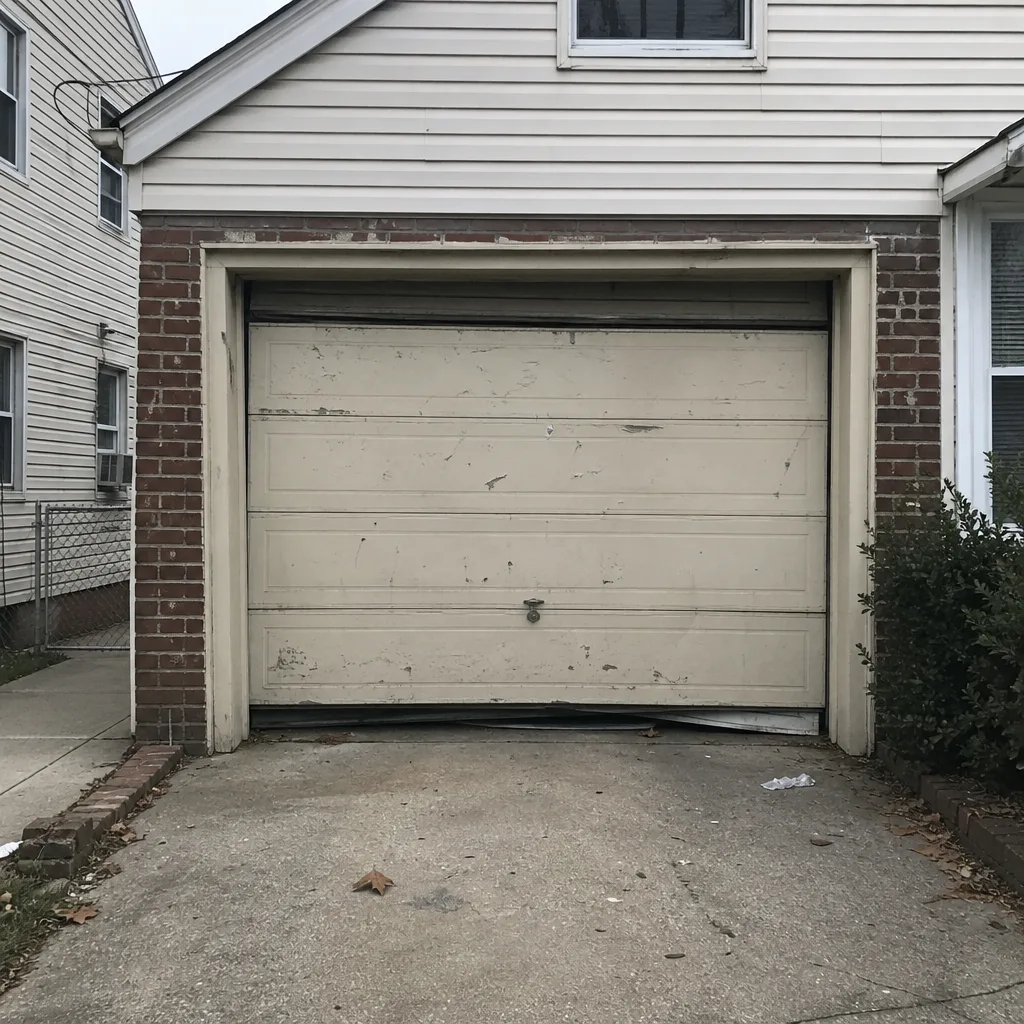 Before
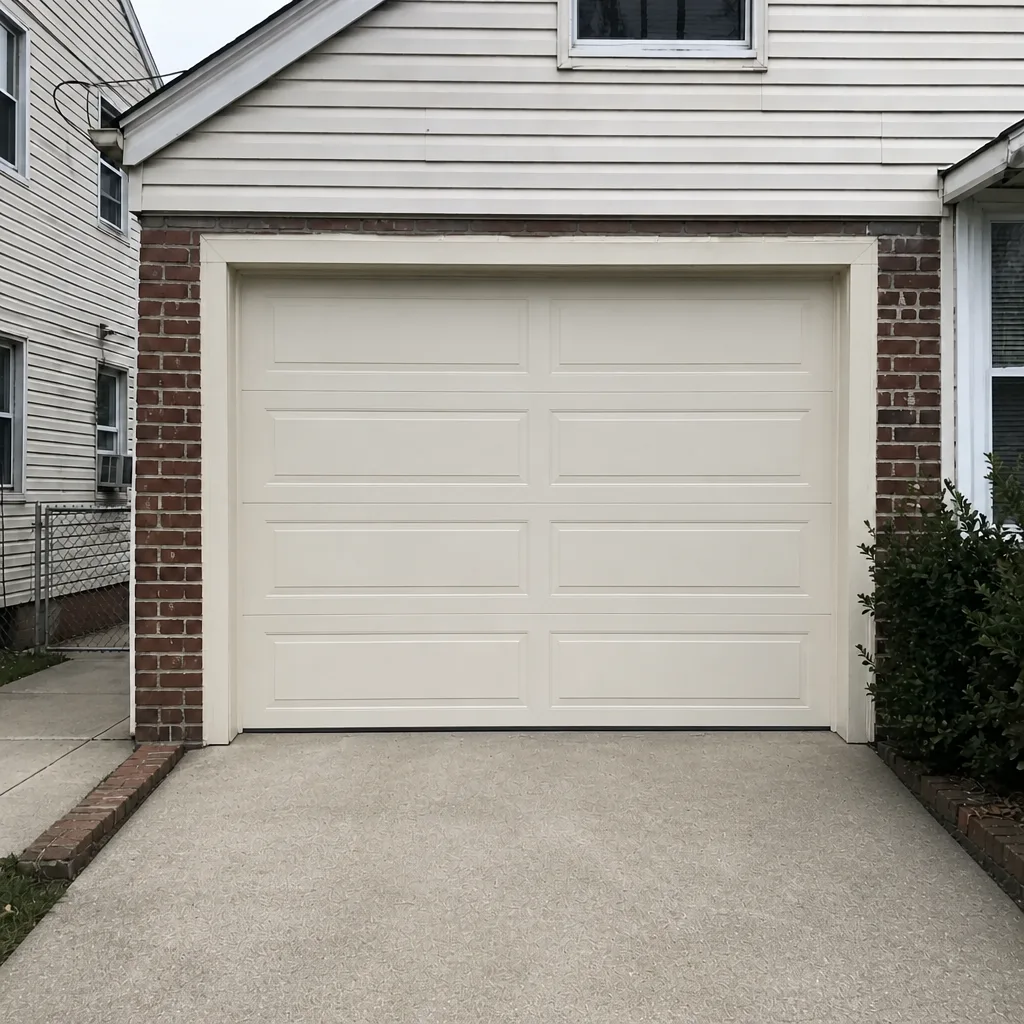 After
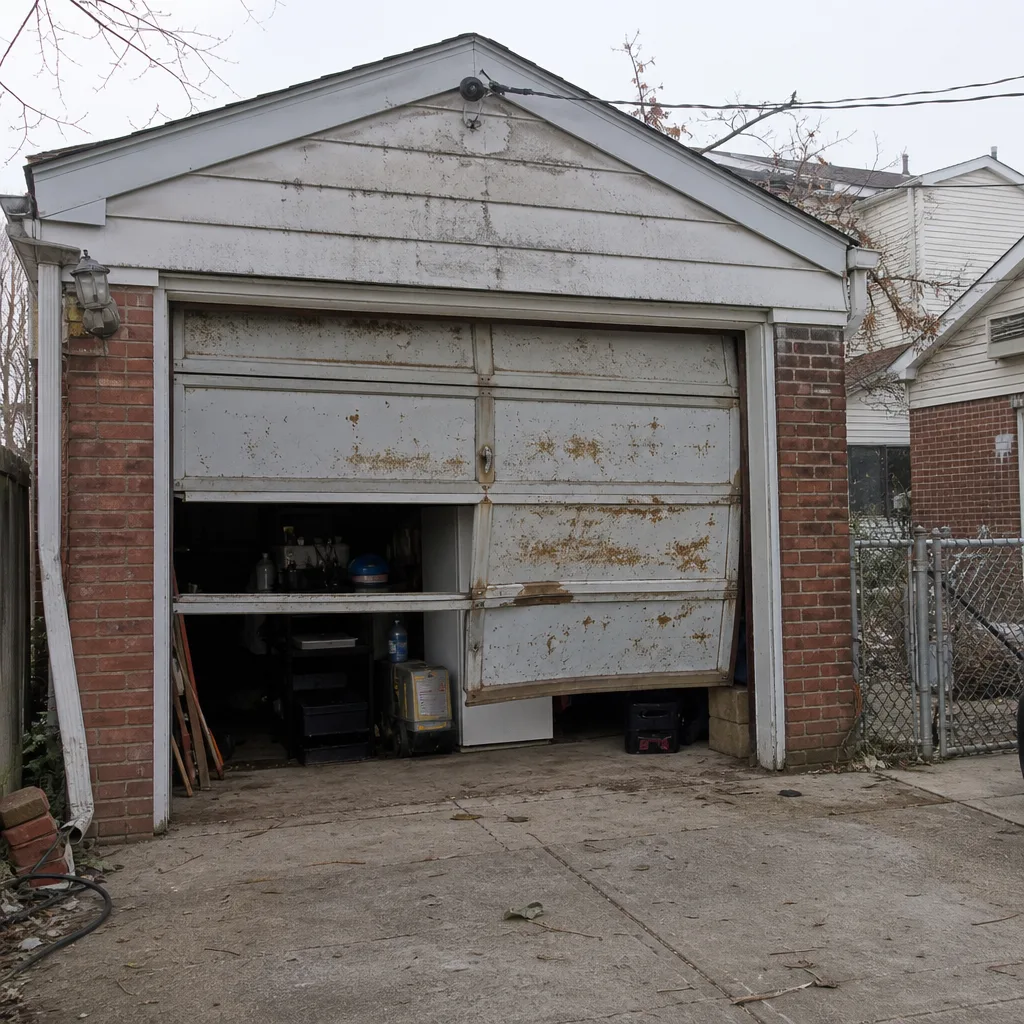 Before
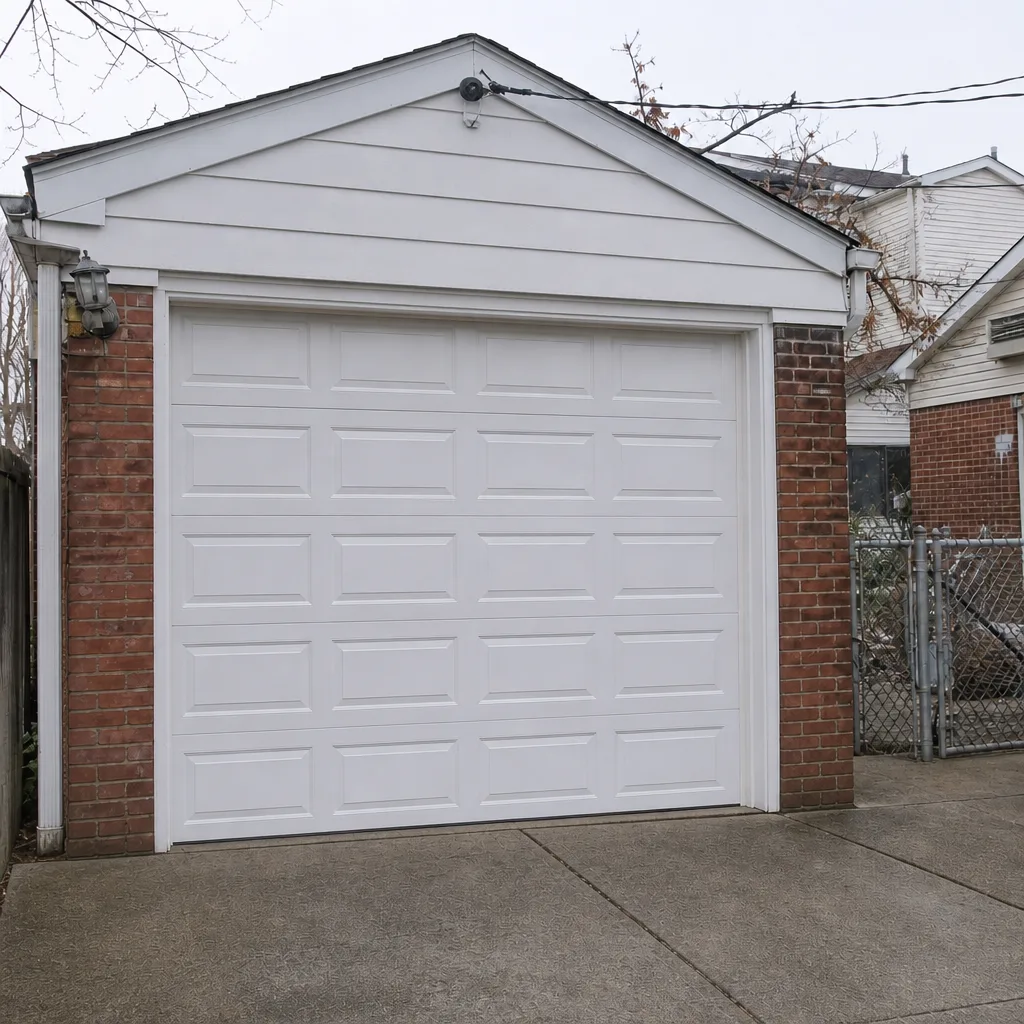 After
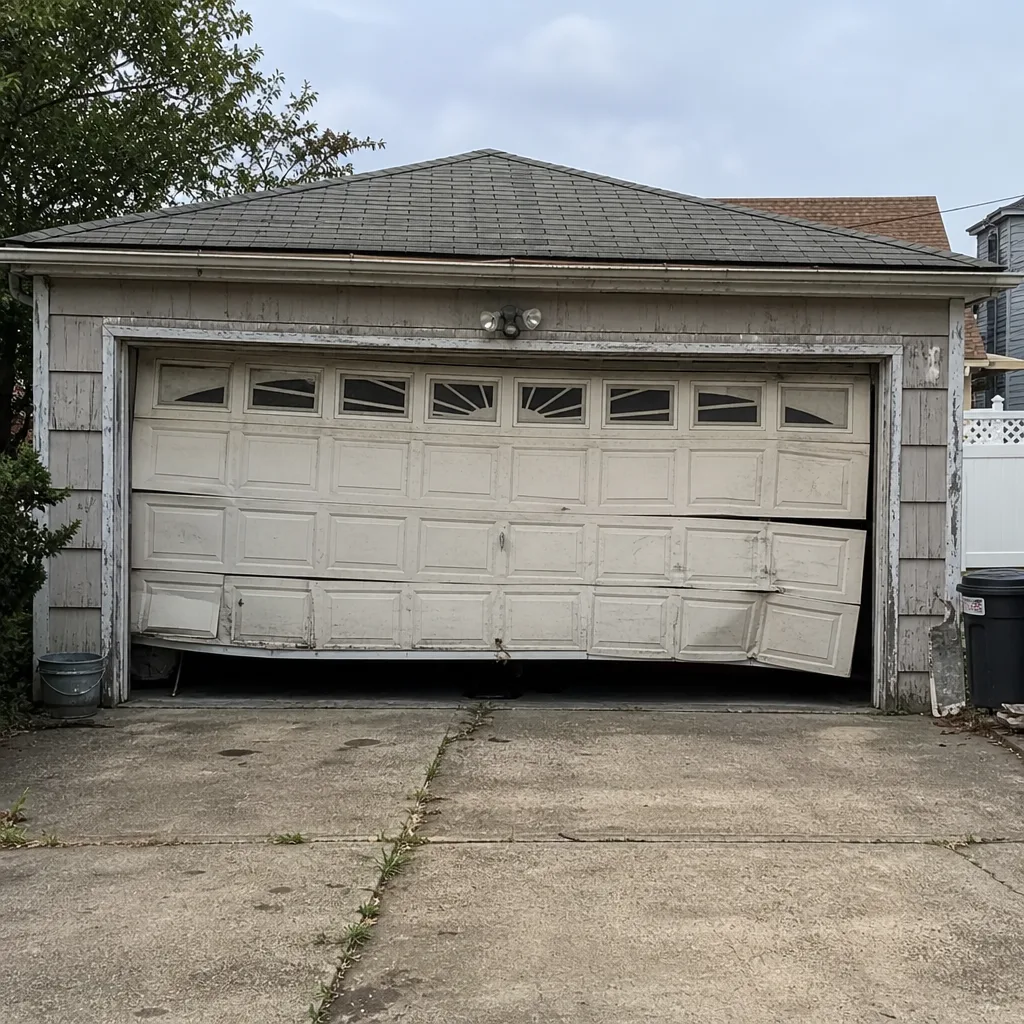 Before
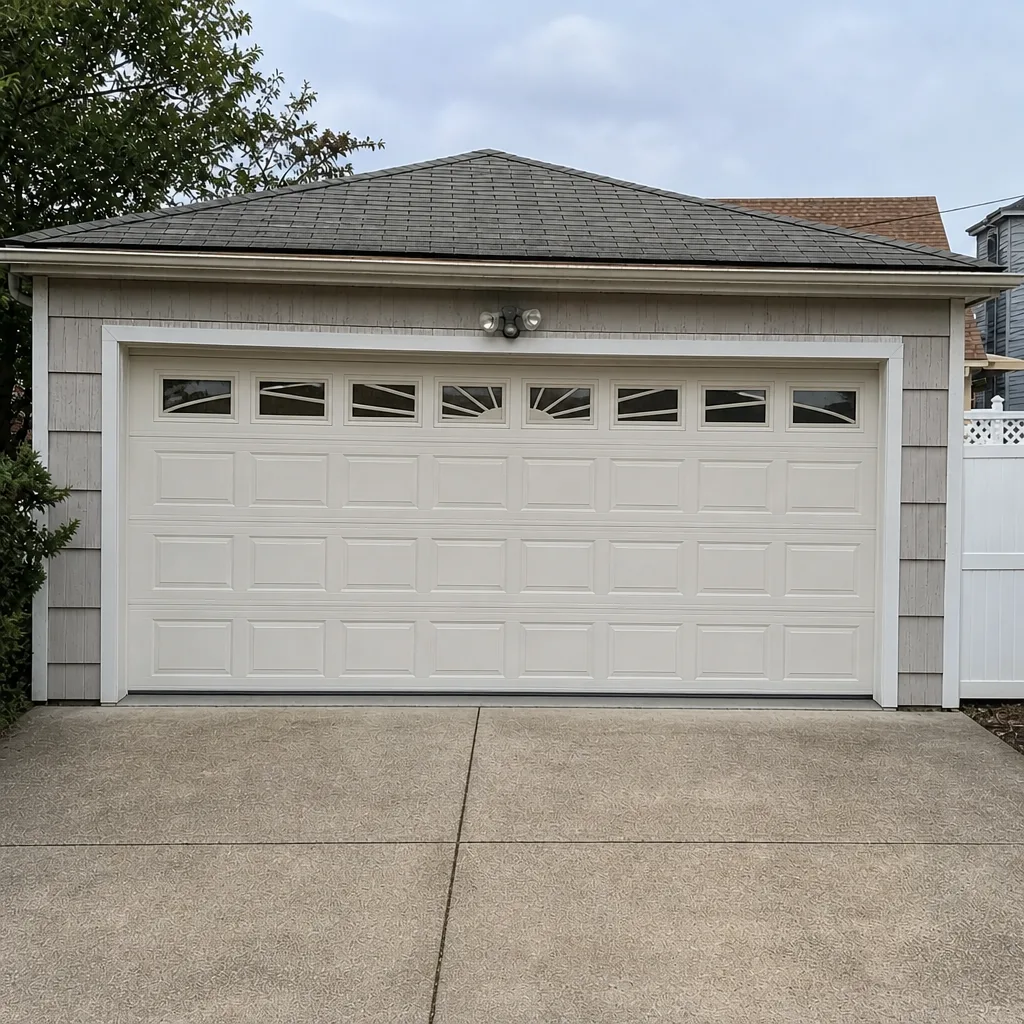 After
When to Call a Professional
Call a professional if any of these are true: a spring is broken or sags, a cable is frayed, the door slams down or won’t stay up, a bottom bracket is loose, a track is bent, or the opener grinds and won’t lift. These are emergency-level problems. A door that won’t close leaves your home unsecured and the door itself under strain. Don’t wait for it to get worse.
If you’re in Far Rockaway and you’re not sure which category you’re in, ask before you try. We answer 24/7, and a call outside dispatch hours is booked into the next opening, Sunday through Friday, 7am to 7pm. Far Rockaway Garage Door Repair offers free estimates in Far Rockaway, call (877) 492-1997. Our technicians have up to 11 years of experience and we handle every major brand, so you don’t need to hunt for a brand-specific tech.
Frequently Asked Questions
No. Springs store enough energy to cause permanent injury when released unexpectedly, and the risk is far higher than the cost of the part. The job needs two winding bars, a full understanding of the door’s weight, and training to release the tension safely. Call a professional for spring repair, and don’t run the door with a broken spring in the meantime.
Sensor alignment, remote programming, weather stripping, lubrication and visual inspection are all safe DIY tasks. These involve no stored energy and no serious injury risk. Anything that holds tension, like springs, cables and bottom brackets, is not safe to DIY. Call (877) 492-1997 for an estimate if you’re unsure which category your issue falls into.
It can. Most manufacturers tie their warranty to work done by a qualified installer, and a DIY repair outside that may leave you without coverage on the part or the door. That risk is why we recommend pro work for any component that affects the door’s balance or the opener. A free estimate makes the decision easy; call (877) 492-1997 to book one.
A single torsion or extension spring replacement typically costs $150 to $350 depending on the door and spring type, and a matched pair usually costs roughly double. The written estimate sets the final price. Call (877) 492-1997 for an exact quote. Estimates are free.
It depends. Repairs usually don’t require a permit, but full door or opener replacement often does, particularly if the opener is hard-wired or the opening changes. The exact rules come from your building department, so ask before work starts. A professional installation gets the permit and inspection handled as part of the job.
We answer 24/7. A call outside dispatch hours is booked into the next opening, Sunday through Friday, 7am to 7pm. Don’t force the door open by hand with a broken opener; that can bend the track. Call (877) 492-1997 and we’ll schedule the visit.
The Bottom Line
Garage door DIY is safe for the low-tension jobs: sensors, remotes, weather stripping and lubrication. It’s never safe for the parts that store energy: springs, cables and bottom brackets. That’s not about your skill. It’s about physics. In Far Rockaway, the wet climate makes seized bolts and rusted brackets worse, so the dangerous jobs are more dangerous here than in a dry climate.
Use manufacturer videos for the safe tasks, and stop at the first step that loosens a loaded part. If the door won’t stay up or down, or you’re facing a spring, don’t force it. We’ll come out, diagnose the whole unit, and give you a written price before any work starts. Call (877) 492-1997. We answer 24/7. Fast dispatch from 7am to 7pm, Sunday through Friday. We’re closed Saturday.
Written by the team at Far Rockaway Garage Door Repair.