
Last updated November 21, 2026
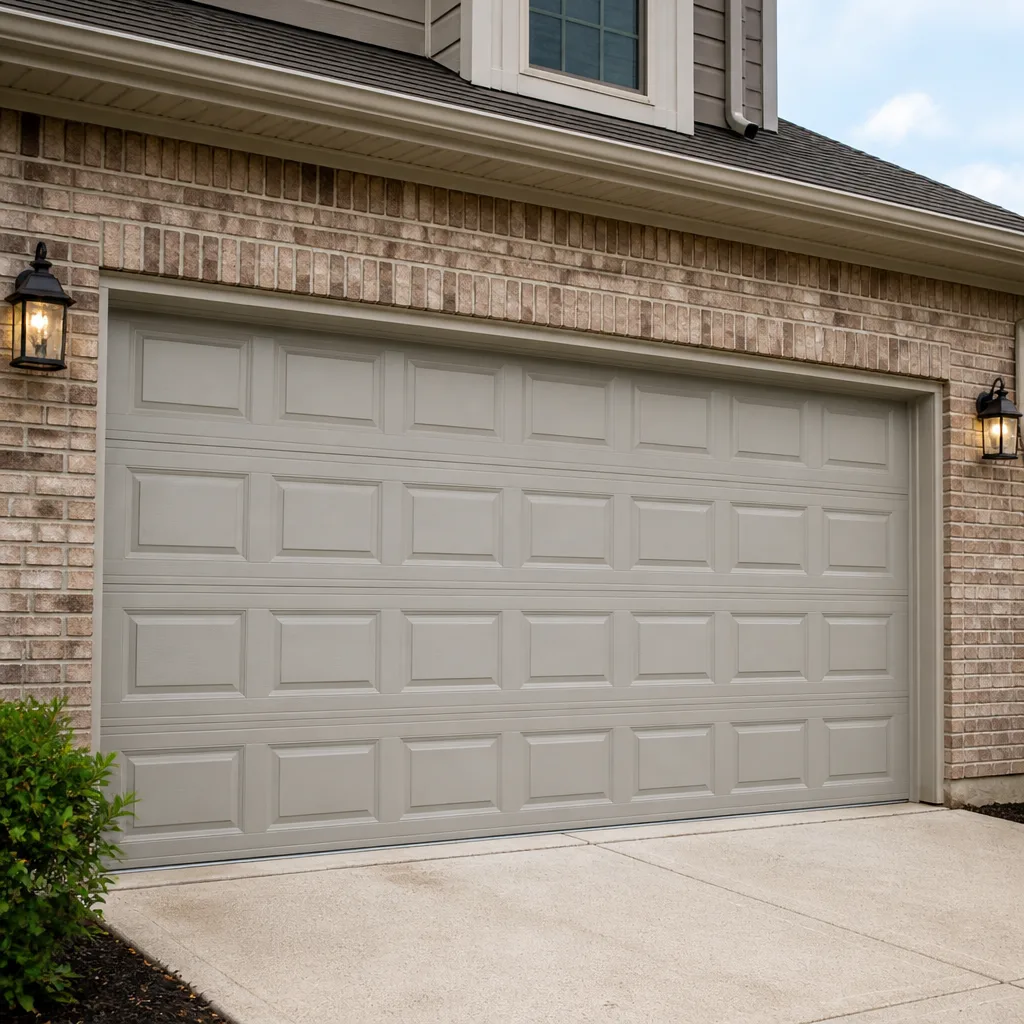 Raised-panel steel
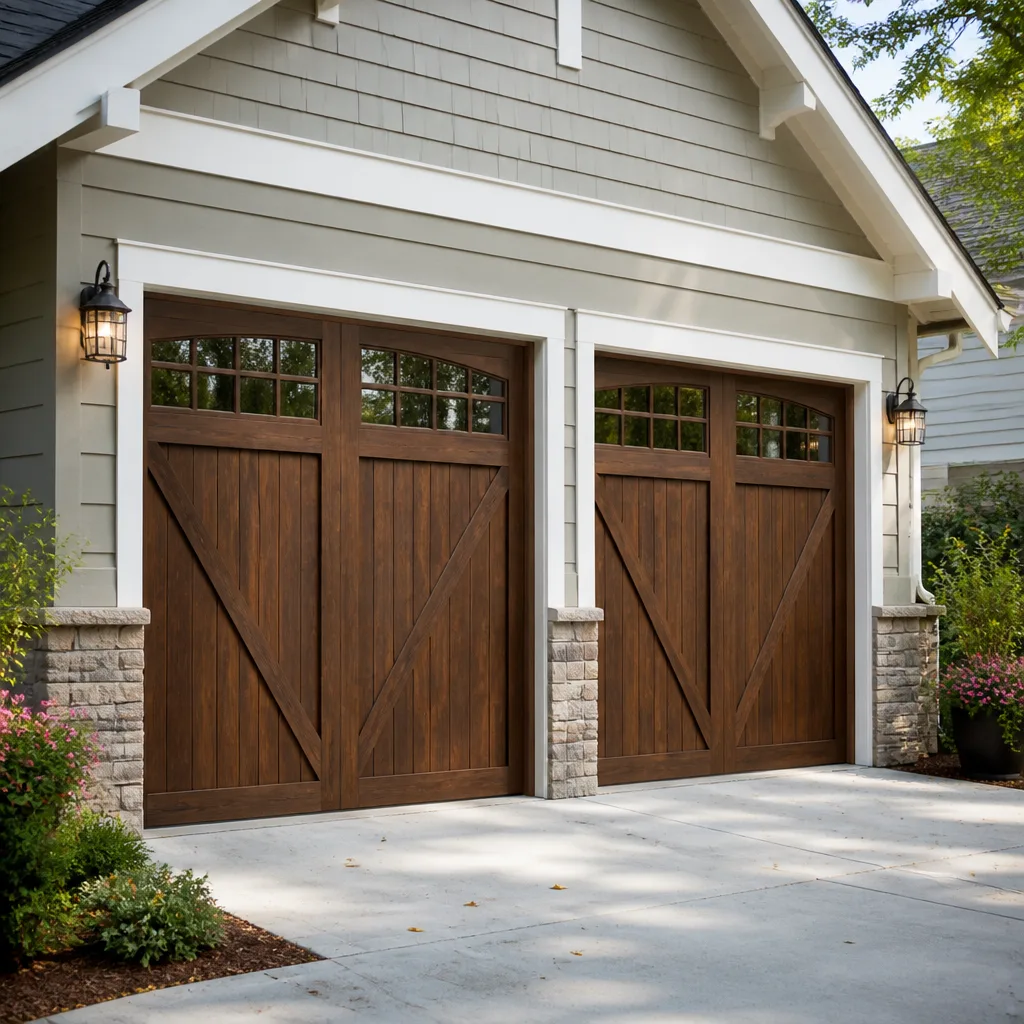 Carriage house
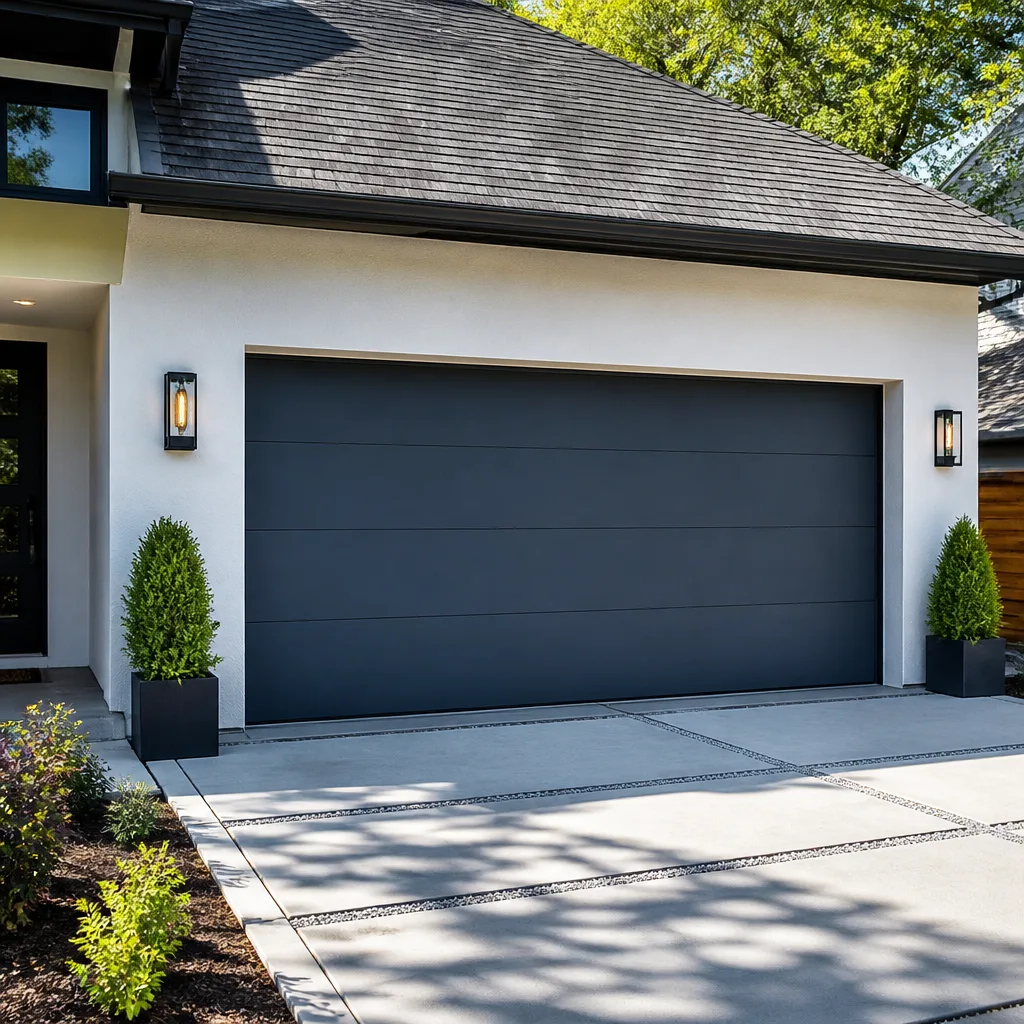 Modern flush
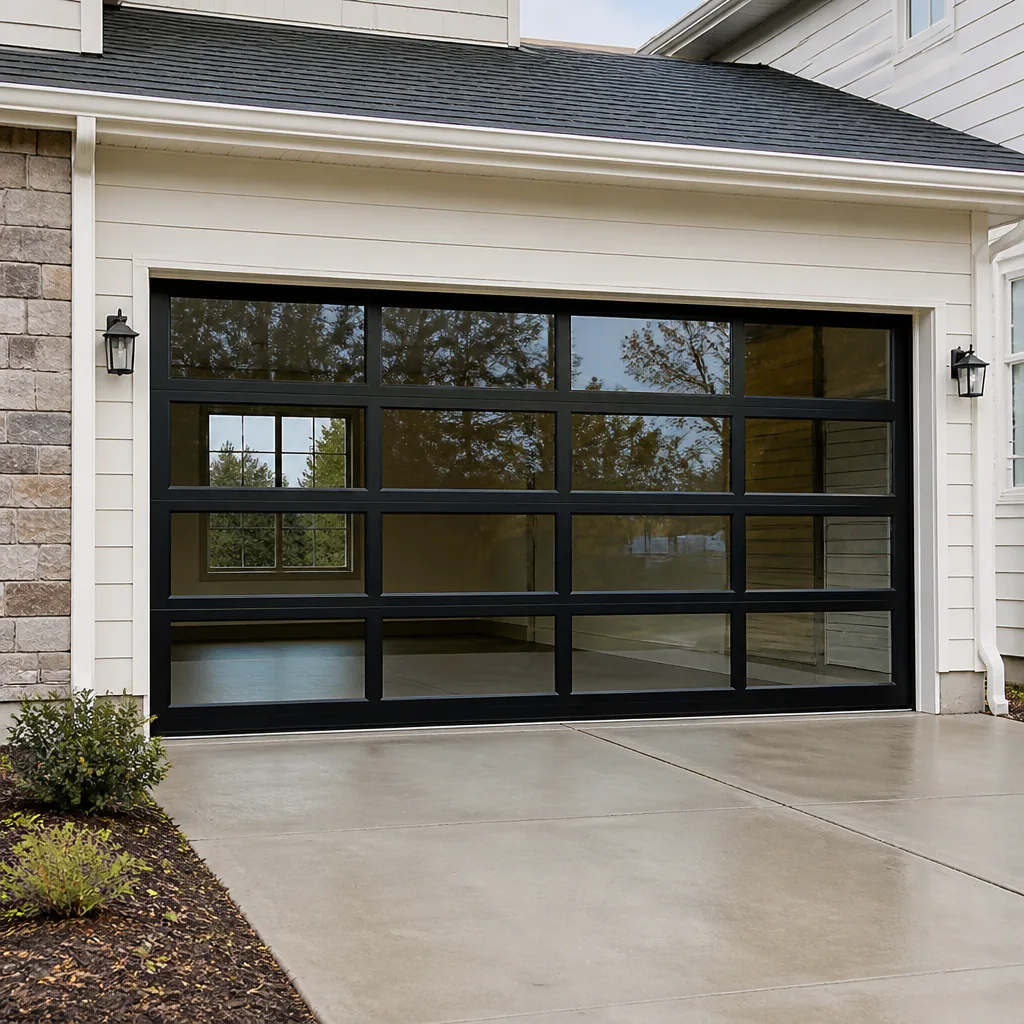 Full-view glass
 LiftMaster openers
 Chamberlain openers
Full 25-point door and opener safety check with every visit - springs, cables, rollers, tracks, and your LiftMaster or Chamberlain opener included
You get a price before we start. It does not change when the pro arrives.
Get your free estimateChoosing the Right Garage Door Brand: A Buyer’s Guide for Far Rockaway
Two doors from the same manufacturer can differ by a decade of service life, and the brand name on the carton tells you almost nothing about which one you’re getting. What separates them is the steel gauge, the galvanization method, the coating system, the bottom seal spec, and whether the door was engineered for wind load or just marketed as “weather resistant.” Homeowners in Far Rockaway shop by logo because logos are easy to compare. Spec sheets are harder, and that’s exactly why they matter. This guide walks you through what actually holds up in Far Rockaway’s climate and wind zone, which product lines within each major brand are built for it, and the four numbers that let you cross-shop like a contractor.
Quick Answer
The right garage door brand for a Far Rockaway home is the one whose specific product line meets three things: a steel gauge of 24 or thicker (25 or 27 for wind-rated doors), hot-dip galvanization with a factory finish warranty you can read, and a wind load rating that satisfies NYC Building Code for your address. Brand reputation is secondary. Clopay, Wayne Dalton, Amarr, and Raynor all make both entry-level doors and genuinely durable coastal-grade lines, and the price difference between those two tiers is far smaller than the lifespan difference. Pick the product line first, then the brand.
Styles & brands we work with
- Raised-panel steel
- Carriage house
- Modern flush
- Full-view glass
- LiftMaster openers
- Chamberlain openers
Table of Contents
- Why the Brand Name Matters Less Than You Think
- The Four Spec Numbers That Tell You Everything
- Brand-by-Brand: Where Each Line Actually Stands
- Which Product Lines Are Built for Humidity and Wind
- Wind Load Ratings and NYC Building Code in Far Rockaway
- The Service Network Factor Nobody Checks
- How to Cross-Shop Brands with Spec Sheets
- Opener Brands: LiftMaster, Chamberlain, and Genie
Why the Brand Name Matters Less Than You Think
A garage door is a system of panels, hinges, rollers, tracks, springs, and an opener. The manufacturer whose name goes on the front panel typically makes the steel sections and stamps the hardware. Spring steel, bearings, and opener electronics often come from separate suppliers entirely. That means “Clopay versus Amarr” is a shorter conversation than most sales presentations suggest. The meaningful comparison is “Clopay’s entry line versus Clopay’s premium line,” and the same holds true for every brand on this list.
Here in Far Rockaway, the difference shows up faster than in most markets. The Rockaway peninsula sits on a narrow strip between Jamaica Bay and the Atlantic, and the humidity here doesn’t take a season off. Summers run humid, winters cycle through freeze and thaw, and wind comes at these doors from angles that inland Queens homes never see. A door built to a price point will start showing it: paint blistering along the bottom section, hinges rusting at the knuckle, a bottom seal hardening and curling inside two or three years. A door built to a spec will sit there quietly for much longer.
This isn’t an argument against buying a known brand. It’s an argument for buying the right line from that brand. The logo on the door doesn’t keep the weather out. The gauge, the coating, and the seal do. When we quote a Far Rockaway installation, the conversation starts with those three things, not with a manufacturer catalog.
For a broader look at what a full replacement involves locally, our garage door installation page walks through the process from measure to final adjustment.
The Four Spec Numbers That Tell You Everything
You can evaluate any garage door, from any brand, anywhere, using four numbers. Ask for them in writing. A sales rep who can produce them quickly is selling you a real product. A rep who deflects to color options and panel styles is hoping you won’t ask.
- Steel gauge. Lower numbers mean thicker steel. Entry-level doors commonly use 27 or 28 gauge for the front skin. Wind-rated and premium doors move to 25 or 24 gauge, sometimes with a heavier back skin. In a humid climate with real wind exposure, 25 gauge is a sensible floor for the front panel. Anything thinner will flex, dent, and fatigue sooner.
- Galvanization spec. Ask whether the steel is hot-dip galvanized and at what coating weight. Hot-dip galvanization puts a zinc layer on the steel to resist rust from the inside out. Painted-only steel with no galvanized substrate is the single most common reason a door starts rusting from cut edges and the bottom rail inward.
- Finish warranty. Not the overall warranty, the finish warranty specifically. Look at what it excludes and how long it runs on the paint or powder coat. A meaningful finish warranty covers blistering, cracking, and peeling of the factory finish, which is a different failure than a dent.
- Wind load rating. This comes as a design pressure figure, and it must meet or exceed what NYC Building Code requires for your address. More on that below, because this is where Far Rockaway buyers get caught.
There’s a fifth item worth asking about even though it isn’t a number on a spec sheet: the bottom seal. A door’s bottom seal is the first thing to degrade in humid conditions. A quality door comes with a replaceable vinyl or rubber astragal seal, not a glued-on foam strip. Ask whether the seal is a stocked replacement part. If it isn’t, every future seal change becomes a scavenger hunt.
Brand-by-Brand: Where Each Line Actually Stands
These four manufacturers cover most of the doors you’ll see on Far Rockaway homes. Each makes a range from builder-grade to genuinely durable, and the tiers within a brand differ more than the brands differ from each other. Here’s how they stack up on the specs that matter here.
- Clopay. Broad lineup from entry-level steel to insulated premium lines. Their mid and upper tiers use 24 to 25 gauge steel with hot-dip galvanized substrate and a factory finish system that holds up well in humid conditions. Entry-level Clopay doors are thinner and rely more on paint than galvanization, so the line you pick within Clopay matters a lot.
- Wayne Dalton. Strong in insulated steel and carriage-house styles. Their better lines use galvanized steel with a baked-on finish and a bottom seal that’s easy to source as a replacement part. Builder-grade Wayne Dalton doors are common on Far Rockaway homes and often show bottom-rail rust after several humid seasons, which is a line issue, not a brand issue.
- Amarr. Solid mid-market reputation with good galvanization across more of their lineup than some competitors. Their steel gauge and finish tiers are straightforward to compare once you have the spec sheet in hand. Wind-rated options exist but aren’t the default on every model.
- Raynor. Leans commercial and heavy-duty residential. Thicker steel, better hardware, and more consistent galvanization. If you want a door that will outlast the house’s next paint job, Raynor’s upper lines are worth the premium. They’re less common on this peninsula, which makes the service network question more important.
You’ll notice what’s missing from this list: a winner. There isn’t one. A mid-tier Amarr and a mid-tier Clopay are close enough on the relevant specs that color, panel profile, and the local service picture should decide it. The brand competition happens at the entry level, where a couple of gauge steps and a different galvanization spec separate a door that lasts from one that doesn’t.
We work with all of these brands, along with LiftMaster, Chamberlain, Genie, Craftsman, and Wayne Dalton on the opener side. Being brand-agnostic is the only honest position for a company that repairs as much as it installs. We don’t earn anything from steering you toward one manufacturer, so the recommendation you get is based on your door opening, your wind exposure, and your budget.
Which Product Lines Are Built for Humidity and Wind
“Weather resistant” is a marketing phrase, not a specification. Every major brand uses some variation of it. What you need is the product line that was engineered with thicker steel, better galvanization, and a wind-rated option. That information lives in the technical data sheets, not the showroom brochure.
Ask these questions when you’re comparing lines within a brand:
- Is the front steel 25 gauge or heavier? If the spec sheet doesn’t say, the door is probably 27 gauge or thinner.
- Is the steel hot-dip galvanized, and at what coating weight? A galvanized substrate resists rust at cut edges and the bottom rail, which is where Far Rockaway doors fail first.
- What’s the finish warranty, and does it cover blistering and peeling? A paint warranty that only covers adhesion failure for a short term is telling you something.
- Is there a wind-rated version of this exact model? Some lines offer it as an upgrade; some lines don’t offer it at all. If it isn’t available, that line was never engineered for wind exposure.
- Are replacement bottom seals and hinges stocked parts? Humid air degrades seals and hinges on every door eventually. The question is whether you can get replacements without a special order.
In our experience across Far Rockaway, the doors that hold up best are insulated steel with a 24 to 25 gauge front skin, hot-dip galvanized, a powder-coat or baked-enamel finish, and a wind-rated version available for the same model. That combination exists in more than one brand. It’s just not the door at the bottom of any brand’s price list.
If your existing door is showing its age, our garage door repair team can tell you whether it’s worth repairing or replacing. Sometimes a five-year-old door needs $200 in seals and hinges. Sometimes a twenty-year-old door is past the point of good money after bad.
Wind Load Ratings and NYC Building Code in Far Rockaway
Wind load is the spec Far Rockaway buyers overlook most often, and it’s the one with the most direct consequences. NYC Building Code requires garage doors in this region to be rated for specific design wind pressures, and a door that doesn’t meet that requirement can fail under load: panels bowing, tracks bending, the door coming out of its roller track. This isn’t a hypothetical. It’s the reason some installations from decades ago have to be reinforced before a new door goes in.
What you need to know:
- The requirement is based on your address and exposure. The design wind pressure a door must meet depends on factors including location and the exposure category of the building. Far Rockaway’s exposure to the open Atlantic and Jamaica Bay makes this a real consideration, not a formality. The place to confirm the number for your address is the city’s building department, and you should always ask before ordering.
- Some doors are wind-rated out of the box; others need upgrades. A manufacturer may sell a base model with a wind-rated option and a premium model with wind-rated engineering built in. The difference shows up in steel gauge, reinforcement plates at the hinges, and the hardware package. A door that needs a wind upgrade you didn’t order may not meet the requirement.
- Wind rating isn’t the same as impact rating. Impact glazing and impact certification are separate considerations from wind load. If a door has windows, ask specifically about wind-rated glazing, not just wind-rated panels.
- Reinforcement matters on older installations. An existing opening built for a lighter door may need anchor and bracket upgrades before a heavier, wind-rated door goes in. The installer should account for this in the measure, not discover it during installation.
The practical move: get your address’s design pressure from the city’s building department, then ask each manufacturer’s spec sheet whether that model meets it. If the answer isn’t clearly yes, the model is the wrong choice, no matter whose logo is on it.
The Service Network Factor Nobody Checks
A great door from a brand with no local service support is a liability in Far Rockaway. Here’s the scenario: a heavy premium door with a proprietary hinge and roller design, ordered from a manufacturer whose nearest stocking dealer is somewhere you can’t imagine driving to, fails in the middle of a humid summer. The door is fine. The parts aren’t in the borough. Now you’re waiting on a special order for a hinge, and your garage is dead in the meantime.
What to check before you buy:
- Is this brand’s hardware available as a stocked part locally? Hinges, rollers, bottom seals, and lock bars are the parts that fail first. Ask your installer whether those parts for this specific model are something you can get replaced quickly.
- Does the brand have a service network that covers Queens? A manufacturer with local service coverage is worth more than a mid-tier feature. Ask whoever is installing the door.
- Are the springs on this door a standard size? Garage door springs are sized by wire gauge and length, not by brand. A reputable installer can source a matching pair for any door. But if the door uses an uncommon proprietary torsion assembly, that changes.
- Can the opener link to this door’s safety hardware? If you’re keeping a LiftMaster or Chamberlain opener, confirm compatibility with the new door’s safety sensors and hardware before ordering.
We service doors from Clopay, Wayne Dalton, Amarr, and Raynor, along with the opener side from LiftMaster, Chamberlain, Genie, and Craftsman. That means the brand you choose is unlikely to leave you without service in Far Rockaway. But it’s a question worth asking of any installer before you sign, because it’s the one that bites years later.
Springs deserve a note here. Garage door springs are high-tension, wound steel under continuous load, and replacing them is one of the most dangerous jobs in the trade. A spring that releases under load can cause serious injury. We handle spring repair as its own specialized service because it needs the right winding bars, the right technique, and no improvisation. If your door has a broken spring, don’t attempt it yourself, and don’t hand it to a general handyman who doesn’t do springs as a matter of routine. See our page on Far Rockaway Garage Door Repair for how we approach the mechanical side of the system.
How to Cross-Shop Brands with Spec Sheets
You can compare any two garage doors, from any two brands, in under an hour. The trick is to ask each manufacturer’s rep for the same four numbers and put them in the same row. Sales presentations are designed to make the comparison hard. Spec sheets make it easy.
Here’s the sequence we recommend:
- Request the technical data sheet, not the brochure. Say you need the model’s steel gauge, galvanization spec, finish warranty, and wind load rating in writing. Any manufacturer can produce this. The brochure is a different document and won’t have it.
- Build a comparison table with four rows. One row per spec. Both doors. If a number is blank, that’s data too: a missing gauge spec is usually a thin one that the manufacturer would rather not lead with.
- Get the design pressure for your address first. Confirm it with the city’s building department before you compare wind ratings. A wind rating is meaningless without the number it has to meet.
- Check the finish warranty’s exclusions. A long warranty that excludes blistering and peeling is shorter than it looks. Read what’s excluded before you compare what’s covered.
- Ask about the bottom seal and hinge parts. Confirm they’re stocked replacement items and what they cost individually. That’s the future maintenance picture, and it’s worth comparing.
- Get a written installation quote that includes any reinforcement. The door price is one number. The installation, including any anchor or track work required by the door’s weight and wind rating, is the other. Compare both totals, not just the doors.
Once you’ve done this two or three times, the field narrows fast. You may find that one brand’s entry line and another brand’s mid line are nearly identical on price and specs, which means the decision should come down to color, panel profile, and who you trust to install it properly.
Opener Brands: LiftMaster, Chamberlain, and Genie
The door and the opener are separate purchases, and most Far Rockaway buyers end up picking them from different brands. That’s fine. What matters is that the opener matches the door’s weight, the cycle count your household puts on it, and the safety features the door requires.
A few things to know before you choose:
- LiftMaster and Chamberlain. These two share a common parent and a lot of the same underlying electronics, so the difference between them is mostly feature tiers and where you buy. LiftMaster is typically the builder and installer channel, Chamberlain the retail channel. Both use the same safety sensor logic and are usually compatible with the same accessories. If you’ve had good service from a LiftMaster opener, a Chamberlain of the same tier will look familiar.
- Genie. A genuinely separate ecosystem. Genie openers and their accessories are not interchangeable with LiftMaster or Chamberlain, so a replacement opener means replacing the remotes and wall control too. That’s worth building into the budget.
- Belt drive versus chain drive. Belt drive is quieter, which matters if a bedroom is near the garage. Chain drive is heavier-duty and typically what you want for a tall or heavy door. Neither is “better” in the abstract.
- Horsepower. Match the opener to the door, not to a number that sounds impressive. A heavy insulated door over a certain height needs a stronger opener than a single-car door. The installer should size it, not guess it.
If your existing opener is failing, that’s a different conversation than a new installation. Motors, gears, logic boards, and sensors are all serviceable on major brands, and a good technician can tell you whether the opener is worth repairing. Our garage door opener repair service covers LiftMaster, Chamberlain, Genie, and Craftsman units, and includes the safety sensor alignment that most opener problems trace back to.
Common Mistakes to Avoid
- Buying by brand name alone. The brand tells you almost nothing about the specific product line’s gauge and galvanization. Ask for the four spec numbers on the exact model, not the family name.
- Skipping the wind load requirement. A door that doesn’t meet NYC Building Code for your address is a problem waiting for a windy day. Confirm the design pressure with the city’s building department and match it on the spec sheet.
- Ignoring the finish warranty exclusions. A finish warranty that excludes blistering and peeling isn’t protecting you from the most likely failure in a humid climate. Read the exclusions before comparing warranties.
- Assuming “weather resistant” means something specific. It doesn’t. It’s a marketing label. The spec sheet is where the actual weather performance lives, and it’s the document you should be comparing.
- Forgetting the service network. A premium door from a brand with no local parts support can leave you waiting on a special order for a hinge while the garage sits dead. Ask your installer which models have stocked replacement parts.
- Repairing a door that’s past its economic life. A door at end-of-life gets expensive fast. If the panels are rusting at the seams, the bottom rail is failing, and the springs are the originals, a replacement is often more sensible than a second or third round of repairs.
- Letting a general handyman touch the springs. Springs are high-tension steel under continuous load, and a spring failure can cause serious injury. Use a technician trained on spring work, not a generalist.
See the difference
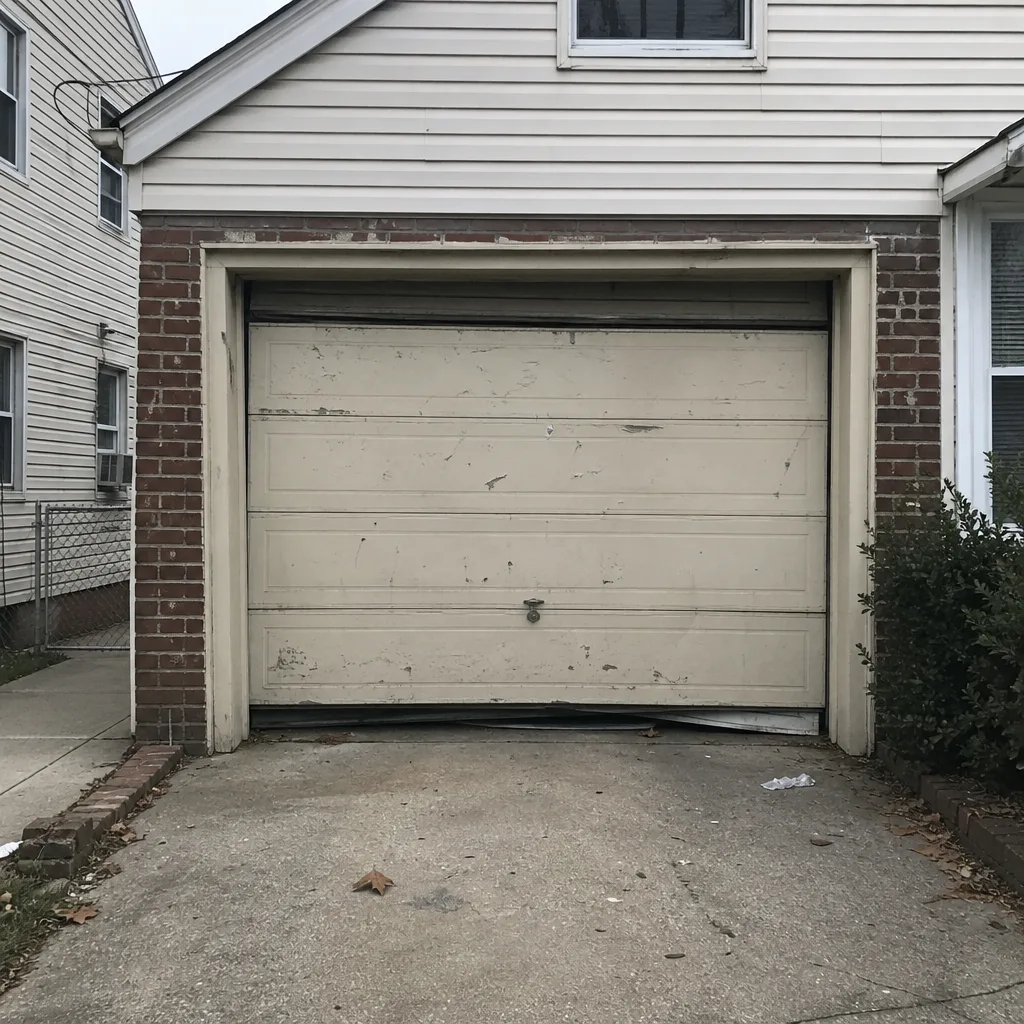 Before
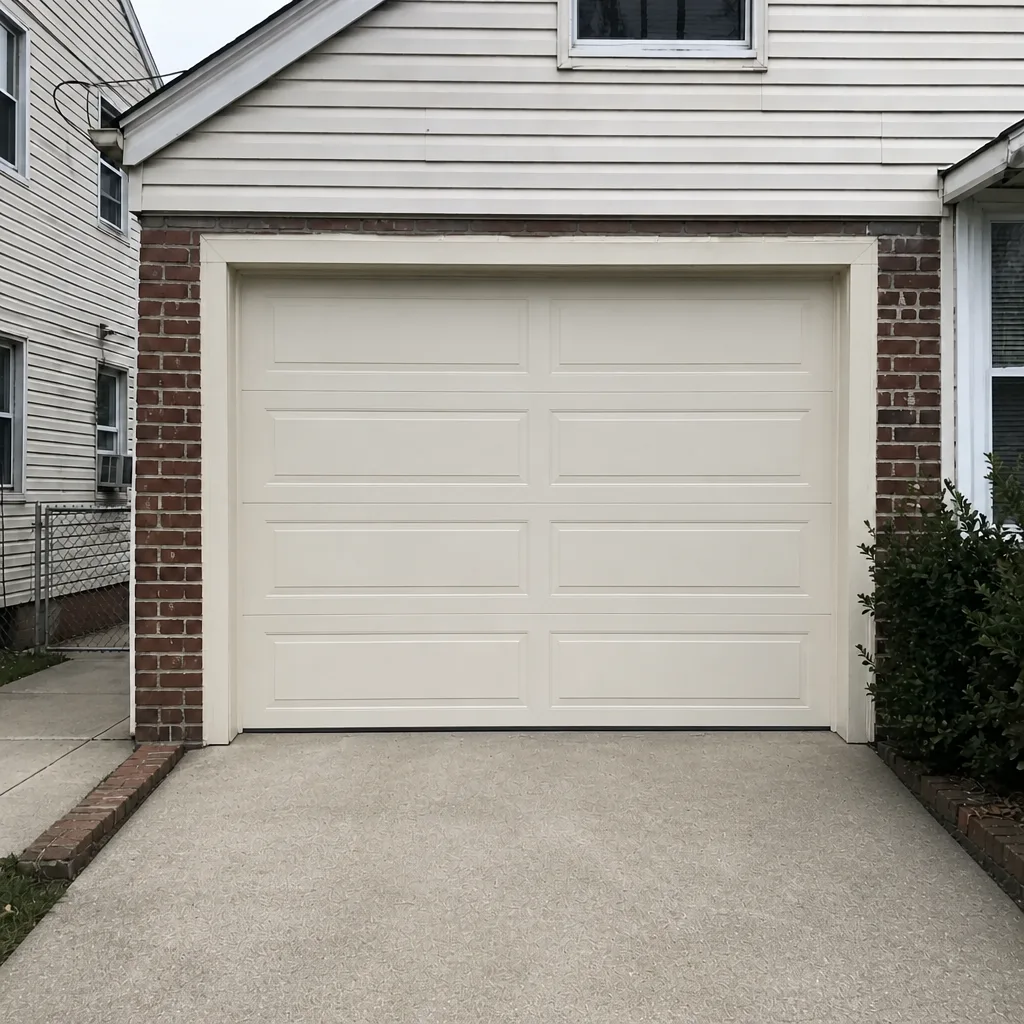 After
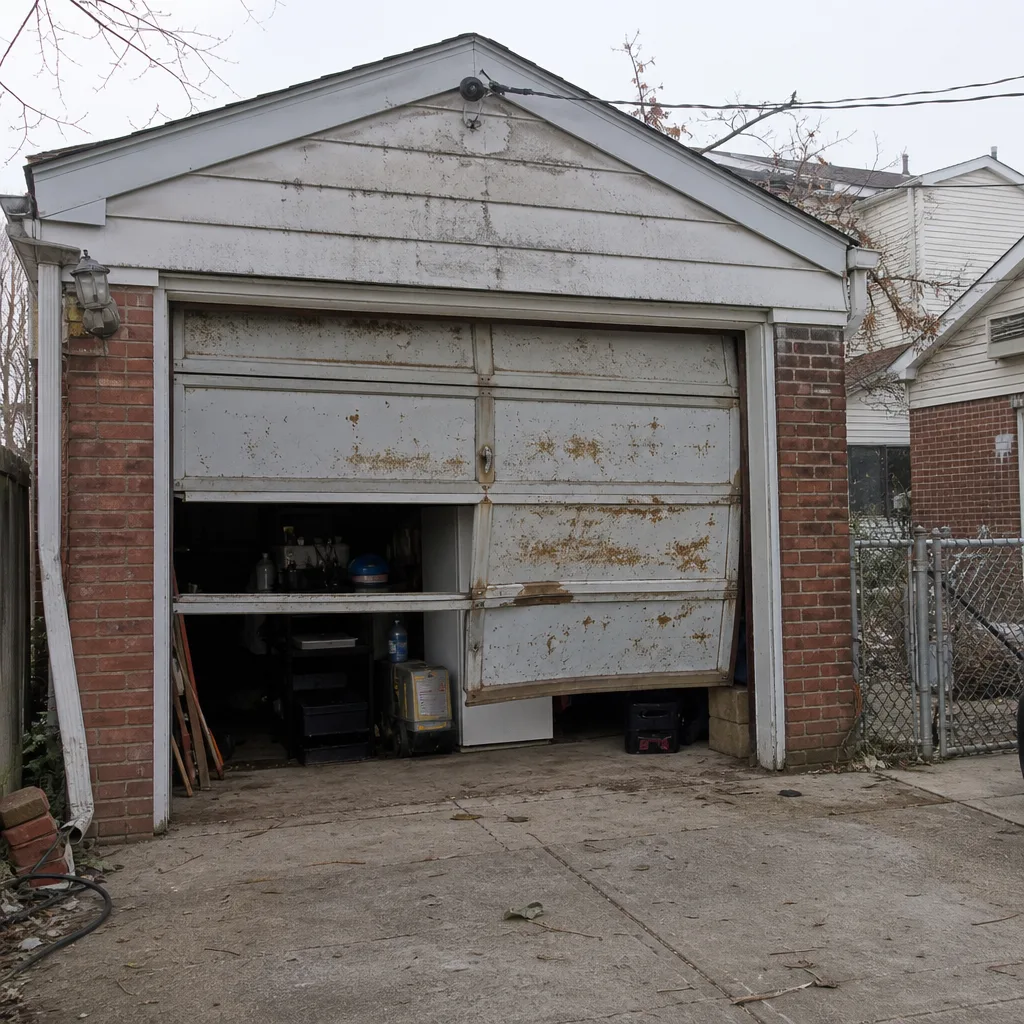 Before
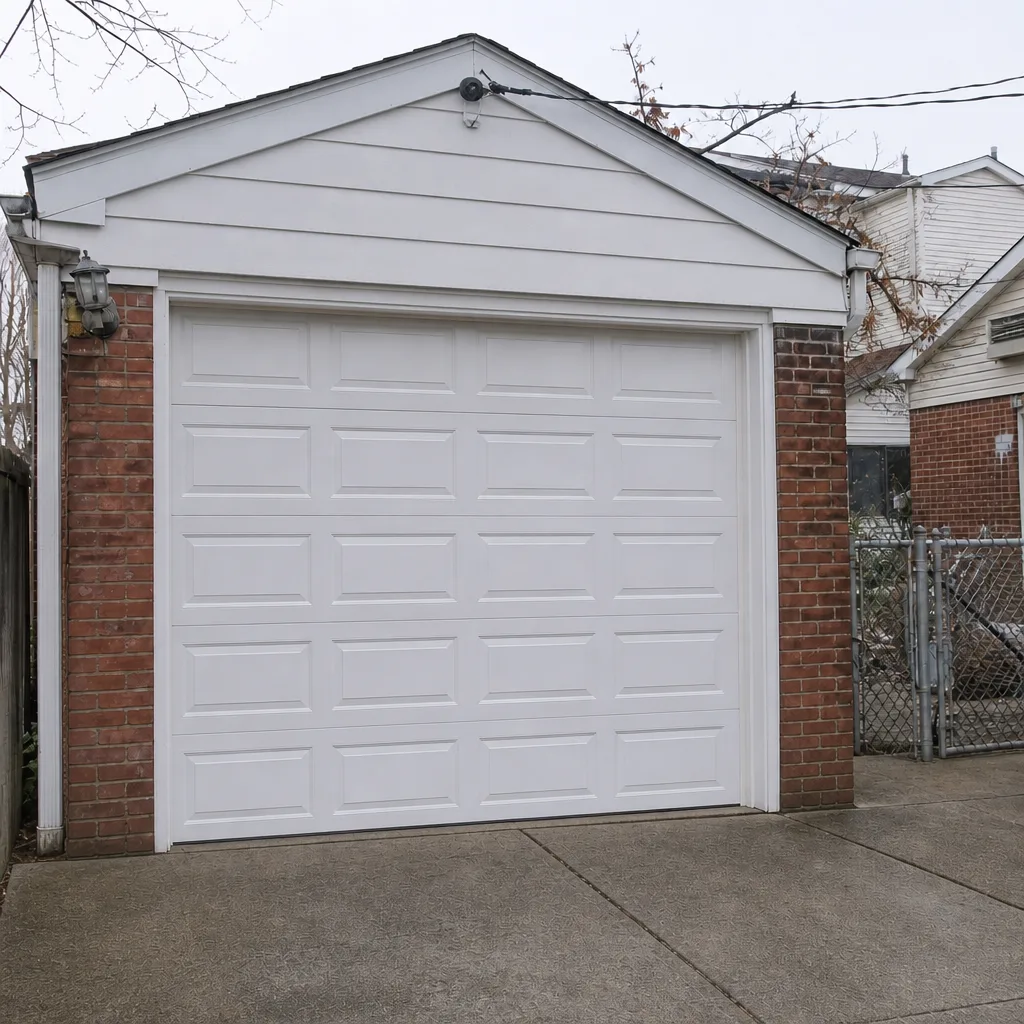 After
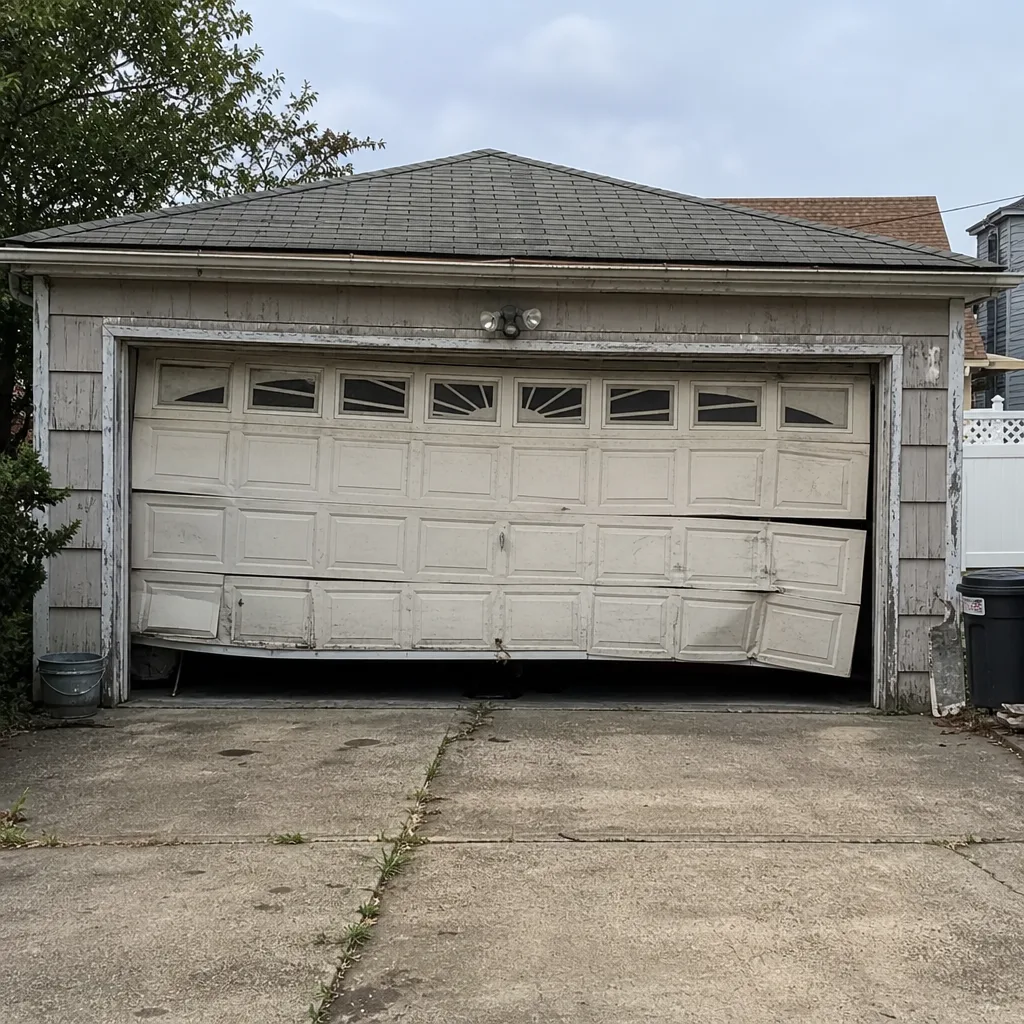 Before
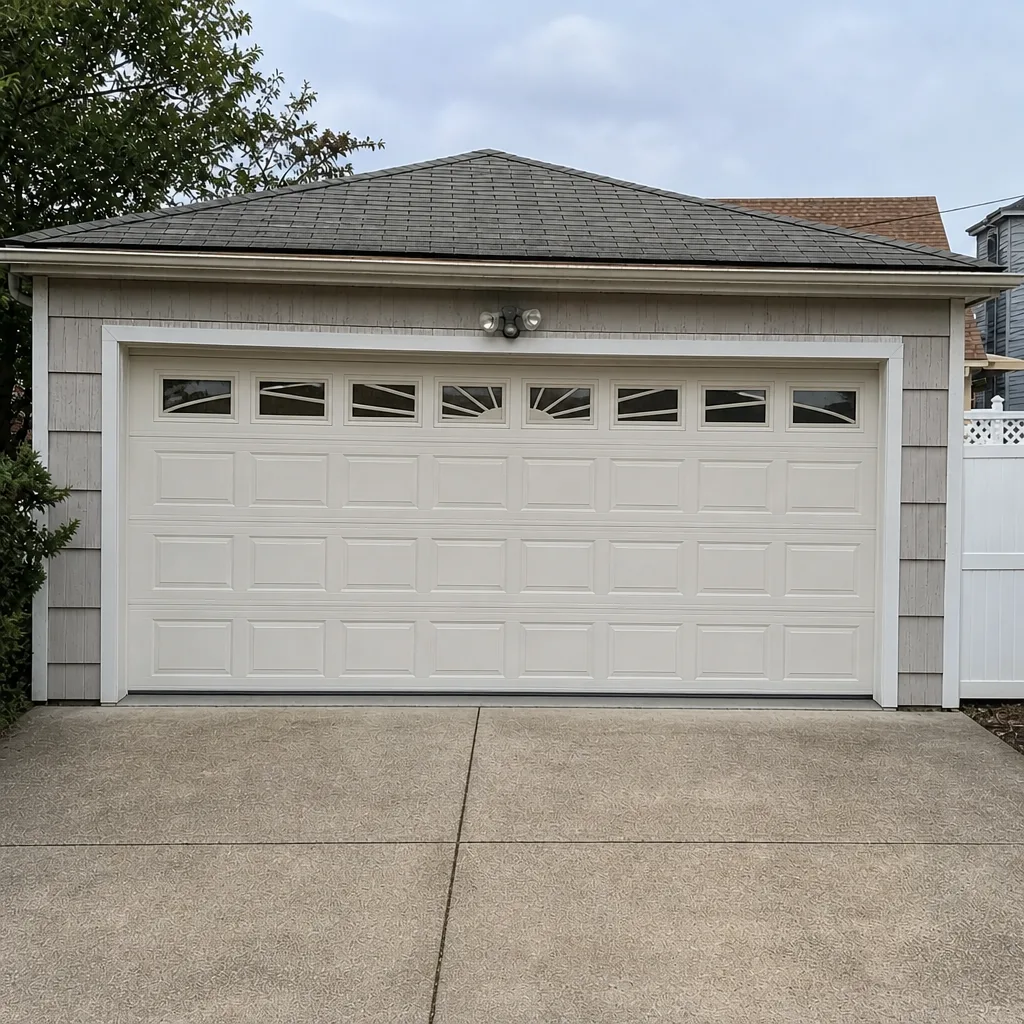 After
When to Call a Professional
Some garage door problems are genuinely worth a phone call. A broken spring, a door that won’t close and leaves the garage unsecured, an opener that reverses for no reason, a door that’s come off its track, or a cable that’s snapped all warrant professional service. Springs and cables are the dangerous ones. Don’t attempt them yourself. A door that won’t secure is a security problem that can’t wait for a weekend project.
For installations and replacements, call when you’re ready to measure. The measure needs to account for wind load requirements, opening dimensions, and any reinforcement the new door’s weight will require. A free measure and a written estimate give you the number before anything is ordered.
Far Rockaway Garage Door Repair offers free estimates in Far Rockaway. Call (877) 492-1997. We answer 24/7. Fast dispatch from 7am to 7pm, Sunday through Friday, closed Saturday. Our technicians have up to 11 years of experience, and the local pro we connect you with is licensed and insured as the state requires. The price is quoted and agreed before any work starts.
Frequently Asked Questions
There’s no single best brand. The best choice for a Far Rockaway home is the product line within a brand that has 24 to 25 gauge steel, hot-dip galvanization, a meaningful finish warranty, and a wind-rated version. Clopay, Wayne Dalton, Amarr, and Raynor all offer lines that meet those criteria at different price points. Pick the line first, then the brand. Call (877) 492-1997 for a free estimate that compares the options for your opening.
Yes, garage doors in this region must meet design wind-pressure requirements under NYC Building Code, and the specific number depends on your address and the building’s exposure. The city’s building department is the source for the number that applies to your home. Ask before ordering, and confirm the model you choose meets it. A door that doesn’t meet the requirement can fail under load. Call (877) 492-1997 if you want help confirming the spec on a specific model.
A single-car steel door typically runs in the range of a few hundred to roughly a thousand dollars for the door itself, and a double-car or insulated premium door runs higher, with installation and any required reinforcement on top. The exact price depends on the model, wind rating, and whether the opening needs work. We quote per job and provide a written estimate before any work starts. Call (877) 492-1997 for a free measure and quote.
We service LiftMaster, Chamberlain, Genie, and Craftsman openers, along with the door systems from LiftMaster, Chamberlain, Genie, Clopay, Amarr, Wayne Dalton, Craftsman, and Raynor. If your opener is failing, a repair is often cheaper than a replacement. Call (877) 492-1997 and we’ll tell you which makes more sense for your unit.
Ask for the technical data sheet and check three things: steel gauge of 24 or 25, hot-dip galvanized substrate, and a finish warranty that explicitly covers blistering and peeling. A door with thin painted steel and a finish warranty that excludes blistering isn’t built for a humid climate, whatever the brochure says. The spec sheet is the answer, not the marketing language. Call (877) 492-1997 with a model number and we’ll help you read the spec.
Often, yes. Spring repair is a service we handle as a dedicated job, not a sideline, and it’s one of the more urgent calls we get. Springs are high-tension steel under load, so don’t attempt the repair yourself. Call (877) 492-1997. We answer 24/7. Fast dispatch from 7am to 7pm, Sunday through Friday, closed Saturday. A call outside dispatch hours is booked into the next opening, Sunday through Friday, 7am to 7pm.
The Bottom Line
Brand names sell doors, but specs make them last. In Far Rockaway, the doors that hold up are the ones with 25 gauge or heavier steel, hot-dip galvanization, a finish warranty that covers blistering and peeling, and a wind load rating that meets NYC Building Code for the address. Every major brand sells a door that meets those criteria and one that doesn’t, so the line you pick matters more than the logo on the carton. Compare spec sheets, confirm your design pressure with the city’s building department, and get a written installation quote that accounts for reinforcement. The right door is a specific door, not a famous one.
Far Rockaway Garage Door Repair offers free estimates in Far Rockaway. Call (877) 492-1997 for a free estimate. We answer 24/7. Fast dispatch from 7am to 7pm, Sunday through Friday, closed Saturday. The price is quoted and agreed before any work starts.
Written by the team at Far Rockaway Garage Door Repair.