
Last updated November 21, 2026
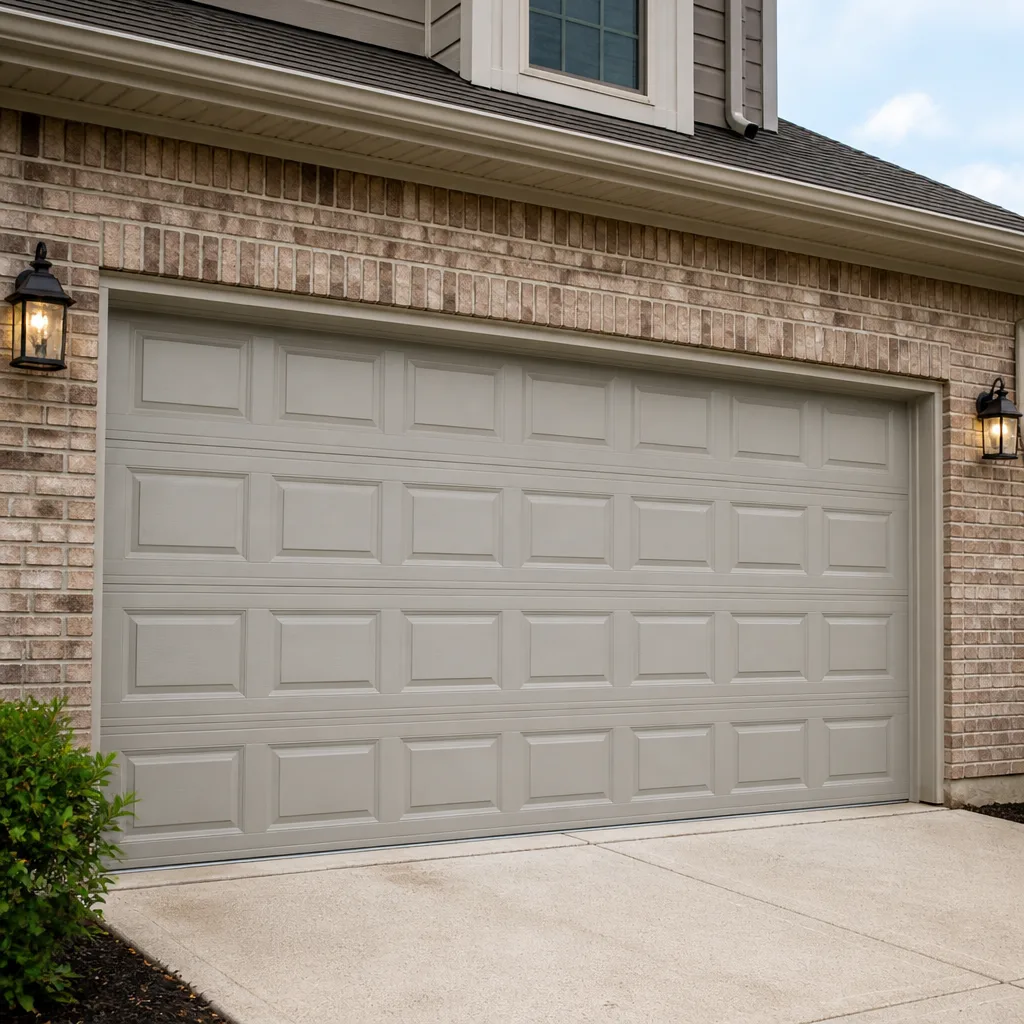 Raised-panel steel
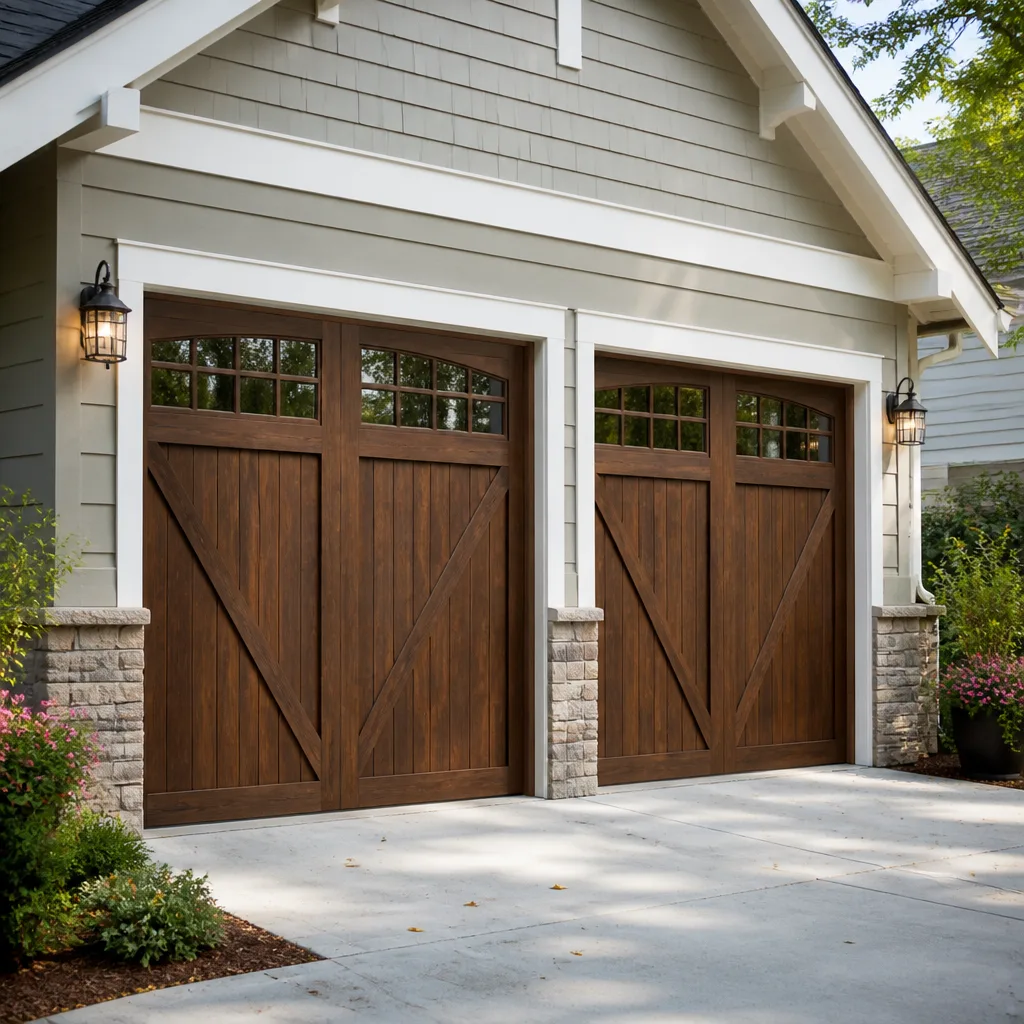 Carriage house
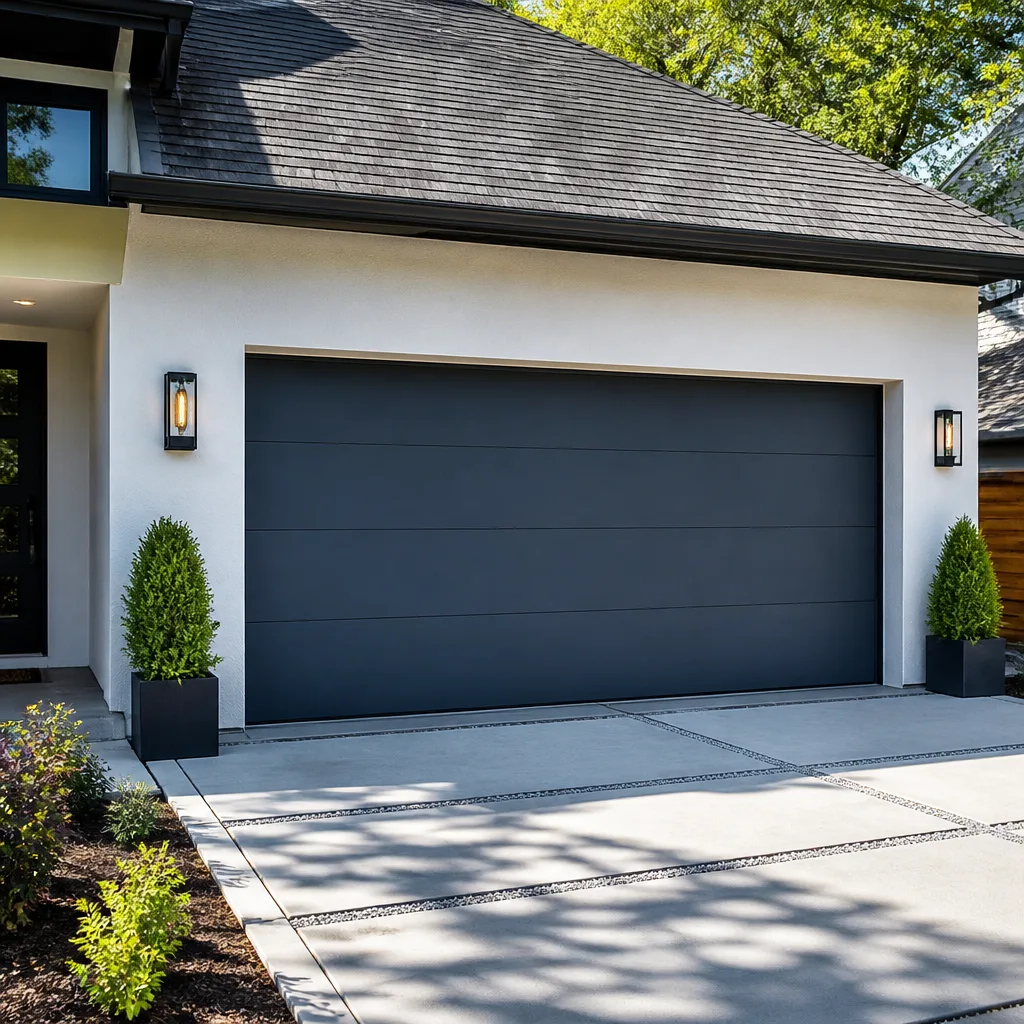 Modern flush
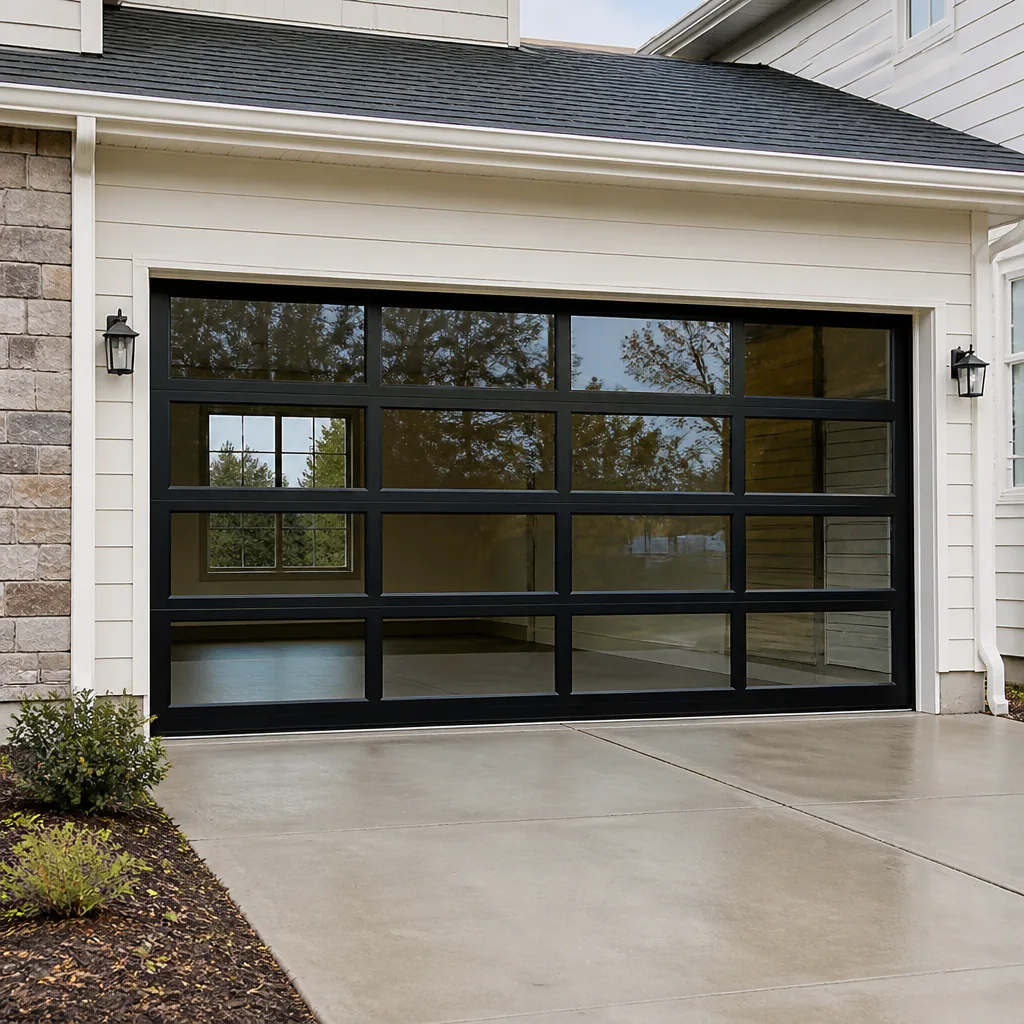 Full-view glass
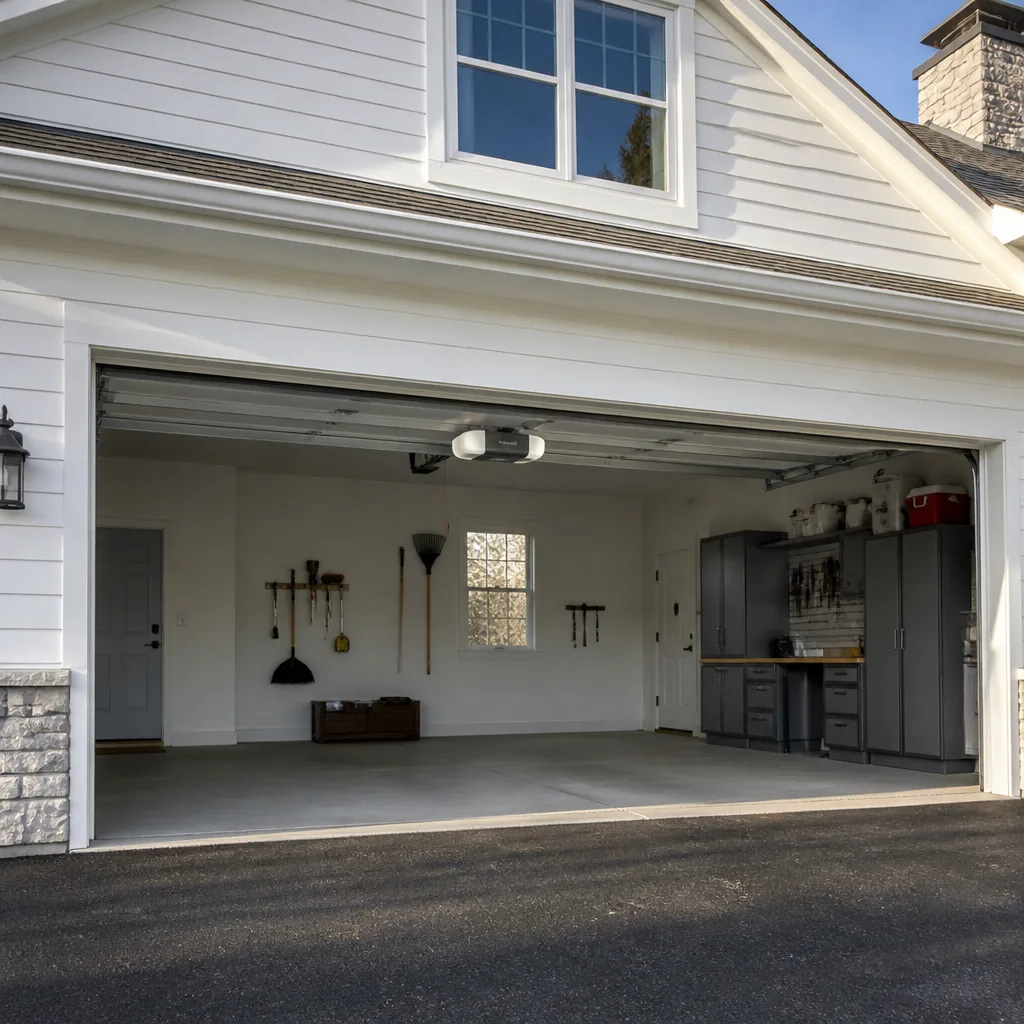 LiftMaster openers
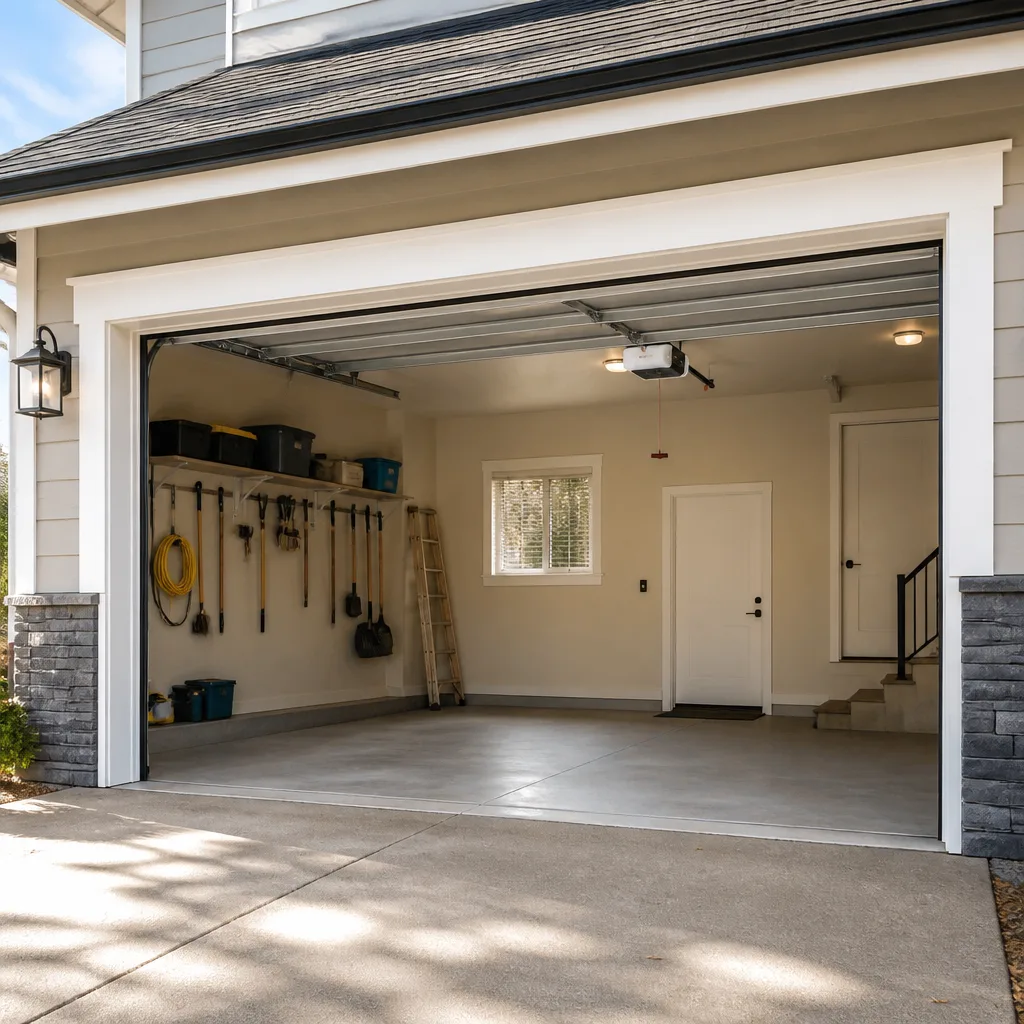 Chamberlain openers
Full 25-point door and opener safety check with every visit - springs, cables, rollers, tracks, and your LiftMaster or Chamberlain opener included
You get a price before we start. It does not change when the pro arrives.
Get your free estimateSeasonal Garage Door Care for Far Rockaway: Year-Round Homeowner’s Guide
Most homeowners treat a garage door like an appliance: install it, forget it, fix it when it breaks. That approach costs money here. Far Rockaway sits at the edge of the Rockaway peninsula, which means a door on Beach 116th Street faces wind loads and humidity that a door in Rego Park never sees. Cold snaps push torsion springs toward failure. Summer sun bakes wood and composite panels. Storm seasons test every seal and anchor. This guide assigns specific tasks to each season based on what actually fails and when, so you’re checking the right parts at the right time instead of guessing. You’ll learn which jobs you can safely do yourself and which ones belong to a technician.
Quick Answer
Seasonal garage door care in Far Rockaway means four checkpoints per year: a fall storm-readiness inspection before hurricane season peaks, a pre-winter cold-snap audit of springs, cables, and tracks, a spring hardware-and-corrosion review after the freeze, and a summer check of panels, seals, and opener electronics under sun and humidity. One non-negotiable task anchors each season. Everything else can slide.
Styles & brands we work with
- Raised-panel steel
- Carriage house
- Modern flush
- Full-view glass
- LiftMaster openers
- Chamberlain openers
Table of Contents
- Why Far Rockaway Doors Age Differently
- Fall: The Storm-Prep Protocol
- Winter: Why Springs Fail in January
- Spring: The Post-Winter Corrosion Audit
- Summer: Sun, Humidity, and Seal Performance
- The One Task Each Season You Can’t Skip
- Common Mistakes to Avoid
- When to Call a Professional
Why Far Rockaway Doors Age Differently
A garage door in Far Rockaway works harder than the same door fifty miles inland. The peninsula layout means wind comes off the water with very little to slow it down, and that wind carries moisture and airborne grit that work their way into hinges, rollers, and track channels. The housing stock adds its own pressure: many homes across Far Rockaway, from the blocks near Mott Avenue out toward Arverne and Edgemere, have attached garages that face the weather head-on with no buffer from a neighboring structure. Bungalows and older two-story homes often carry original or lightly updated doors, which means twenty-year-old hardware meeting modern weather cycles.
Temperature swings along the peninsula are the second factor. A day in the forties followed by a night in the teens is normal in January here, and that rapid contraction and expansion is what fatigue metal. Springs don’t fail because they’re old, they fail because they’ve cycled through thousands of tension changes, and a cold snap concentrates that stress into a few hours.
The third factor is the electronic side. Openers from LiftMaster, Chamberlain, Genie, and Craftsman live in unheated garages. Circuit boards and gear assemblies handle cold better than they handle heat and damp together, which is why opener problems in Far Rockaway cluster in humid summer stretches as often as they do in deep winter.
None of this means your door is doomed. A door checked four times a year handles all of it. A door ignored for three years starts costing real money. If something already feels wrong when you open it, our garage door repair page covers the diagnostics that come next.
Fall: The Storm-Prep Protocol
September and October are when Far Rockaway homeowners should treat the garage door as part of the building envelope, not just an entry point. When a major storm is forecast, that door is the largest opening on the structure, and a weak bottom seal or a loose track bracket turns it into the first failure point. Start this work in early fall, before anything is on the radar.
- Inspect the bottom seal. Run a hand along the rubber where it meets the floor. Any gap wider than a pencil, any tearing, any section that has gone stiff and lost its flex, and it needs replacement. A seal that lifts in wind lets water and pressure under the door.
- Check the vertical track brackets. These hold the track to the jamb, and they’re what keep the door in its channel under lateral load. Loose brackets should be tightened, and any bracket pulling out of wood needs attention before storm season.
- Test the reverse mechanism. Place a roll of paper towels flat under the door and close it. The door should reverse on contact. This safety feature matters every day of the year, and the test takes under a minute.
- Look at the door panel anchors. On a sectional door, each panel connects to the hinge line. Wiggle the hinges gently. Any that rock or show rust trails at the fastener should be swapped.
- Clear the tracks and the floor line. Grit that accumulates over summer becomes a jam point when wind drives debris against the door.
When a Storm Is 48 Hours Out
At the 48-hour mark, stop doing maintenance and start doing preparation. Confirm the door closes fully and latches or locks. Move anything stored against the door away from it. If your opener has a manual release, know where the cord is and how it works, because after a power failure that’s your only way to operate the door. If the door currently won’t close all the way, or a panel is already bent, don’t ride it out. Far Rockaway Garage Door Repair handles emergency garage door service for exactly this situation, and a door that won’t secure before a storm is the time to use it.
Winter: Why Springs Fail in January
Torsion springs are under constant tension, and cold metal contracts. That contraction raises the stress on an already-loaded spring, and a spring that was carrying its full load comfortably in October can reach its limit at 20 degrees. This is why a door that worked all fall suddenly snaps one morning in January. The failure is rarely sudden in the sense of being unpredictable. It’s usually the last event in a chain that started months earlier.
The pre-cold-snap inspection is what breaks that chain, and October to early December is when to do it. You’re looking for the warning signs that a spring is near the end of its life.
- Uneven door travel. If the door lifts faster on one side or the gap at the top of the door is uneven, a spring is losing tension.
- Audible changes. A door that has developed a groan, a creak, or a popping sound during operation is telling you something.
- Visible gaps in the coils. A torsion spring should show a tight, even coil. Any separation in the coil means the spring has stretched and weakened.
- A door that won’t stay up on manual release. Test this with care. If the door drops when you let go at the halfway point, the spring is no longer balancing it.
- Opener strain. An opener that’s suddenly working harder, or that reverses partway up, is often compensating for a weakening spring.
One important point on safety: torsion springs and the cables attached to them store enough energy to cause serious injury. We do not recommend adjusting, unwinding, or replacing a spring yourself, and no written guide can replace the training and specific tools the job requires. If you suspect a spring problem, call us. Our technicians have up to 11 years of experience with spring repair, and we treat it as its own discipline, not a side job.
Winter Tasks That Can Wait
Once the cold sets in, limit yourself to light work. Lubricate hinges and rollers with a silicone-based product, keep the tracks clean, and test the safety reverse monthly. Save the deeper adjustments for spring. Forcing a stiff mechanism in freezing temperatures causes more damage than it prevents.
Spring: The Post-Winter Corrosion Audit
By March, a garage door in Far Rockaway has survived a winter of wet cycles, road grit, and temperature swings. The audit you do now is about finding what the winter took. Hardware is the first place to look. Hinge plates, roller stems, track fasteners, and the springs themselves all accumulate moisture over the season, and moisture left sitting on bare metal starts the pitting that turns into a seized hinge by summer.
Check these in order:
- Hinges. Open the door halfway and look at the hinge joints. Rust-colored staining around the pin means the hinge is on its way out. Seized hinges put lateral strain on the door panels.
- Rollers. Steel rollers can develop flat spots from sitting under load through cold months. Nylon rollers tolerate the cold better. Spin each roller by hand. Any that grind or wobble should be replaced.
- Track condition. Look for rust in the channel, and look for any spot where the track has been pushed out of alignment by a minor impact during winter. A track that’s out of true causes the door to bind.
- Cables. Look for fraying near the drum at the top of the door and near the bottom bracket. A single broken strand is the beginning of a cable failure, and a cable failure can drop a door.
- Weatherstripping. The perimeter seal around the door frame takes the worst of winter moisture. Any section that’s cracked or pulling away should be replaced while the weather is mild.
Spring is also the right time to check the opener’s mechanical condition. If you noticed a grinding sound, a jerky start, or a remote that’s working intermittently, that’s not a battery issue as often as people assume. Our garage door opener repair service handles the drive gear, logic board, and safety sensor side of the unit, and getting it looked at in spring is cheaper than getting it looked at when it stops entirely.
Summer: Sun, Humidity, and Seal Performance
Summer in Far Rockaway puts a different kind of stress on a door. The garage interior can get hot enough to affect both the door’s panels and the electronics bolted to the ceiling. On the door side, direct sun exposure is the main concern, and it hits hardest in the afternoon on west- and south-facing garages.
What Sun Does to Panels
Wood doors need the most attention. UV exposure breaks down the finish, and once the finish goes, the wood starts checking and splitting. If your wood door faces direct sun, inspect the finish each spring and refresh it before summer. Composite and steel doors handle UV better, but the paint or powder coat on any door will fade over time, and a faded top panel is a sign the coating is thinning. Doors from Amarr and Wayne Dalton typically hold their finish well, but no coating lasts forever. A quick wash with mild soap and a check for chalky or dull patches tells you when a repaint is due.
Humidity and the Seals
Summer humidity is the season’s bigger practical problem. The bottom seal can stick to the concrete floor in heat, and it can pull loose from the retainer. If the door sounds like it’s tearing free when you open it, that’s what’s happening. A silicone-based spray on the seal surface solves most of it. The perimeter seal around the frame can also soften in heat and lose its grip, so run a finger along it and check for gaps.
The Opener in Heat
If your opener is a LiftMaster or Chamberlain unit and it’s hesitating in the afternoon heat, the issue is often thermal. Control boards and motor capacitors can behave differently when the garage hits 100 degrees. Keep the area around the opener head clear so it can shed heat, and check the light bulb socket. A hot bulb close to the board adds to the problem.
The One Task Each Season You Can’t Skip
A four-season checklist with fifteen items per season is a list nobody follows. Here’s the honest version: one task per season, and if you only do that one, you’ve covered the majority of the risk.
- Fall: the storm-readiness seal and bracket check. Before storm season, confirm the bottom seal is intact and the vertical brackets are tight. This is the task that protects the structure.
- Winter: the pre-cold-snap spring inspection. If you see uneven travel, coil gaps, or hear new noises, get the spring looked at before January. A trained technician can measure the tension and tell you how much life the spring has left.
- Spring: the hardware corrosion pass. Hinges, rollers, cables. Replace what’s failing now, because the same hinge that’s stiff in April will seize in July.
- Summer: the seal and finish check. Confirm the seals are still doing their job and the panel finish hasn’t broken down.
The tasks that can slide, in order of how long they can wait: cosmetic repainting, track cleaning, opener remote battery replacement, and decorative hardware tightening. None of those are urgent, and none will cause a structural failure if they wait a month.
When the seasonal work is done and the door still bounces, drags, or won’t close evenly, that’s not a maintenance question anymore. See our Far Rockaway Garage Door Repair page for the full set of services, or call for a same-day look.
Common Mistakes to Avoid
- Spraying the tracks with oil. Track channels collect dust and grit in an area with as much wind-driven debris as Far Rockaway. A wet lubricant turns into a sticky paste that accelerates wear. Use a dry or silicone-based product, and apply it to hinges and rollers, not the track itself.
- Painting over rust instead of removing it. Rust on a hinge or bracket doesn’t stop where the paint goes. Sand it back, treat the metal, and replace the hardware if it’s far along. Painting over rust on a spring or cable hides a failure that’s already in progress.
- Adjusting springs by yourself. This is the mistake with the worst consequences. Torsion and extension springs store enormous energy, and there’s no safe way to adjust one without the correct winding bars and the training to use them. Leave spring work to a technician.
- Ignoring the safety reverse test. It’s the single most important safety feature on the door, and it takes under a minute to check. Test it monthly, and if it fails, don’t use the door until it’s fixed.
- Skipping the fall seal check. A bottom seal that looks fine in July can tear in the first fall wind. Check it while the weather is still calm, not the day before a storm.
- Assuming a brand-specific technician is required. In Far Rockaway, the door might be an Amarr and the opener a Craftsman, and that mix is normal. A technician familiar with both types will diagnose faster. Our technicians are factory-familiar with all eight major brands: LiftMaster, Chamberlain, Genie, Clopay, Amarr, Wayne Dalton, Craftsman, and Raynor.
- Waiting until the door fails to call. A door that lifts unevenly or sounds different is giving you a warning. Emergency response exists for genuine failures, but scheduling a repair while the door still works is easier on everyone.
When to Call a Professional
Some situations leave no room for a seasonal checklist. Call a technician when:
- A spring breaks or the door won’t hold its position on manual release
- A cable is frayed or has come off the drum
- The door won’t close all the way, won’t stay level, or one side drops
- The opener runs but the door doesn’t move, or the door reverses partway
- A track is bent or has pulled away from the wall
- The door won’t secure before a storm
Far Rockaway Garage Door Repair offers free estimates in Far Rockaway. Call (877) 492-1997. We answer 24/7. Fast dispatch from 7am to 7pm, Sunday through Friday. If your door has reached the point where repair costs more than it’s worth, our garage door installation service covers full replacement with a measured, scheduled assessment, so you get a written price before any work begins.
See the difference
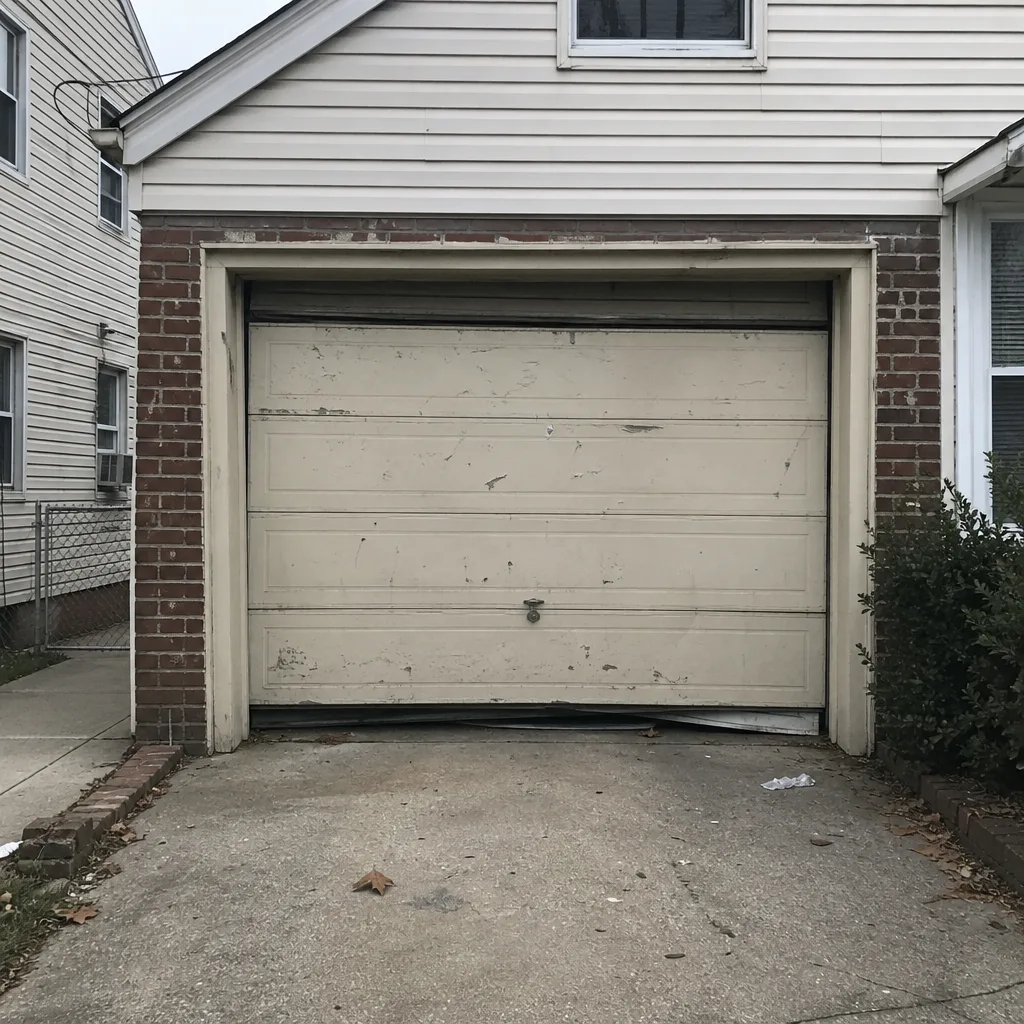 Before
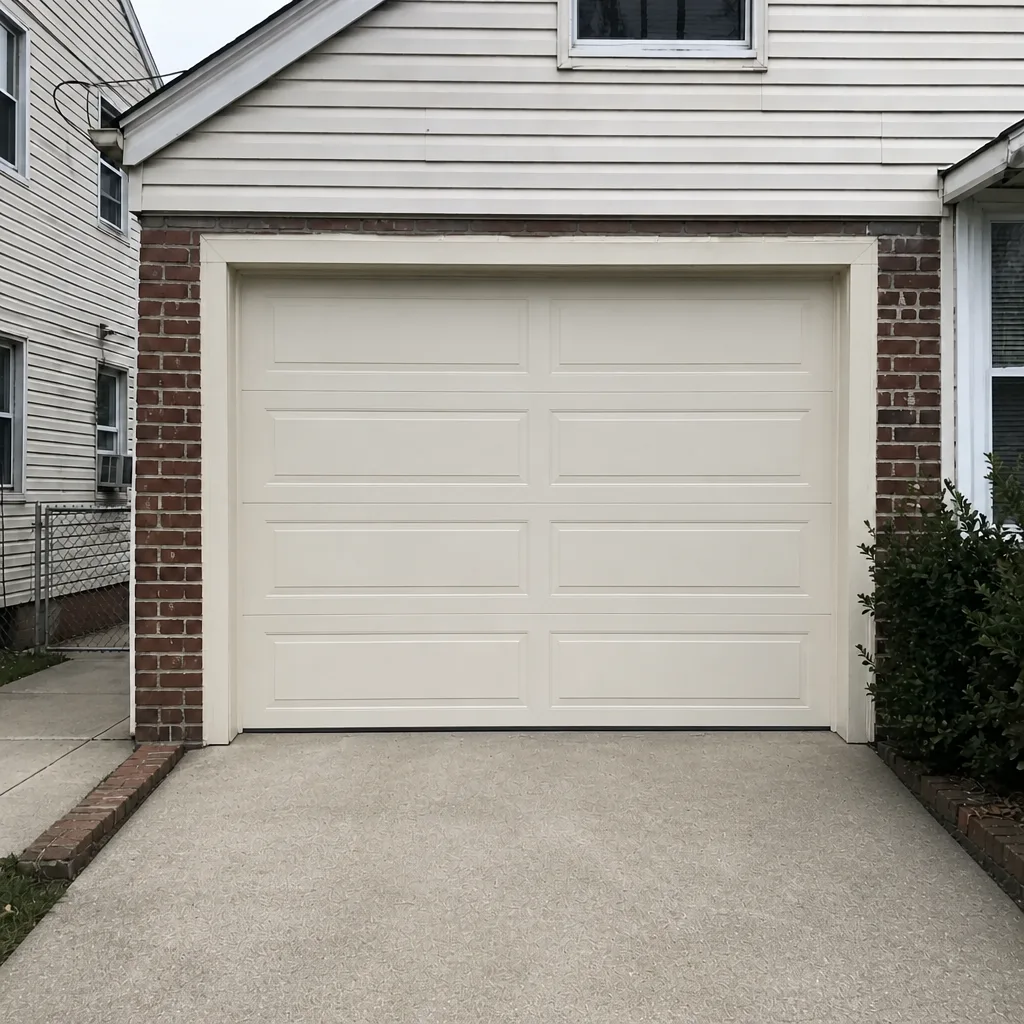 After
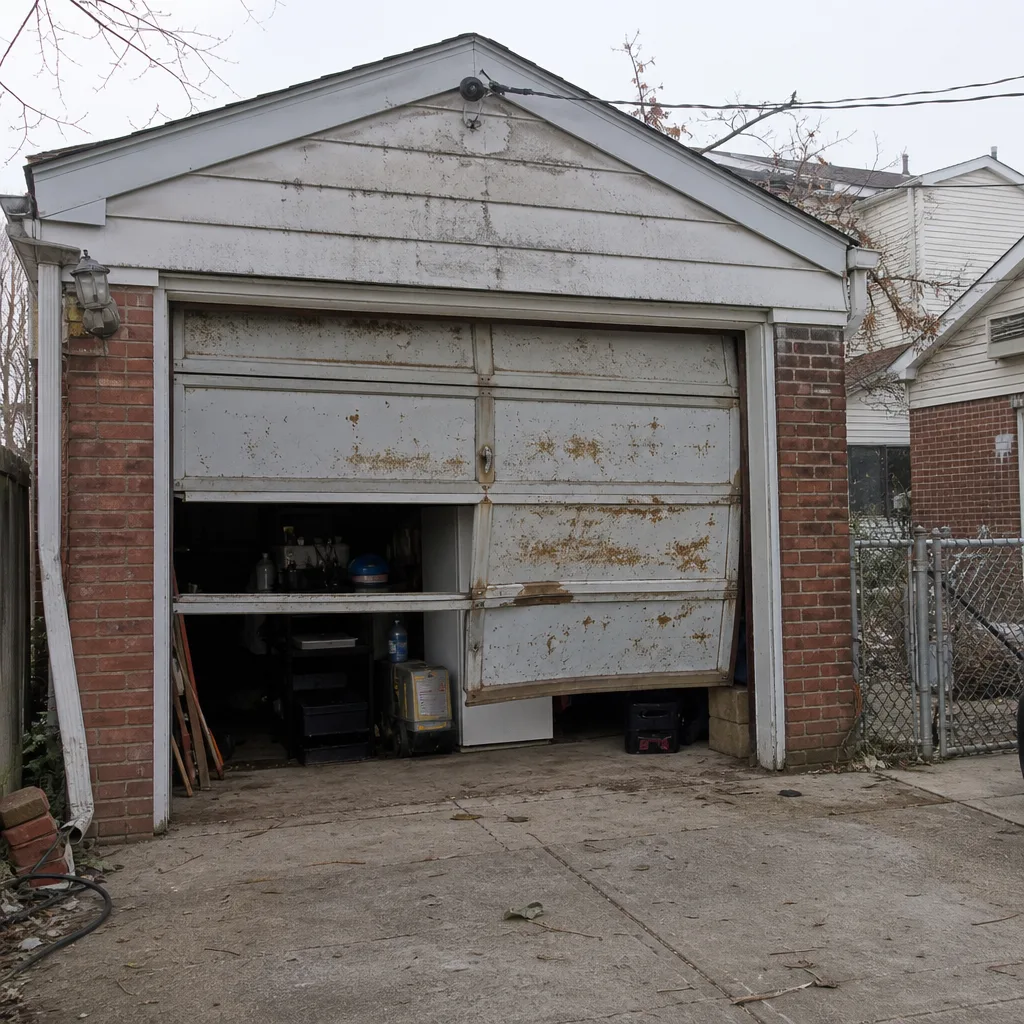 Before
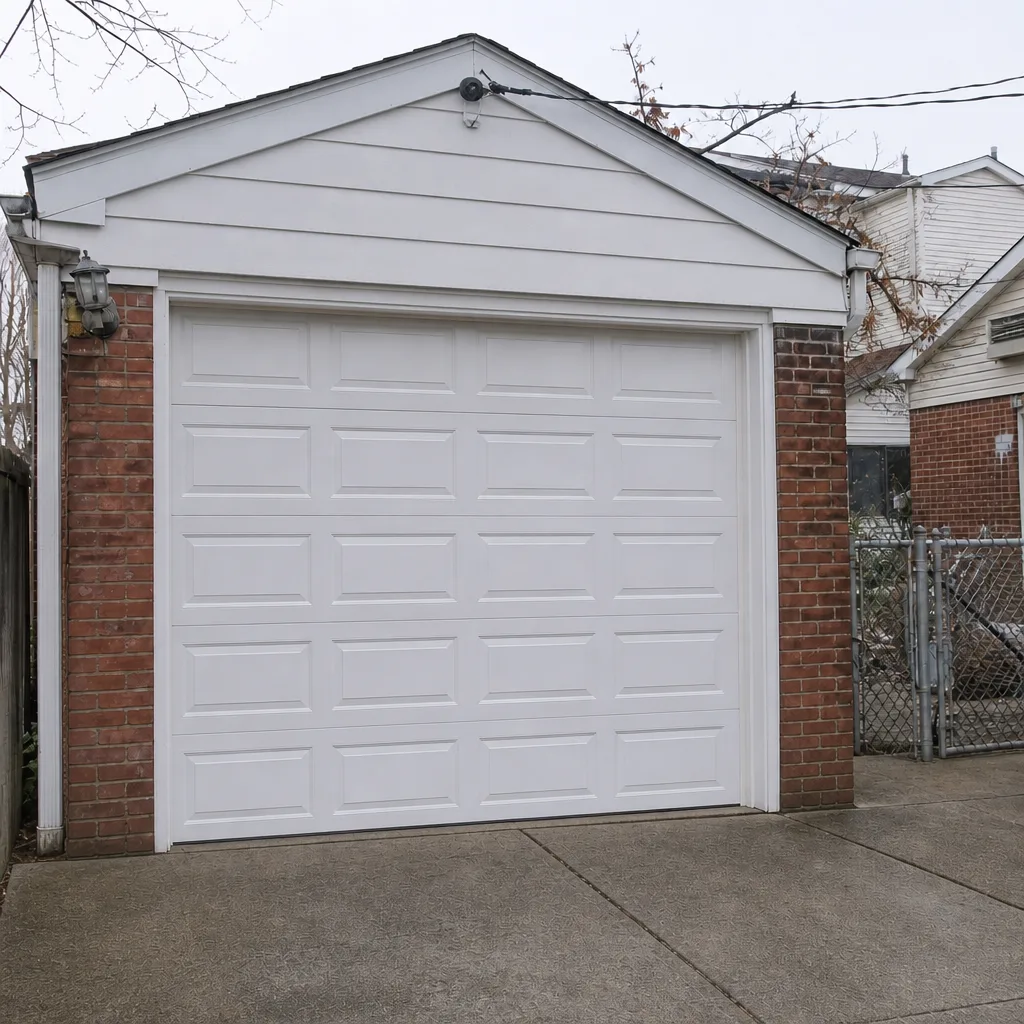 After
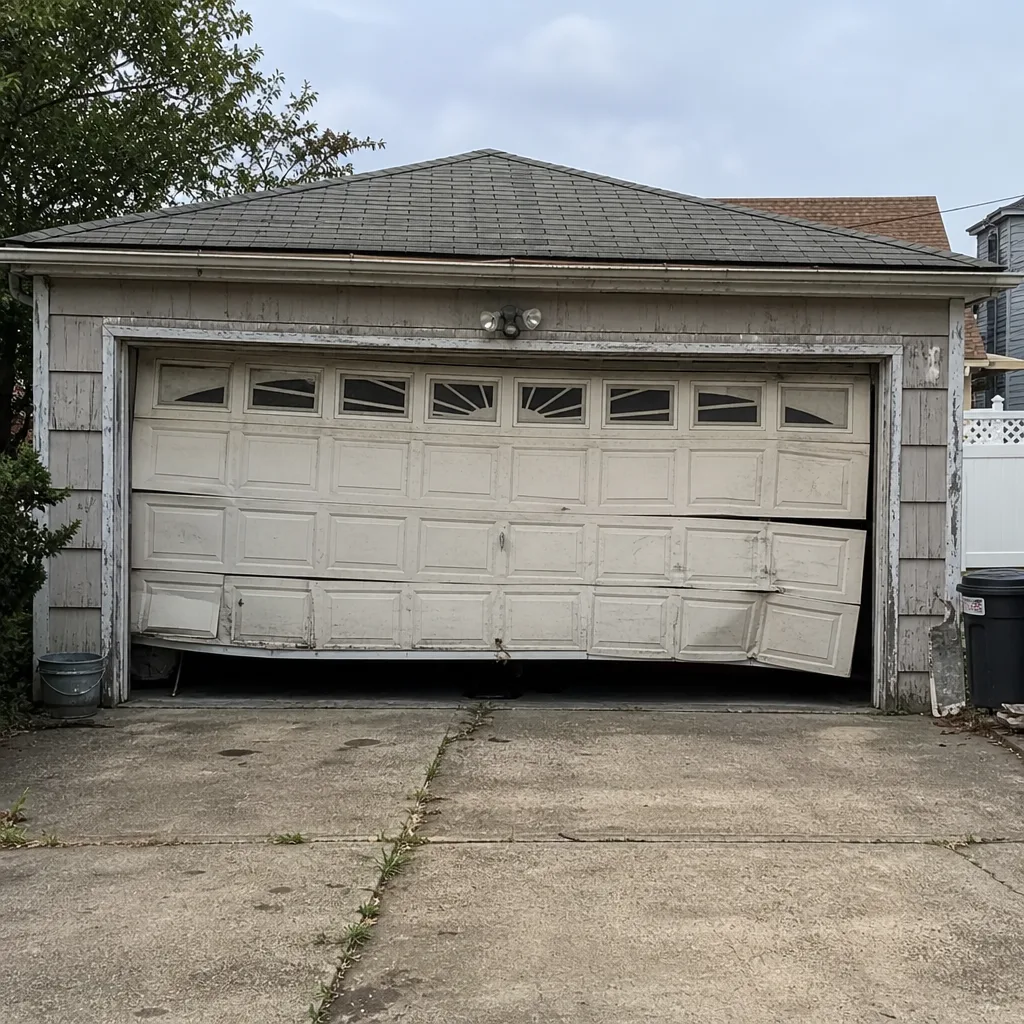 Before
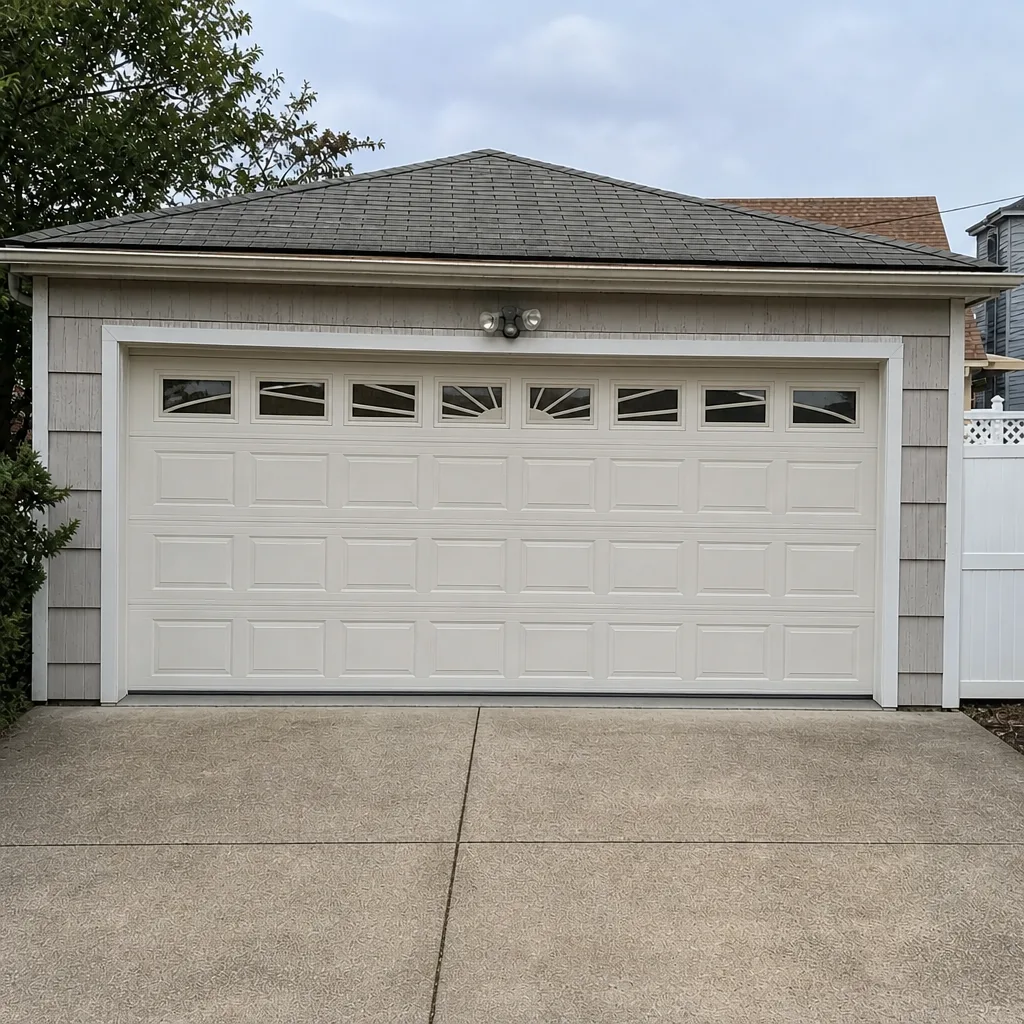 After
Frequently Asked Questions
Once a year at minimum, with a quick self-check each season. The yearly service should include spring tension, cable condition, track alignment, hinge and roller wear, and opener safety settings. A door that faces direct weather on the peninsula benefits from the seasonal checkpoints in this guide on top of that yearly service.
Yes. Cold metal contracts, and a torsion spring under constant tension has less margin in January than in July. A spring that’s near the end of its cycle life will usually fail on the first cold morning after it’s been holding fine through the fall. That’s why the pre-winter inspection matters more than any other single task.
No, and we strongly advise against attempting it. Torsion springs store enough energy to cause serious injury, and the job requires specific winding bars and knowledge of how to balance the door afterward. A technician can inspect the spring, measure its remaining tension, and replace it safely. Call (877) 492-1997 for a free estimate.
Confirm the door closes fully and locks, move anything stored against it away, and know where the manual release cord is in case power fails. If the door won’t close or a panel is bent, don’t wait for the storm. Call us for emergency service, because a garage door that won’t secure is the first way a storm gets inside.
Yes. We work on LiftMaster, Chamberlain, Genie, Clopay, Amarr, Wayne Dalton, Craftsman, and Raynor doors and openers. Brand-agnostic service means the recommendation comes from what fits your door and budget, not from a single manufacturer. Call (877) 492-1997 for a free estimate.
Yes, for time-sensitive failures like a broken spring, a door that won’t close, or an opener problem. Call (877) 492-1997. We answer 24/7. Fast dispatch from 7am to 7pm, Sunday through Friday. A call outside dispatch hours is booked into the next opening, Sunday through Friday, 7am to 7pm. We’re closed Saturday.
No. The written estimate you’re given is the price, and it’s quoted and agreed before any work starts. Call (877) 492-1997. Estimates are free.
Yes. The local professional who arrives is licensed and insured as their state requires. Our technicians have up to 11 years of experience, and they can work on both the mechanical door system and the opener electronics in one visit. Call (877) 492-1997 for a free estimate.
The Bottom Line
Garage door care in Far Rockaway works on a seasonal rhythm, and each season has one task that carries most of the weight. Fall is about storm readiness: the seal and the brackets. Winter is about springs, and getting ahead of the cold snap. Spring is about the hardware the winter wore down. Summer is about sun, seals, and heat. Four checkpoints a year, one non-negotiable task each, keeps a door reliable through everything the peninsula throws at it. When something fails, or when you’d rather have the door assessed by someone who knows the brands and the forces at work, we’re a phone call away.
Far Rockaway Garage Door Repair provides garage door repair, spring repair, opener repair, and full installation across the eight most widely installed brands. Call (877) 492-1997 for a free estimate. We answer 24/7. Fast dispatch from 7am to 7pm, Sunday through Friday, and we’re closed Saturday.
Written by the team at Far Rockaway Garage Door Repair.