
Last updated November 21, 2026
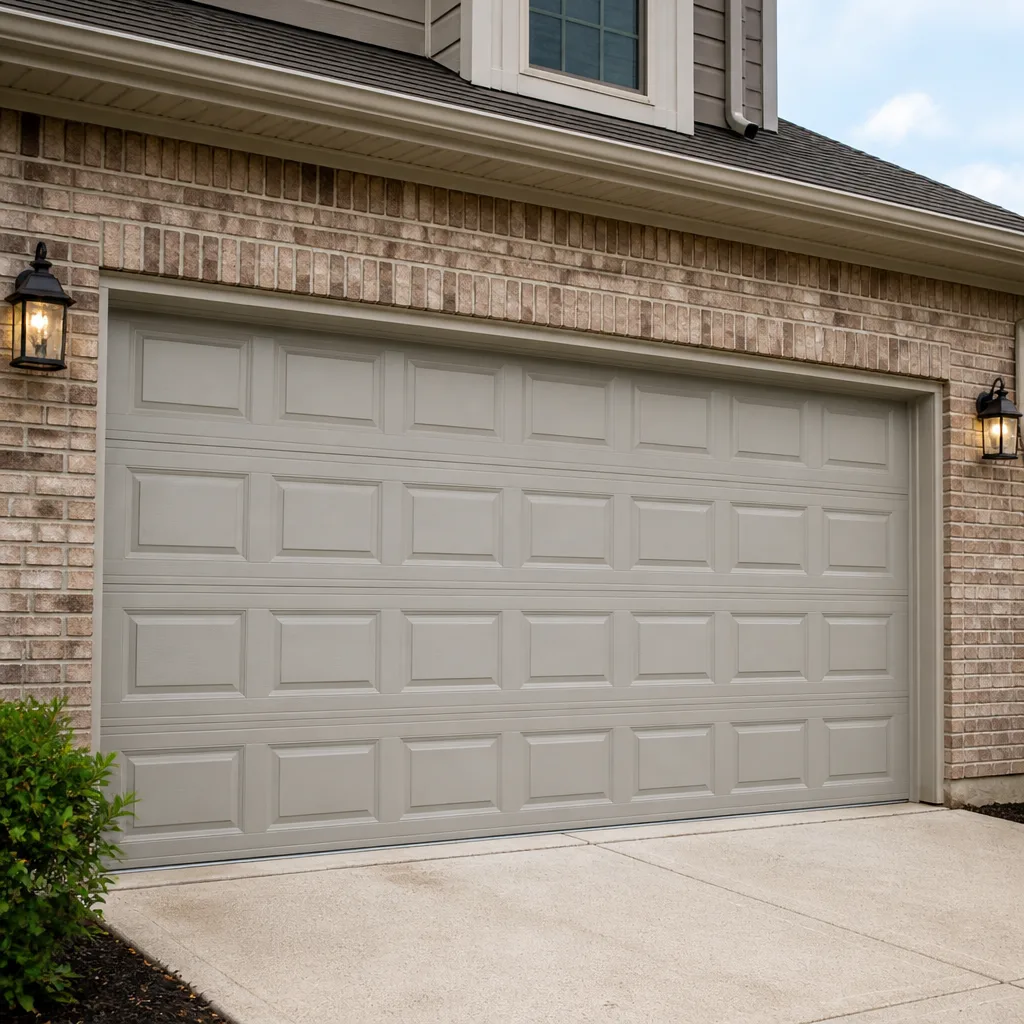 Raised-panel steel
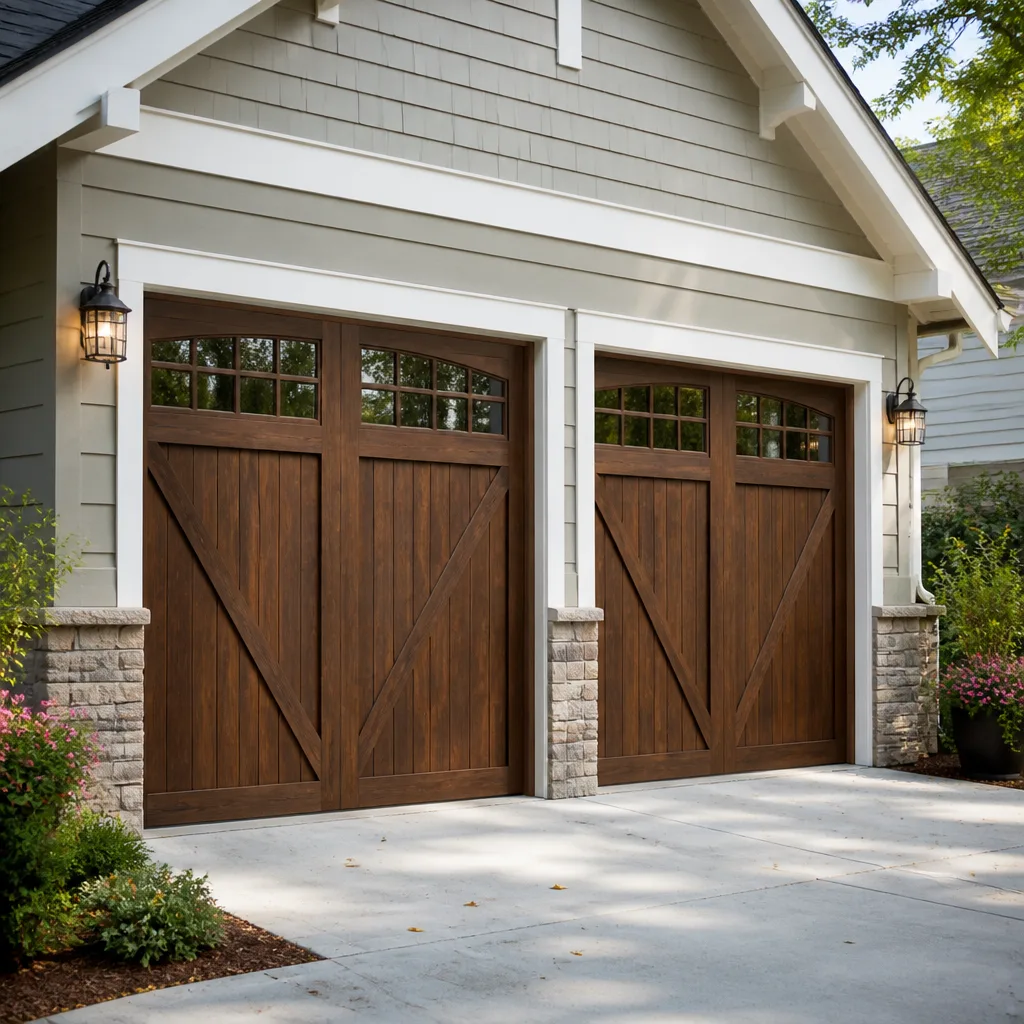 Carriage house
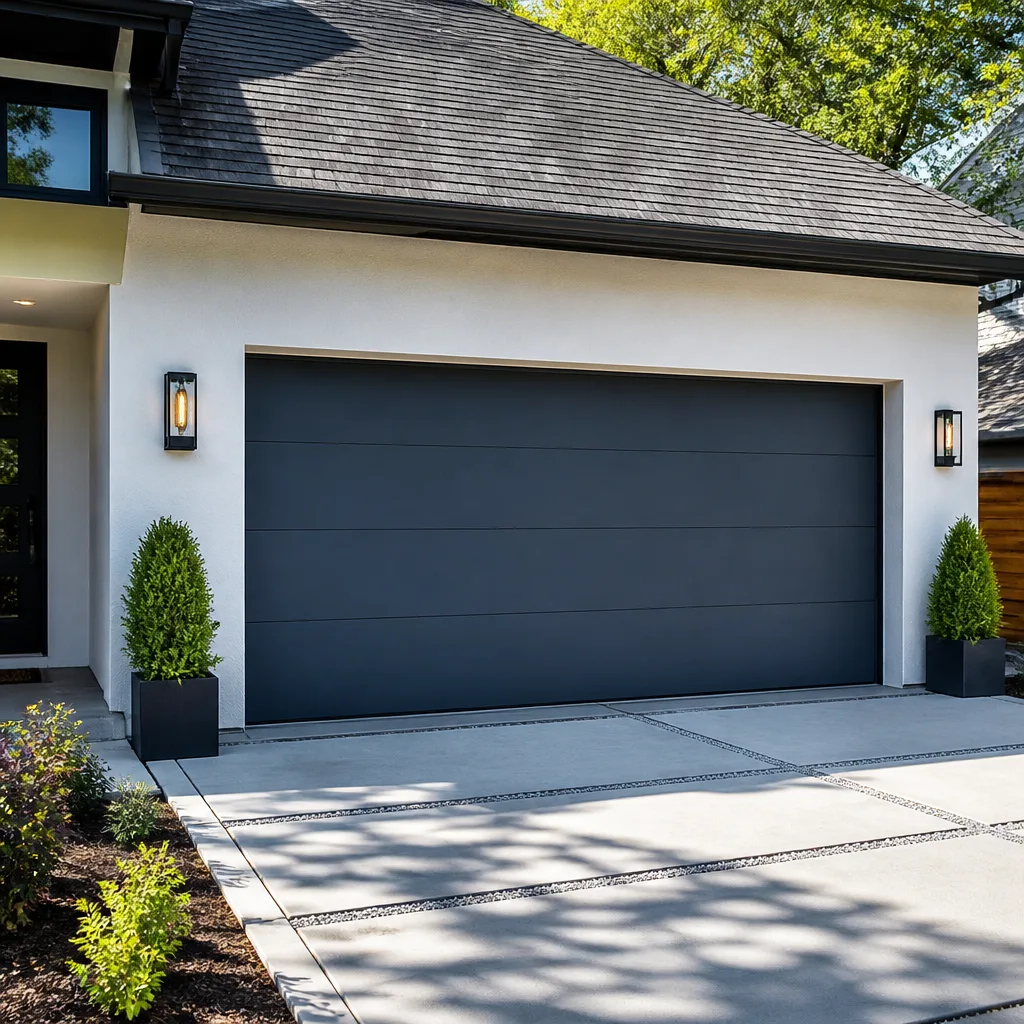 Modern flush
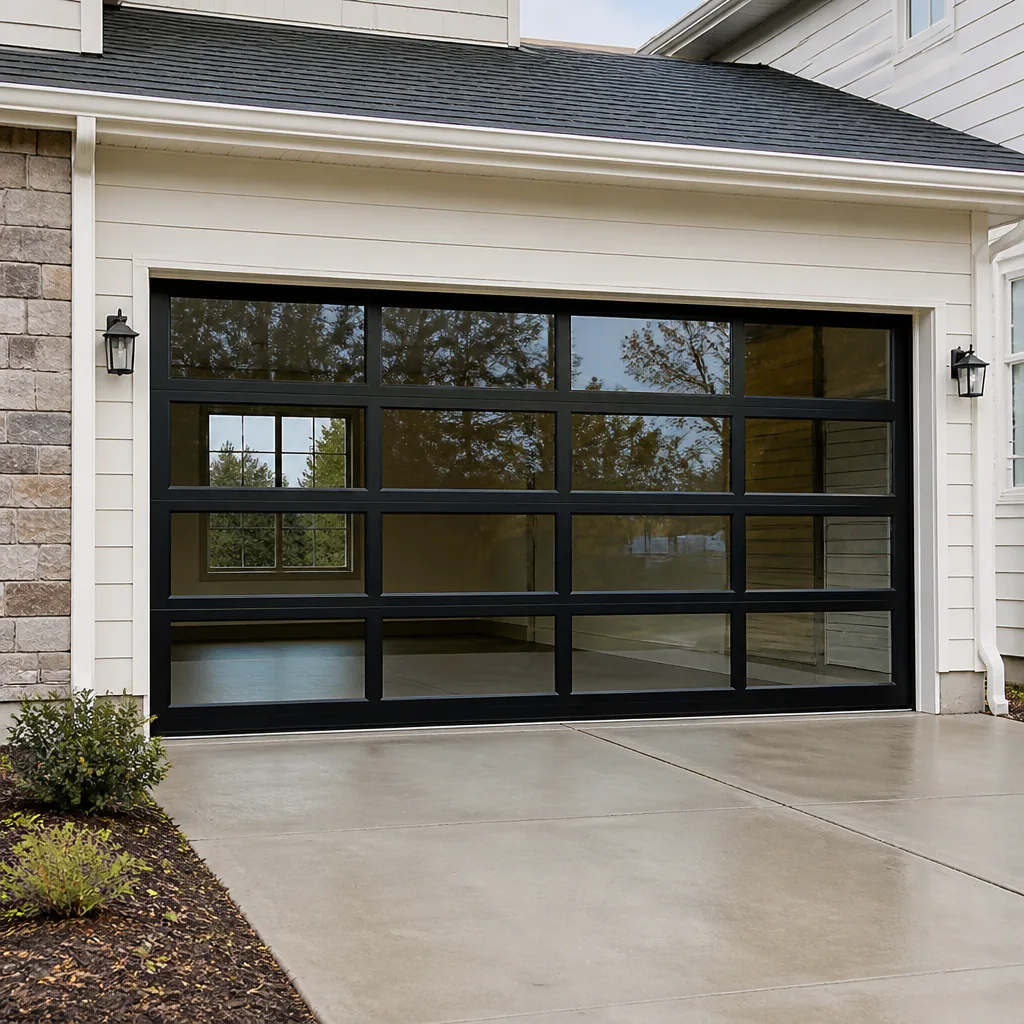 Full-view glass
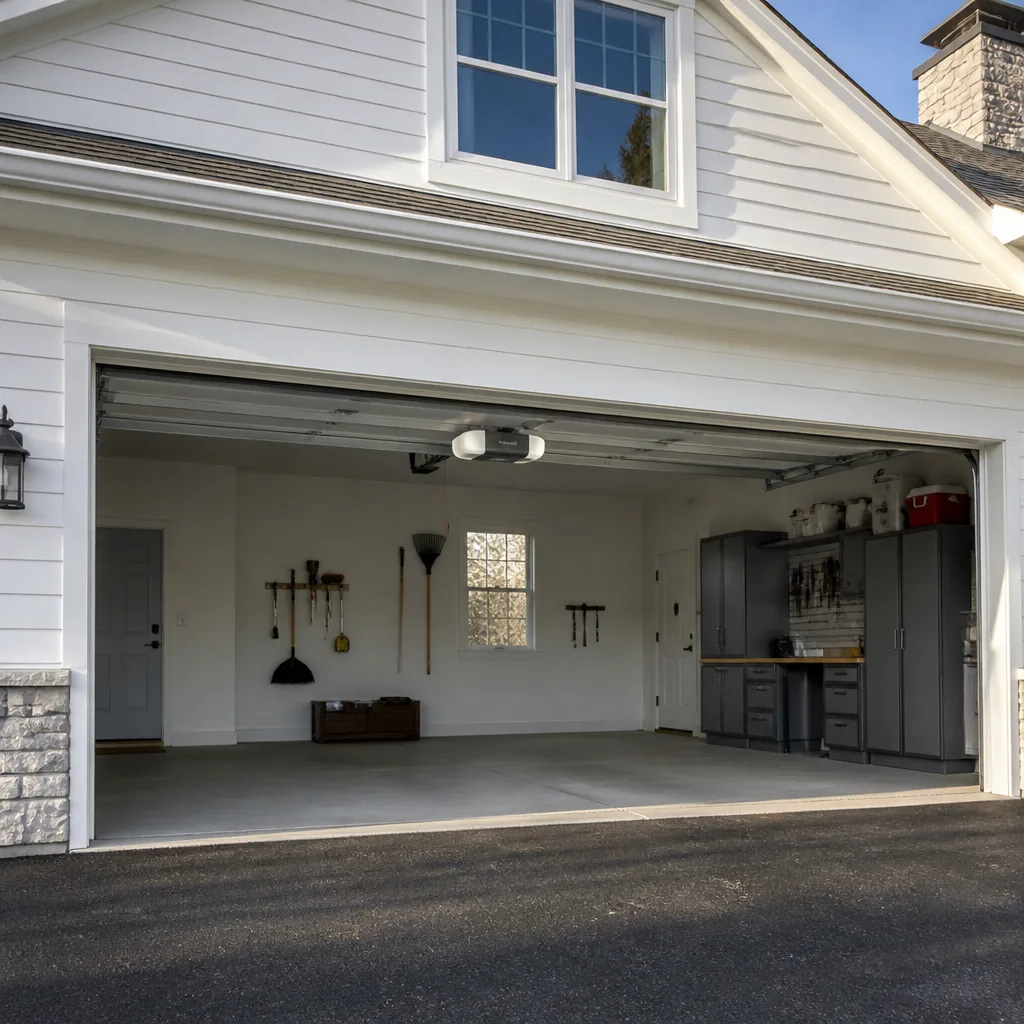 LiftMaster openers
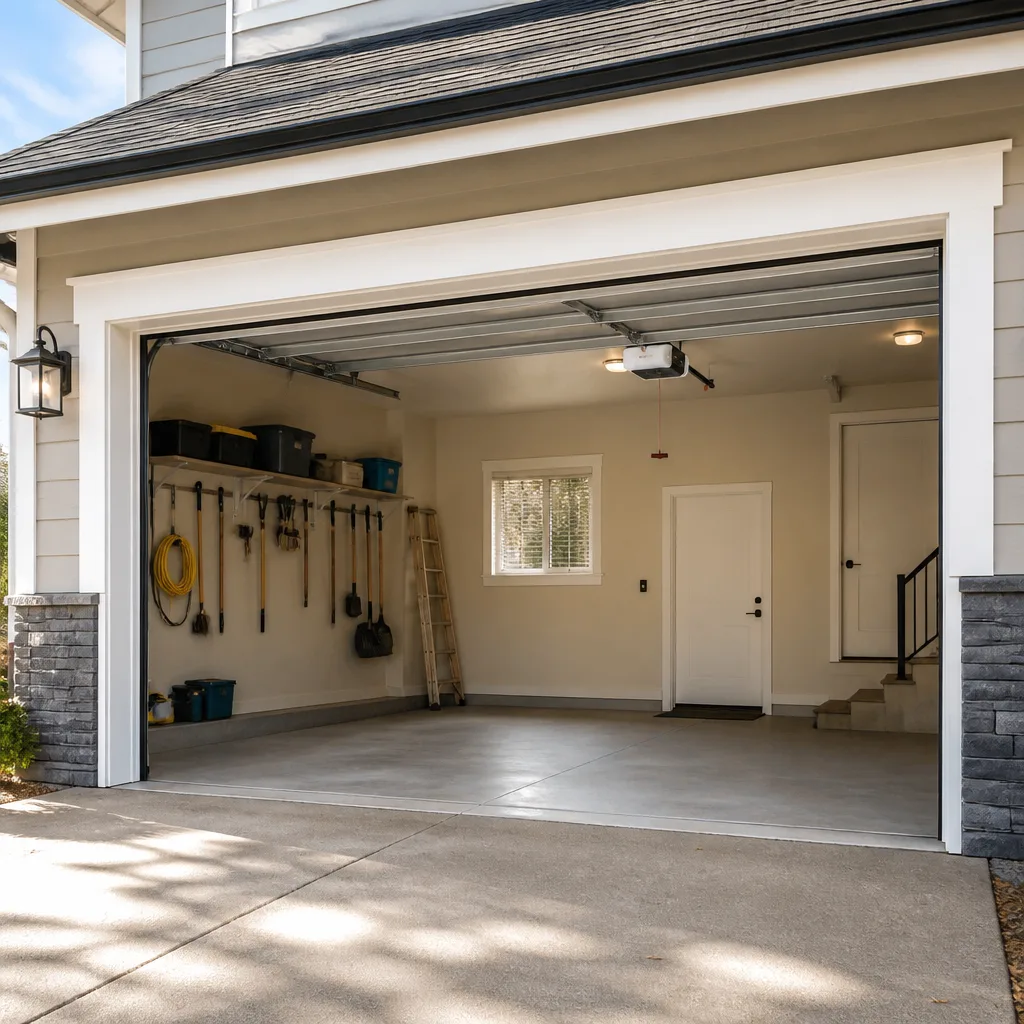 Chamberlain openers
Full 25-point door and opener safety check with every visit - springs, cables, rollers, tracks, and your LiftMaster or Chamberlain opener included
You get a price before we start. It does not change when the pro arrives.
Get your free estimateGarage Door Warning Signs: A Far Rockaway Homeowner’s Reference Guide
Most warning sign articles tell you your door is making noise. That’s not useful. A rattling door and a grinding door are two different failures, and one of them can drop a 200-pound panel on you this afternoon. In Far Rockaway, where the garage is often the front door and the door runs several times a day, symptoms show up fast and get ignored for weeks. This guide translates every sound, streak, and stutter into a specific mechanical cause, an estimate of how long you have, and a plain call: safe to schedule, or stop operating it today.
Quick Answer
A garage door warning sign is any change from normal – new noise, uneven travel, a reverse before closing, a frayed cable, or a door that responds slowly – and each symptom maps to a specific component. Broken or weakening springs, frayed cables, and asymmetric travel are dangerous and mean stop using the door until a trained technician inspects it. Grinding openers, remote faults, and sensor misalignment are usually safe to operate and can be scheduled. Call (877) 492-1997 to get a free estimate and a firm answer on which one you’re looking at.
Styles & brands we work with
- Raised-panel steel
- Carriage house
- Modern flush
- Full-view glass
- LiftMaster openers
- Chamberlain openers
Table of Contents
- How to Narrow Down Which Component Is Failing (Without Touching Anything)
- The Symptom-to-Cause Translation Table
- Warning Signs That Mean Stop Using the Door
- Warning Signs That Are Safe to Schedule
- Minor Signs With a Short Runway to Full Failure
- Far Rockaway Warning Signs That Inland Guides Miss
- Why Springs and Cables Are a Trained-Professional Job
- Why Brand Matters When Something Breaks
How to Narrow Down Which Component Is Failing (Without Touching Anything)
You can get most of the way to a diagnosis standing in your driveway with the door closed, using your eyes and ears only. There are four systems on a garage door: the springs (tension), the cables (safety backstop), the opener (the motor), and the safety sensors at the floor. Each fails in a recognizable pattern. The skill is reading which one is complaining before you call.
Here’s how to walk through it in order, and this works the same whether you’re in Wavecrest, Arverne, or out toward Bayswater:
- Look at the top of the door frame. If it’s a torsion system, you’ll see a horizontal bar with springs coiled around it. If you see a visible gap in a coil, that’s a broken spring. A torsion spring breaks with a single loud pop that sounds like a gunshot in the garage.
- Look at the cables. They run from the bottom corners of the door up through pulleys to the tracks. Cables should be taut and smooth. Wavy, frayed, or visibly unlaced cables are dangerous – do not run the door.
- Look at the door’s alignment. Walk to the side and check whether the door gaps unevenly at the bottom or top. One side hanging lower than the other is a cable or spring imbalance, not an opener problem.
- Look at the safety sensors. They’re the small lens-equipped units on either side of the door tracks, six inches off the floor. If the indicator LED is flickering or off, they’re misaligned or dirty.
- Listen to the opener only. With the door disconnected (pull the red release handle with the door closed – that’s safe), run the opener alone. If the motor hums but the trolley doesn’t move, the opener is the problem. If the opener runs smoothly without the door, the problem is in the door itself, not the motor.
That last step is the most useful trick in the guide, because it splits your diagnosis in half in about thirty seconds. If your door won’t open at all and you can’t get it disconnected, call Far Rockaway Garage Door Repair – emergency response is a real, available option, not an upsell. We answer 24/7, and dispatch runs 7am-7pm, Sunday through Friday.
The Symptom-to-Cause Translation Table
Most homeowners describe a symptom the same way: “It’s making a weird noise.” The symptom is the outer layer. The cause is the mechanical story underneath. Here’s the translation between what you notice and what’s actually failing – the same mapping our technicians use in Far Rockaway and across the Rockaway peninsula.
| Symptom | Likely Cause | Failure Timeline | Safe to Operate? |
|---|---|---|---|
| Loud pop from above the door | Broken torsion spring | Already failed; door will not lift safely | No – stop operating |
| Grinding or rumbling | Worn rollers, dry or worn torsion bearing | Weeks to months | Yes – schedule |
| Squealing or high-pitched whine | Dry torsion spring, opener gear wear | Weeks to months | Yes – schedule |
| Snapping or popping while moving | Fraying cable strands | Days – the next 20 cycles matter | No – stop operating |
| Door reverses before closing | Sensor obstruction, or spring tension issue | Immediate fix or days | Yes, after testing sensor |
| Door jams and hangs on one side | Cable off the drum or broken spring on one side | Days | No – stop operating |
| Openers hums, door doesn’t move | Opener gear or logic board | Days to weeks | Yes, until it fully stops |
| Door speeds up going down | Weakened spring – gravity doing the work | Days to weeks | No – stop operating |
Notice how many of these are “no.” Broken springs, frayed cables, crooked doors, and doors that rush on the way down are a real injury risk, not a scheduling inconvenience. Everything else, you can book on the next available window without a phone call at two in the morning. If you want a deeper dive on replacing a failed spring safely, our spring repair page walks through how we measure and replace them one at a time.
Warning Signs That Mean Stop Using the Door
Some failures are what we call a “stop door” – run the door once more and the panel drops, the cable snaps clean, or the door comes off the track. A broken spring, a frayed cable, and a door hanging crooked at the bottom all fall into that bucket. Do not test the theory by pressing the button “just to see.”
The specific signs that put you in stop-operating territory:
- A visible gap in a spring coil. Torsion or extension, doesn’t matter. The spring is what holds up a 200-pound door. A broken spring means there’s nothing between the door and gravity.
- A cable that’s frayed, kinked, or off the drum. Cables are the door’s emergency brake. Once strands are broken, the cable has a fraction of its original strength.
- The door drops fast when you release it from the open position. (Only test this from a couple of inches off the floor.) A door that accelerates instead of holding its position has a weakened or broken spring.
- The bottom panel is hanging off one side or scraping the floor unevenly. That’s a cable or spring issue, not an alignment issue you can fix by shimming the track.
- A loud crack or bang that came from the garage. If it happened once and now the opener works but the door looks wrong, do not run the door to verify what broke.
If any of these describe your situation, call (877) 492-1997. We answer 24/7. A call outside dispatch hours is booked into the next opening, Sunday through Friday, 7am to 7pm. That’s how a stop-operating door gets fixed the smart way – not by watching a video and hoping for the best.
Warning Signs That Are Safe to Schedule
Most warning signs are in the “safe to schedule” bucket. The door still works, it just complains while working. Grinding, squealing, slow opener response, a remote that needs the button pressed twice, and a door that stops a few inches short of the floor all fit here. Get them looked at within a couple of weeks and nothing bad happens. Ignore them for a year and you’re into full replacement territory.
- Grinding or rumbling coming from the door as it moves usually means worn steel or nylon rollers or a dry torsion bearing. Replaceable, and the noise stops the day of repair.
- Squealing from the opener head is often a worn gear inside a LiftMaster or Chamberlain unit. The opener still functions, but it’s working harder with each cycle.
- Remote or wall button needs pressed twice – weak batteries first, then logic board. A Craftsman opener from a few years back is one of the more common ones we see on the peninsula with this symptom.
- Door stops a few inches short of the floor – travel limits are off, or the down-force sensor needs adjusting. A five-minute adjustment if you know what you’re doing.
- Sensor LED flickers – misaligned sensors, dirty lens, or sunlight hitting the receiving eye. Cleaning or realignment fixes it.
Scheduling is the sane path for these, and it’s why our garage door repair service exists – a proper diagnosis in one visit, not a laundry list of “you also need” that half of it turns out you didn’t. We work on your brand without pretending another one is better for upselling reasons. If you also need the electronics sorted, we handle the opener repair on the same trip.
Minor Signs With a Short Runway to Full Failure
Some symptoms look small and are not. The tricky part is timing: a frayed cable today is one snapped strand tomorrow and a fully failed cable on the fifteenth cycle. Here are the ones where being a week late costs you a much bigger repair.
1. Fraying cables
Cables are braided steel. When strands start to break, they show up as a fuzz or fray below the drum. Cables don’t slowly wear down to nothing – they hold, hold, hold, and snap. The “runway” from a frayed cable to a broken cable can be as short as a handful of door cycles. Once one cable breaks, the door comes down crooked and can pull the other side off its track. That’s a stop-operating sign the day you spot it.
2. Asymmetric travel
The door rises and falls evenly, until the day it doesn’t. If you watch the gap at the top of the door and one side arrives a half inch before the other, that’s an imbalance – usually a weakening spring on one side of a two-spring setup, or a cable that’s starting to slip on one drum. It can go weeks without visible change and then fail all at once.
3. Slow response time
When your opener used to lift the door in three seconds and now takes five, the door feels heavier. It’s not. The springs are carrying less of the load and the opener is making up the difference. Slow response isn’t an opener issue – it’s a spring issue with a broken-opener ending about two months out. Catching it early means spring replacement. Catching it late means spring replacement and a new opener.
4. Streaking on the door face
Dark streaks running down from the top of the door or from the hinges aren’t cosmetic. In Far Rockaway homes, streaks usually come from a mixture of oxide (broken-down spring or hinge lubricant) and airborne buildup. Left alone, the streak line pencils in the location of the failing component. It’s a low-cost fix if you address it early and a paint-and-replace problem if you don’t.
5. Grinding that’s getting louder
Nothing on a garage door “settles in.” A grinding noise that was mild three months ago and is now alarming is a roller that’s flat-spotted, or a bearing that’s dry. A bearing seized at the wrong moment can spin the drum and pull the cable off. Two-hundred-dollar roller job now or a full track-and-panel repair later.
Far Rockaway Warning Signs That Inland Guides Miss
Far Rockaway’s weather is different from a lot of the country’s. Hot, humid summers, cold winters with a lot of freeze-thaw cycles along the Rockaway peninsula, and long stretches of sun that hits the face of a south-facing door for most of the day. Those conditions leave their own fingerprints on a garage door, and they show up months before the mechanical warnings do.
- Rust streaks on the face of a steel door. A Clopay or Wayne Dalton steel door will start showing pin-sized rust blooms at the bottom panel first – the spot that gets both the sun and the splash from rain running off the roof. Rust streaks on the face are a hardware issue if they originate at the hinges, and a paint-and-seal issue if they originate at the bottom panel.
- Deposit buildup along the tracks and hinges. On the peninsula, wind and rain bring airborne grit and salt mist into the tracks and hinge points. The buildup feels like fine sand when you drag a finger along a hinge. It accelerates roller wear and adds a grinding noise that looks like a mechanical failure but isn’t.
- Bottom seal cracking. UV exposure from long summer days dries the bottom weather seal faster than in inland areas. A cracked seal lets water and cold air in, and it’s one of the cheapest warning signs to fix early. Cracking at the corners turns into a torn seal within a season.
- Wood panel swelling on older doors. Older wood-panel doors in Far Rockaway absorb humidity in the summer and dry out in the winter. The panels swell, bind, and then shrink back. That cycle visibly warps the door and stresses the hinges.
- Cold-weather spring fade. Cold mornings stress a spring that’s already at end-of-life. If the door feels heavier in January than it did in September, the spring has been losing tension all year.
When a Far Rockaway door needs a full replacement rather than a repair, our garage door installation page lays out what’s involved. On installation and replacement work, we don’t promise same-day service. That work is measured, ordered, and scheduled, and you get a written price before anything gets ordered.
Why Springs and Cables Are a Trained-Professional Job
Garage door springs and cables store and release energy under tension, and they don’t release it slowly. A torsion spring can be wound at over a hundred pounds of torque per turn. When that energy lets go – whether from a worn spring or from a homeowner using the wrong winding bars at the wrong tension – it moves fast, and it moves at whatever’s in the way. There is no safe DIY procedure for winding a torsion spring or for resetting a cable on a drum. This is the reason handymen routinely turn down spring calls.
We keep spring repair as a named, dedicated service for that reason. Our technicians have up to 11 years of experience, they use the correct winding bars and bar clamps for the specific spring size on your door, and they take the door off-line before touching anything. They also wear the right eye protection and won’t stand under a loaded spring while they work.
Three safety rules we ask every Far Rockaway homeowner to follow before we arrive:
- Don’t stand under a broken-spring door. A door held up by a broken spring is held up by the opener – and openers are not designed to hold weight, only to lift it.
- Don’t try to pull a door closed by hand if the door is hanging crooked. The door can come off the track and land on you.
- Don’t press the opener button “just to test” a door that’s shown a stop-operating sign. Every cycle stresses a fatigued component further.
Our spring repair technicians handle the danger part. You just call. We answer 24/7.
Why Brand Matters When Something Breaks
Every garage door system has brand-specific part numbers, tension ratings, and cycle limits – a spring spec’d for a Clopay door isn’t the same gauge as one for an Amarr, and an opener gear from a LiftMaster isn’t the same tooth pattern as one for a Chamberlain, even when they’re owned by the same parent. Getting the right part to your exact model matters, because guessing at a spring or opener gear is how a two-hour fix turns into a two-visit one.
We’re factory-familiar with eight of the most widely installed garage door brands in North America – LiftMaster, Chamberlain, Genie, Clopay, Amarr, Wayne Dalton, Craftsman, and Raynor. That matters more than it sounds, in three specific ways:
- Faster diagnosis. Knowing each brand’s failure modes lets us move straight to the likely suspect instead of opening the whole system up.
- Correct parts, first time. We don’t have to guess between two possible springs or two opener gear kits.
- One visit, full fix. Repair and part are one trip, not two.
We’re brand-agnostic on purpose. If a Raynor is the right door for your opening and a Clopay isn’t, that’s what we’ll tell you – the recommendation is driven by what fits your door and your budget, not by any single manufacturer partnership. Same visit, full fix, no second contractor. For the cost picture on a full replacement or opener job, that’s a written estimate per job, not a call-time number.
Common Mistakes to Avoid
- Winding your own spring. Buying a spring online and following a video looks economical. The stored energy in a torsion spring can kill you or cost you fingers, and getting the wind count wrong turns the door into a missile. Don’t.
- Repeatedly hitting the button on a reversing door. If your door reverses before closing, testing it twenty times a day won’t fix it. It’s the sensor or the spring, and repeated operation wears the system faster.
- Ignoring a grinding noise for a year. A grinding roller or bearing is a couple hundred dollars to fix. A seized bearing that fails while the door is moving is a many-times-that repair. In a humid Far Rockaway summer, the timeline shortens.
- Using WD-40 on the tracks. Tracks aren’t supposed to be lubricated. WD-40 attracts dust, and in a peninsula climate the dust becomes a paste that seizes the rollers.
- Calling a handyman for a spring. Most handymen don’t carry winding bars and turn down spring calls for good reason. If they say yes to a spring job with a toolbag, hang up.
- Buying a new opener when the door itself is the problem. A slow or stuck door is usually a spring or cable issue the opener has been dragging along. Replacing the opener first means you pay twice.
- Replacing the door when the spring or cable is the only failure. Unless the panels are structurally compromised, a $200-300 spring or cable repair is the correct fix, not an $1,800 door. We tell homeowners this on the phone before they commit.
When to Call a Professional
Call now if any of the following is true: a spring has visibly broken, a cable is frayed or off the drum, the door hangs crooked, the door drops fast when released, a loud pop came from the garage, or the door won’t close and won’t secure. Those are stop-operating situations, and every cycle you run stresses the system further. Call to schedule if it’s grinding, squealing, slow to respond, dragging on one side, or reversing on a sensor – those are safe-to-schedule repairs that won’t turn dangerous overnight. And call if you’re not sure which bucket your door is in. Far Rockaway Garage Door Repair offers free estimates in Far Rockaway – call (877) 492-1997. We answer 24/7, and dispatch runs 7am-7pm, Sunday through Friday. The price is set by the written estimate before any work starts, and the estimate itself is free.
See the difference
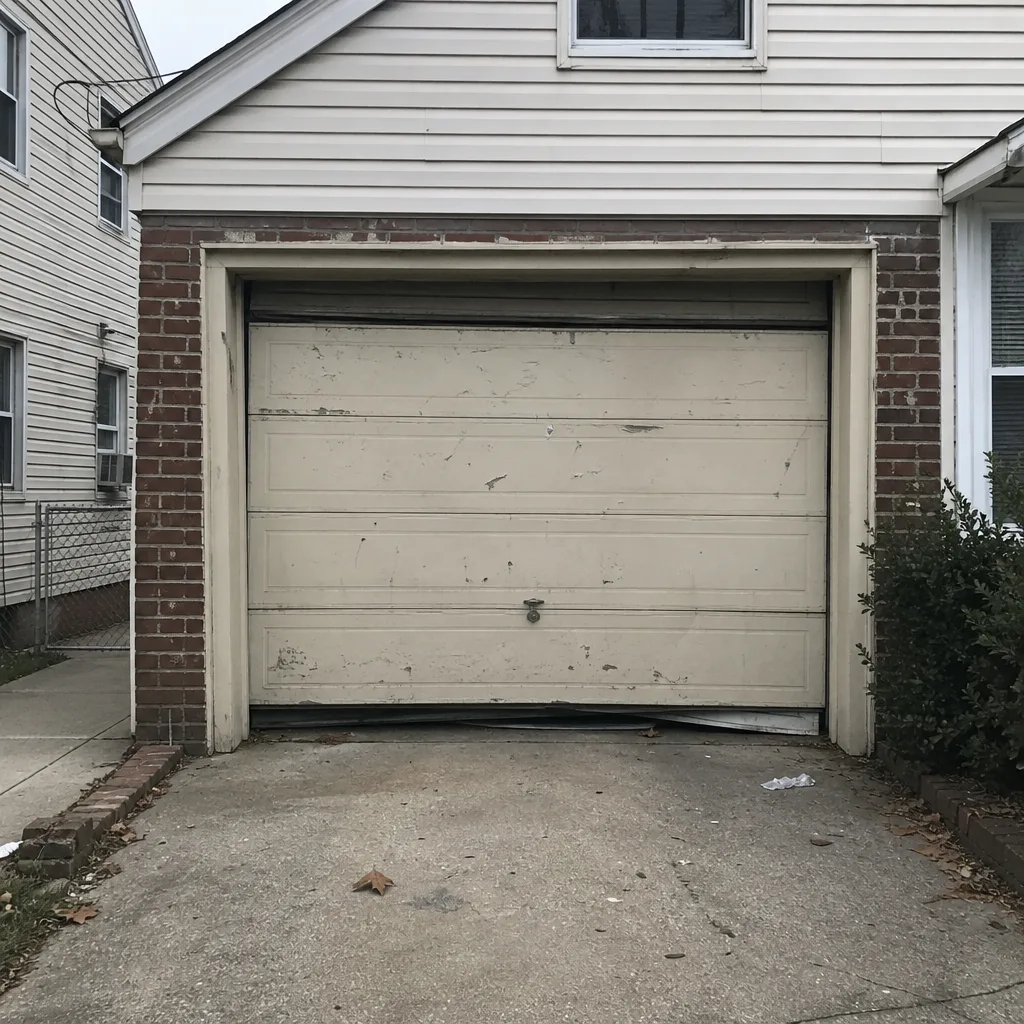 Before
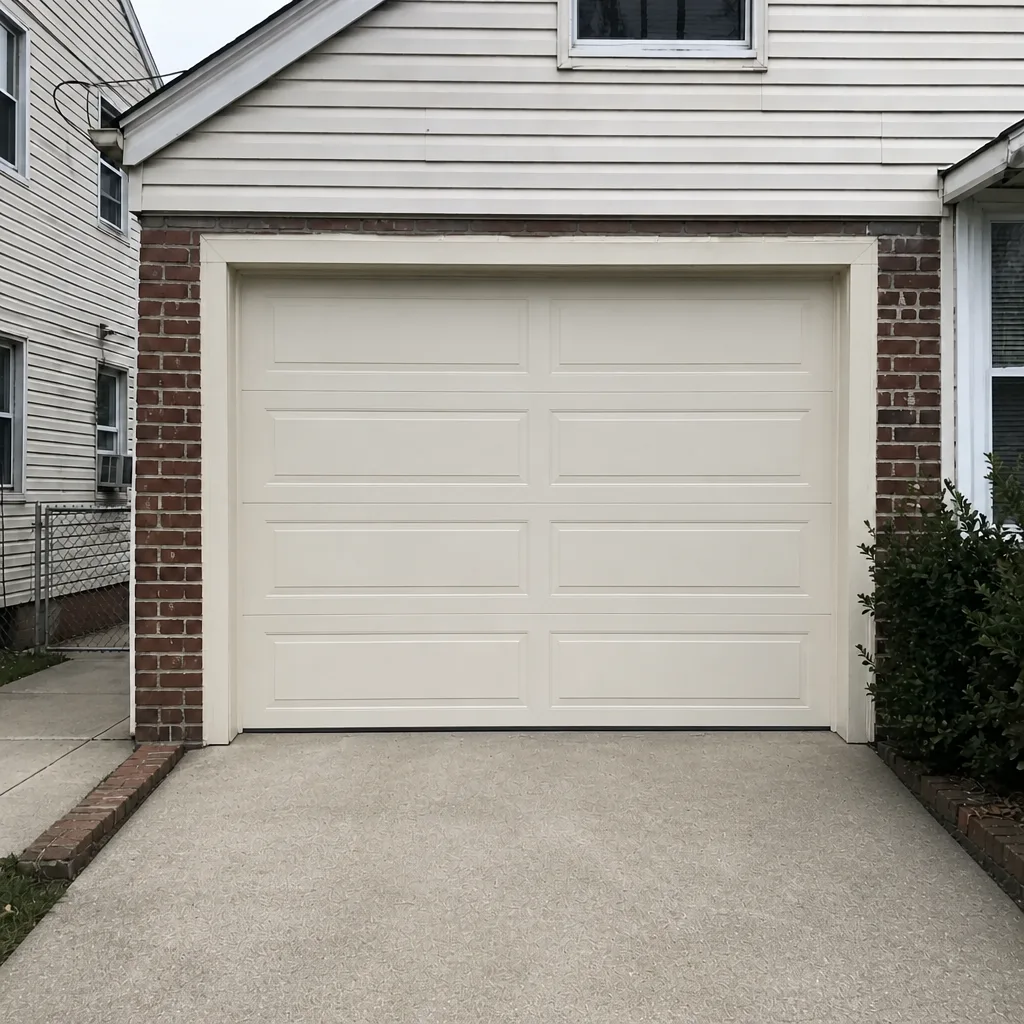 After
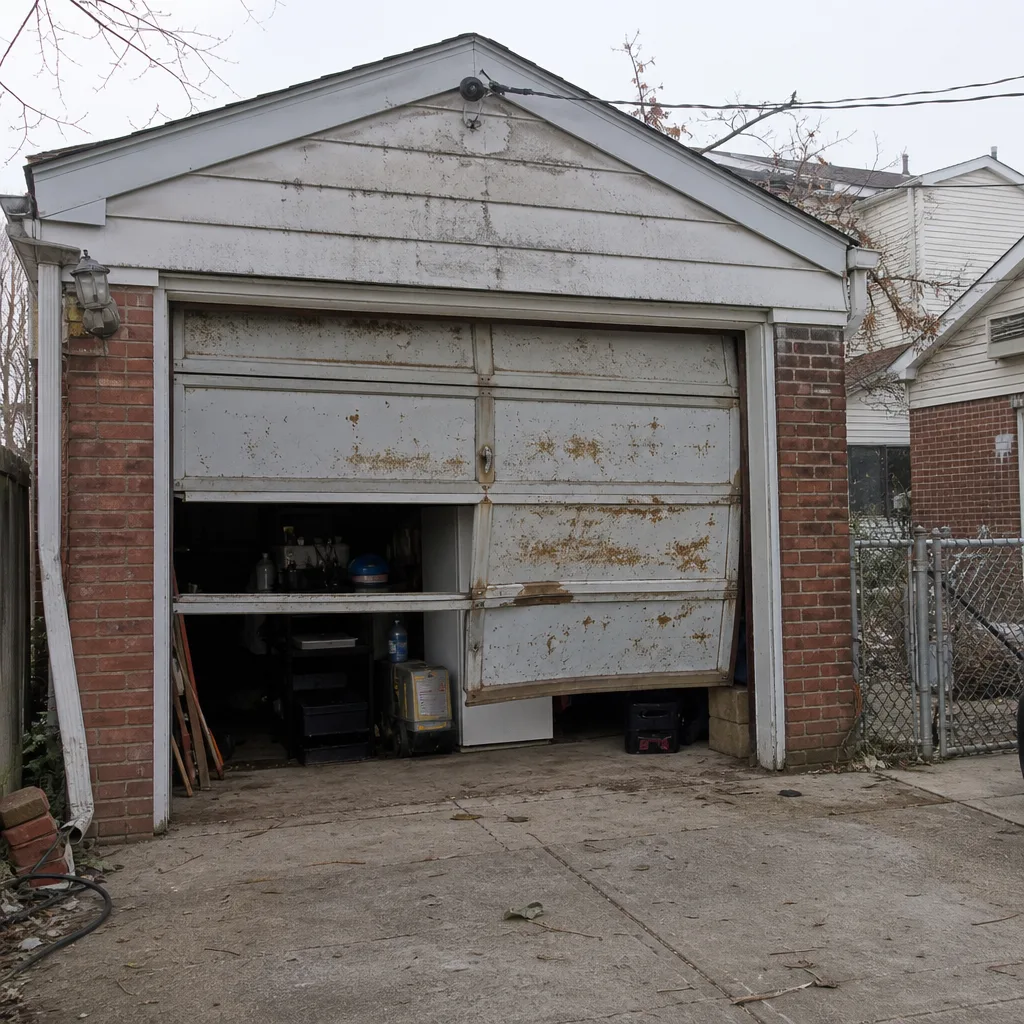 Before
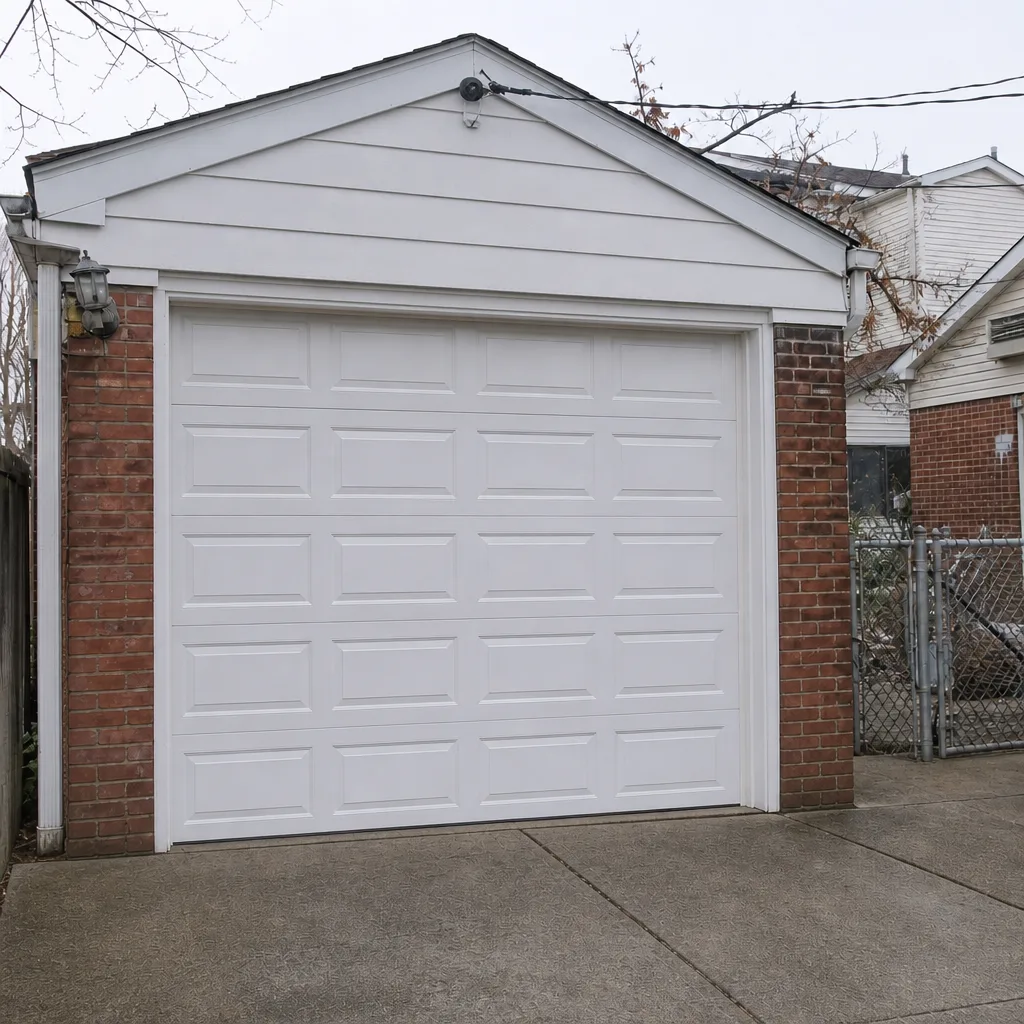 After
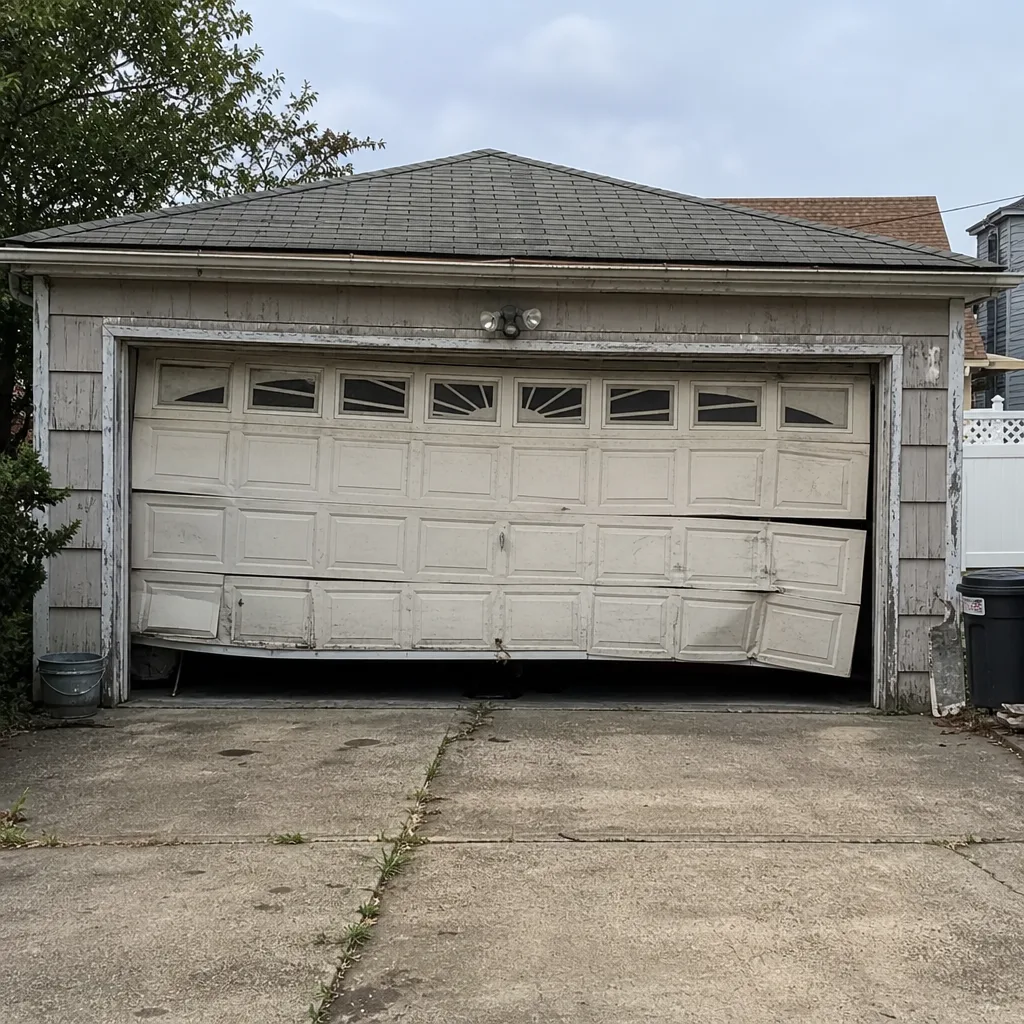 Before
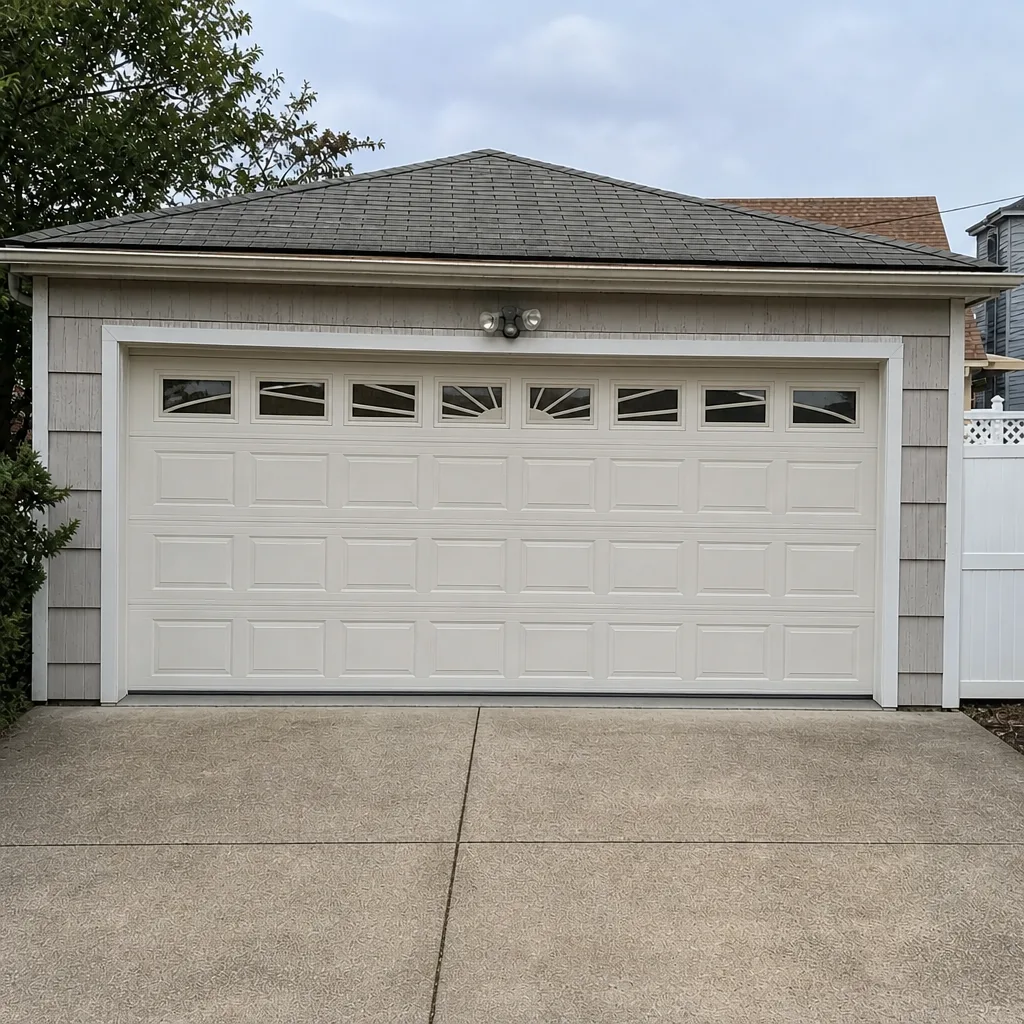 After
Frequently Asked Questions
A broken or weakening spring is the most important warning sign to catch early, because the spring carries the weight of the door and its failure is the most dangerous one. A spring showing any sign of fatigue – a visible gap in a coil, a door that feels heavier than usual, or a door that drops fast when released – should be treated as a stop-operating concern. Call (877) 492-1997 for a free estimate and we’ll tell you which bucket it’s in.
You can tell the four apart from the outside in about a minute. A spring problem makes the door feel heavy and usually announces itself with a single loud pop. A cable problem shows as fraying below the drum or a door that hangs crooked. An opener problem shows as a motor that hums but doesn’t move the door. A sensor problem shows as a door that reverses before closing with a flickering or misaligned sensor LED. If the split still isn’t clear, call for a free estimate – most of our spring and cable calls resolve in one visit.
No. A door with a broken spring should not be operated even once – the spring that supports the door’s weight has failed, and running the opener stresses a system that isn’t designed to carry weight. This is a stop-operating situation. Call (877) 492-1997 and we’ll get a technician out to inspect and replace the spring safely.
A door that reverses before closing is most often a safety sensor issue – misaligned lenses, dirt, or bright sunlight hitting the receiving eye – and it’s usually a quick, affordable fix once the cause is confirmed. Less often, a weakened or broken spring is causing the reversal, which is a stop-operating concern. Testing the sensor first tells you which. Call (877) 492-1997 if the sensor LED is fine and the door still reverses.
Yes. The peninsula’s summer humidity and freeze-thaw winters accelerate rust streaks on steel doors, bottom-seal cracking, and hinge deposits, and cold mornings can push a failing spring over the edge. Watch the bottom panel, the hinges, and the bottom seal each season – those show the earliest local warning signs. If rust streaks or cracking look structural, call (877) 492-1997 for a free estimate.
The cost depends on which component has failed. A typical spring replacement is quoted per spring, a cable replacement per cable, and an opener issue by the specific part. Our written estimate sets the final price, and the estimate itself is free. Call (877) 492-1997 to get numbers for your exact door.
The Bottom Line
Warning signs come in two flavors: safe to schedule, and stop operating. Springs, cables, crooked doors, and doors that rush on the way down go in the stop bucket – every cycle you run is a risk. Grinding, squealing, slow response, and sensor flickers go in the schedule bucket – you have weeks, not hours, but don’t stretch it past a season. Far Rockaway weather writes its own warning signs on steel doors, bottom seals, and hinges, and those show up months before the mechanical failures do. Read the door once a season, translate the symptom, and pick up the phone if it’s the wrong bucket. We answer 24/7 at (877) 492-1997, and every estimate in Far Rockaway is free.
Contact Far Rockaway Garage Door Repair – call (877) 492-1997 for a free estimate. We answer 24/7. Fast dispatch from 7am to 7pm, Sunday through Friday. Whether the door needs a spring, a cable, an opener, or a full replacement, the estimate comes first, the price is agreed before any work starts, and we tell you plainly whether your door is safe to operate right now.
Written by the team at Far Rockaway Garage Door Repair.