
Last updated November 21, 2026
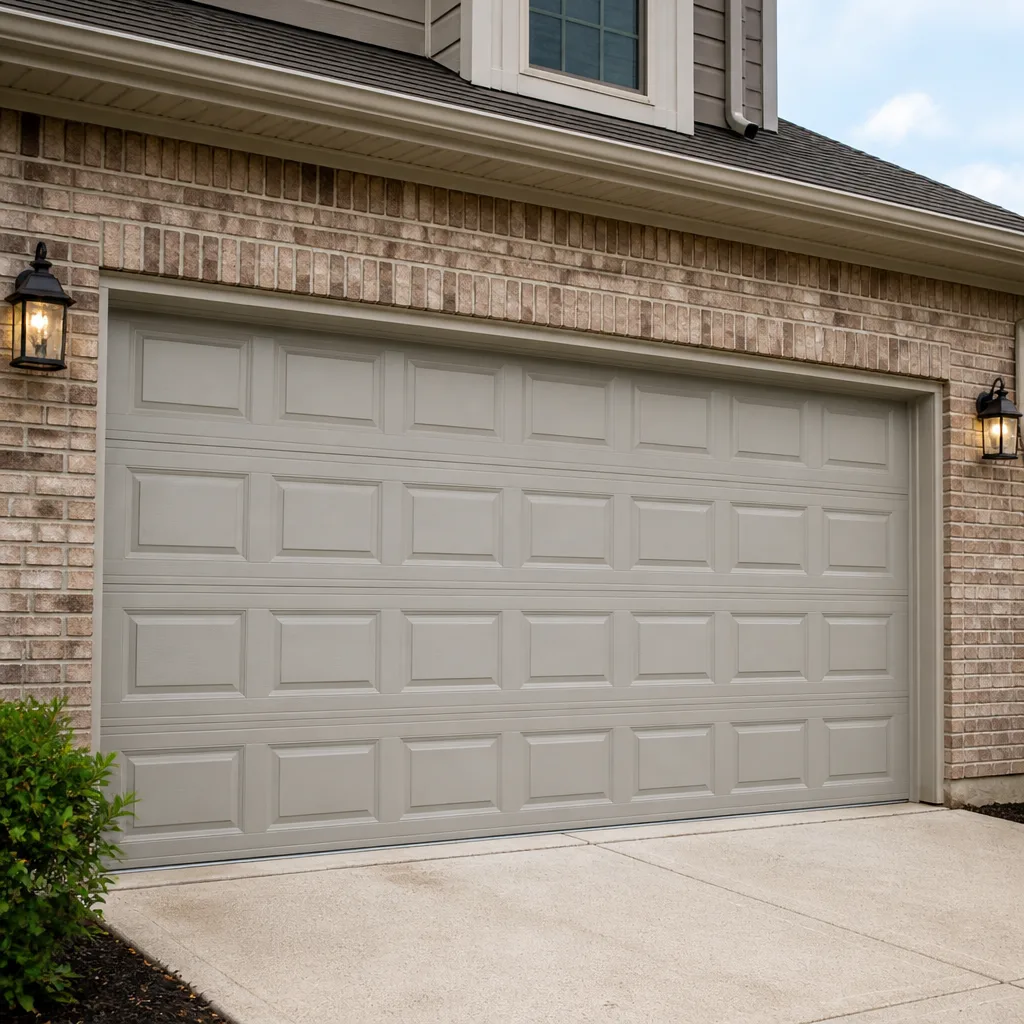 Raised-panel steel
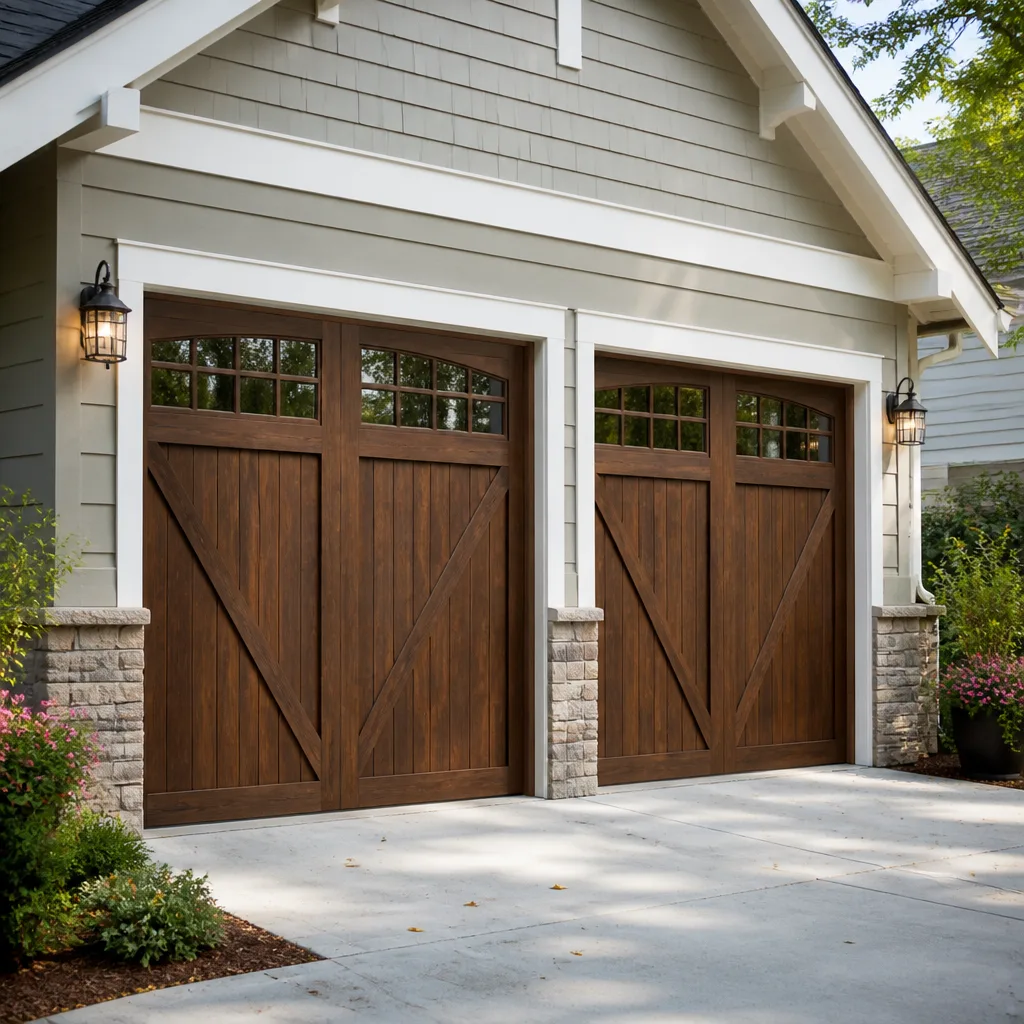 Carriage house
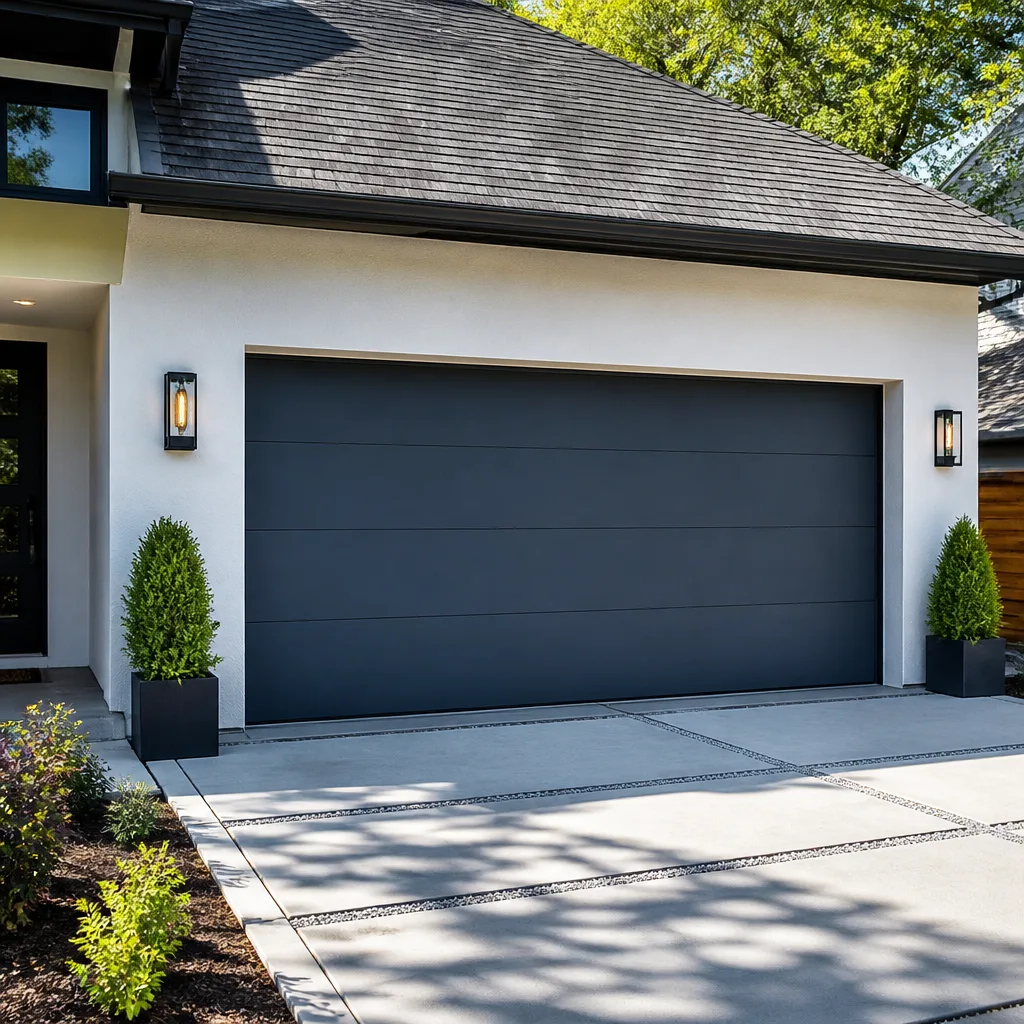 Modern flush
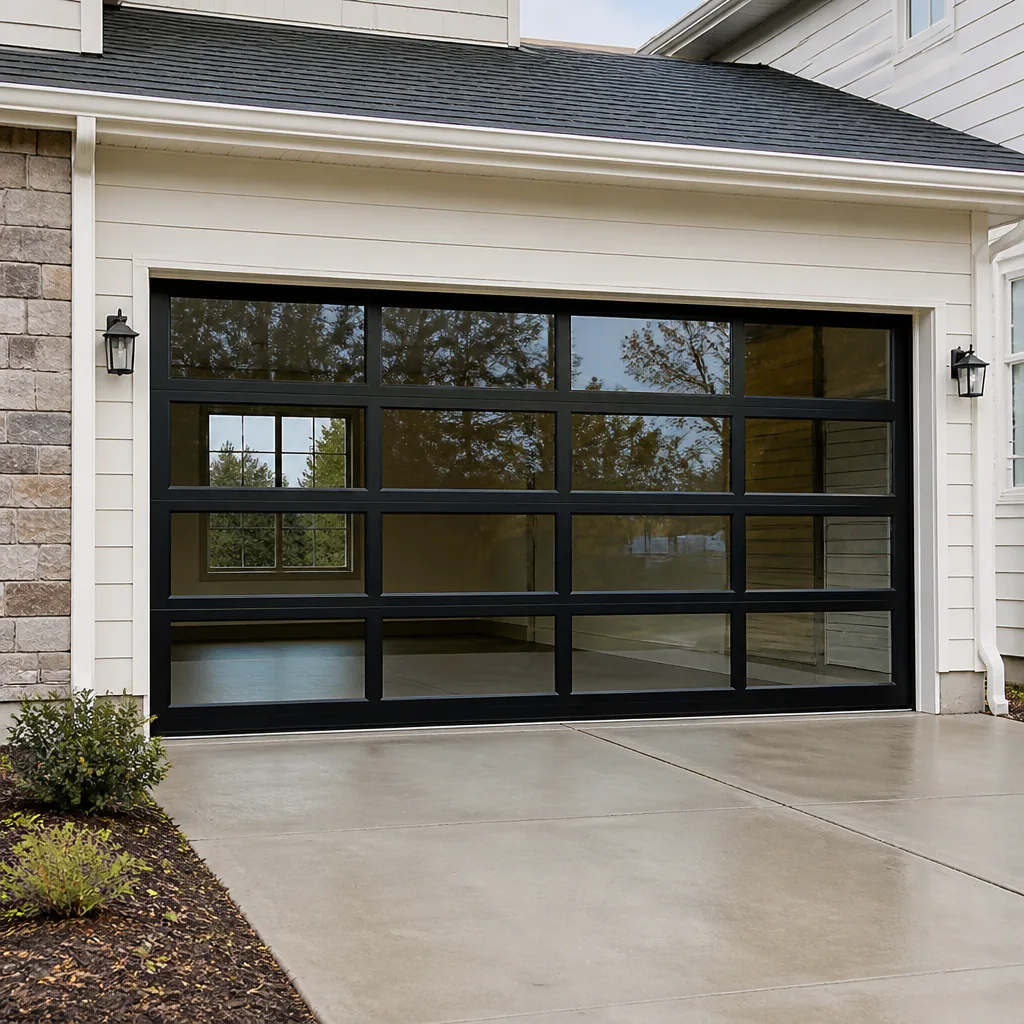 Full-view glass
 LiftMaster openers
 Chamberlain openers
Full 25-point door and opener safety check with every visit - springs, cables, rollers, tracks, and your LiftMaster or Chamberlain opener included
You get a price before we start. It does not change when the pro arrives.
Get your free estimateGarage Door Emergency Preparedness Guide for Far Rockaway Homes
Most homeowners think about their garage door only when it stops working. That’s backwards, especially here. Far Rockaway has been hit by two named storms in 13 years and sits in one of New York City’s highest-risk flood zones, so the time to understand your door is before the weather turns, not while the wind is pushing water up the block. During Hurricane Sandy, dozens of Far Rockaway homeowners couldn’t get their cars out because their openers had no power and they’d never learned the manual release. That’s a solvable problem, and it takes about two minutes to learn. This guide walks you through the manual release, the pre-storm checklist, post-storm assessment, battery backup options, and when a broken door is a genuine same-day call.
Quick Answer
Garage door emergency preparedness in Far Rockaway means three things: knowing how to release your door manually when the power fails, protecting the door and its tracks before a storm arrives, and knowing which post-storm failures are safe to wait on and which need a technician the same day. The single most important skill is the manual release on your opener, because it’s the difference between moving your car and being stranded during an outage.
Styles & brands we work with
- Raised-panel steel
- Carriage house
- Modern flush
- Full-view glass
- LiftMaster openers
- Chamberlain openers
Table of Contents
- How Do You Open a Garage Door Without Power?
- What Should You Do With Your Garage Door Before a Storm?
- Why Keeping Your Door Closed Isn’t Always the Right Call in a Flood Zone
- What to Check After a Storm Before You Touch the Door
- Battery Backup Openers for Far Rockaway’s Power Outages
- The Emergency Call Decision Tree
- A Seasonal Preparedness Calendar for Far Rockaway
- Common Mistakes to Avoid
How Do You Open a Garage Door Without Power?
You open a garage door without power by pulling the manual release cord that hangs from the opener’s trolley, then lifting the door by hand. The cord disconnects the door from the opener motor so the door moves freely on its springs and tracks. Every homeowner should locate that cord and test it once, calmly, on a normal day.
The exact release differs by opener type. These are the three most common configurations and how to operate each one.
- Chain-drive and belt-drive openers (LiftMaster, Chamberlain, Genie, Craftsman): Find the red or brightly colored cord hanging from the trolley assembly on the rail above the door. Pull it straight down and toward the door until it clicks. The door is now disconnected and can be lifted by hand. To reconnect, pull the cord back toward the opener until it snaps into place with the door fully closed.
- Screw-drive openers (common on Wayne Dalton units): These use the same trolley release, but the trolley sits on a rotating screw rail. Pull the release cord down firmly; if it feels stuck, lift the door slightly to take tension off the trolley before pulling again. Reconnect the same way, door closed, cord pulled toward the motor.
- Jackshaft or wall-mounted openers (side-mounted, often on doors with high ceilings or low headroom): The release is a lever or chain on the side unit itself, not overhead. Follow the manual release instructions printed on the side housing. These units often include a lock-out that prevents the door from being lifted until the release is engaged.
A word of caution before you test this: the manual release makes the door heavy, and a door with a failing spring can drop fast once it’s disconnected. If you’ve never done it, test it with someone else present and with the door in the fully closed position. Springs and cables are under extreme tension and are not a homeowner repair; leave those to a trained professional. Our garage door repair team handles release adjustments and spring work as a dedicated service because the risk is real.
What Should You Do With Your Garage Door Before a Storm?
In the 24 to 48 hours before a major storm, your garage door checklist should focus on securing the door, clearing the tracks, and confirming you can open it manually. Do these in daylight, not as the rain starts.
- Test the manual release. Pull the cord, lift the door by hand to confirm it moves, then reconnect. If the door feels unusually heavy or won’t stay up, that’s a spring problem you want fixed before the storm, not during it.
- Clear the tracks and the floor. Debris, leaves and grit in the tracks cause the door to bind, and a binding door is more likely to fail mid-operation when it matters most.
- Check the weather seal and bottom rubber. A worn seal lets wind-driven rain under the door. If the seal is cracked or loose, replacing it is a small job you can schedule before the season.
- Photograph the door and its hardware. If the storm causes damage, photos help with any insurance conversation and give a technician a clear before-picture.
- Move the car out of the flood-exposed side of the garage if you have a choice, and stage your manual release knowledge so anyone in the household can use it.
For Far Rockaway homes in the flood zone, this checklist should be a standing item every hurricane season, not a scramble the day before. Preparing the door is cheaper and calmer than repairing it afterward.
Why Keeping Your Door Closed Isn’t Always the Right Call in a Flood Zone
Most storm advice says keep the garage door closed, and for wind protection that’s usually correct: a closed door is the strongest barrier against flying debris and wind pressure on the panels. But in a flood zone, wind and water call for different answers, and Far Rockaway sits in one of the city’s highest-risk flood areas.
Here’s the tension. A closed door protects everything inside from wind and rain. But if floodwater rises against a closed door, water pressure pushes on the panels and the bottom seal, and water can force its way under or through the door. Some homeowners in a flood-exposed position choose to open the door partway to let water pass rather than trap it against the door, but this only works when wind has already dropped and the water is the remaining threat, and it exposes the garage contents to whatever is coming in. There’s no single answer for every home.
What we tell Far Rockaway homeowners is to decide in advance based on their elevation and whether the garage is the low point of the property. If your garage floor is at or below street level, the door is likely to take water pressure no matter what you do, so focus on what you can move out. If your garage is raised, keep the door closed and sealed. Decide now, write it down, and rehearse it, because you won’t want to reason it out in the dark.
What to Check After a Storm Before You Touch the Door
After a storm, do not open or close a garage door until you’ve done a visual check from the ground. Wind, water and debris can bend tracks, derail rollers, or leave the door unbalanced, and operating a damaged door can turn a repair into a bigger one, or cause injury.
Walk through this sequence before you press a button:
- Look at the tracks. Are they straight, clear and attached to the walls? A bent track means the door can come off its rollers.
- Inspect the panels. Dents, cracks or separated sections can create a gap that traps fingers or lets the door twist as it moves.
- Check the bottom seal. Mud, silt and debris packed against the seal need clearing before the door will seat properly.
- Listen for the springs. If the door won’t lift easily by hand or feels heavier than normal, the springs are suspect. Springs and cables are under high tension and can snap, so this is a trained-professional check, not a homeowner one.
- Check the opener housing and wiring. Water intrusion into the opener or its wiring is an electrical safety concern; if the unit was submerged or got wet, don’t power it on.
- Only then, test the door by hand first, then with the opener from a safe distance.
If anything looks bent, wet or heavy, stop and call. Our garage door opener repair technicians check the mechanical door and the electronics together, so post-storm damage gets assessed as one system rather than piecemeal.
Battery Backup Openers for Far Rockaway’s Power Outages
A battery backup opener keeps your garage door working when the power goes out, which matters in Far Rockaway because outages after storms are common. The right option is a unit with a built-in battery that operates the door for a limited number of cycles after a power loss, so you’re not dependent on the manual release in the dark.
Battery backup is built into many current openers rather than added later. LiftMaster and Chamberlain offer belt-drive and chain-drive units with integrated battery backup, and Genie has battery-backup models as well. When we recommend a unit, we match it to your door’s weight and your ceiling clearance, not to a single brand. That’s the advantage of working across brands: a Clopay or Amarr door with a heavier panel may call for one opener type, while a lighter door opens fine on another.
What to prioritize in a backup unit for a storm-prone area:
- Confirmed battery operation, not just a “battery-ready” housing. Some units need a separate battery you buy later; get one that ships with it.
- Enough cycles to get through an outage. Ask how many open/close cycles the battery supports and match it to how often you use the door daily.
- Battery health monitoring. A backup you don’t know is dead isn’t a backup. Choose a unit that signals low battery.
- A brand a technician can service easily. LiftMaster, Chamberlain and Genie are all widely supported, which matters when you need a part after a storm.
If your current opener is older and has no backup, an upgrade is worth planning before hurricane season rather than after. We can measure your door and give you a written range for a new unit. For a full opener and door replacement, our garage door installation service covers the whole job, and the price is set by a free written estimate before any work begins.
The Emergency Call Decision Tree
Not every post-storm door problem needs a same-day call. Some are genuine emergencies, some can safely wait 24 hours, and the difference is safety and security. Use this decision tree to sort yours.
Call the same day if:
- The door is stuck open and won’t close, leaving the garage and your home exposed. A door that won’t secure overnight is a real risk.
- A spring has broken or the door won’t stay up on its own. This is a safety-critical failure; springs are dangerous to handle and the door can drop.
- The door is off its tracks or hanging unevenly after wind or impact.
- The opener is submerged or got wet, or you smell burning from the motor or wiring.
- You can’t get your car out and it’s your only exit.
You can wait 24 hours without safety risk if:
- The door works normally but is noisy or a roller is squeaking.
- A remote or keypad has stopped working but the wall control still operates the door.
- The weather seal is torn but the door opens and closes and secures.
- A cosmetic dent or scratch with no effect on operation.
When it’s the first list, call (877) 492-1997. We answer 24/7, and a call outside dispatch hours is booked into the next opening, Sunday through Friday, 7am to 7pm. Same-day emergency repair is a core part of what Far Rockaway Garage Door Repair does, not an upsell, so a door that won’t secure gets handled quickly. Our technicians have up to 11 years of experience with the failures that show up after a storm.
A Seasonal Preparedness Calendar for Far Rockaway
The Atlantic hurricane season runs from June through November, so the sensible time to prepare your garage door in Far Rockaway is late spring, with a second check as the season peaks. Build these into your routine.
- Late spring (before June): Test the manual release, inspect the weather seal, clear the tracks, and confirm your opener’s battery backup is working. If your opener has no backup, plan an upgrade now.
- Midsummer: Recheck the door balance by hand and listen for new noises. Heat and humidity can reveal a failing roller or a seal that’s pulling away.
- Late summer (peak season): Confirm your car can be moved out, restock your storm kit, and re-photograph the door. Rehearse the manual release with everyone in the house.
- After any storm: Run the post-storm check from this guide before operating the door.
Popular neighborhoods like Rockaway Beach, Edgemere, Arverne and Far Rockaway Village each sit at different elevations and take water differently, so the specifics of your pre-storm plan depend on your own block. The checklist, though, is the same everywhere.
Common Mistakes to Avoid
- Never testing the manual release. A release you’ve never pulled is a release you’ll fumble in the dark during an outage. Test it once a year, calmly, with the door closed.
- Trying to fix a broken spring yourself. Springs and cables are under extreme tension and can cause serious injury. This is the one job that always belongs to a trained professional.
- Operating the door after a storm before a visual check. A bent track or derailed roller turns a small repair into a large one if you force the door. Look first.
- Buying a “battery-ready” opener and never buying the battery. In a flood-zone neighborhood with frequent outages, a backup that isn’t installed is no backup at all.
- Assuming the door is sealed when the bottom rubber is worn. A cracked weather seal lets storm water under the door and into the garage. Replace it before the season.
- Leaving a door stuck open overnight. A door that won’t secure is a security problem. If it won’t close, that’s a same-day call, not a next-week one.
- Letting water sit against a closed door in a flood zone without a plan. Decide in advance how your garage handles rising water, because you won’t want to improvise during the storm.
See the difference
 Before
 After
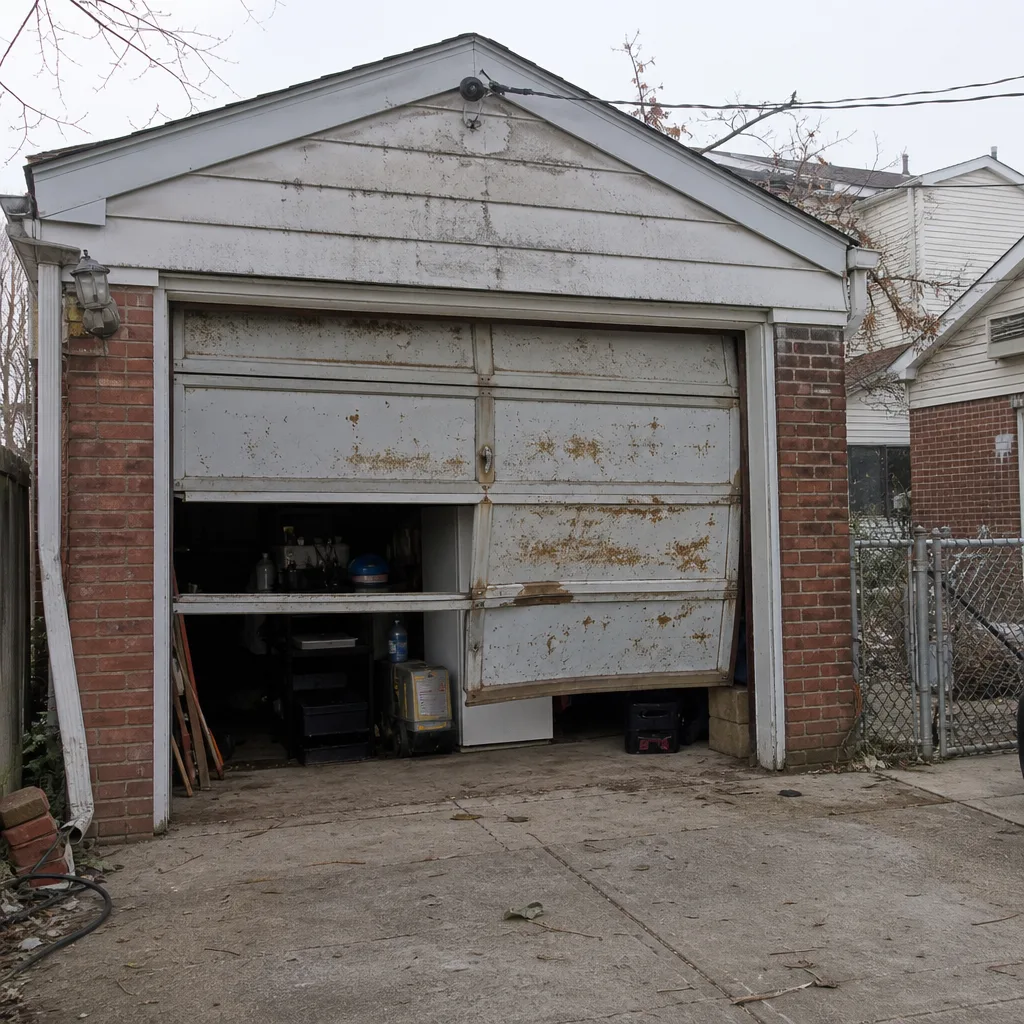 Before
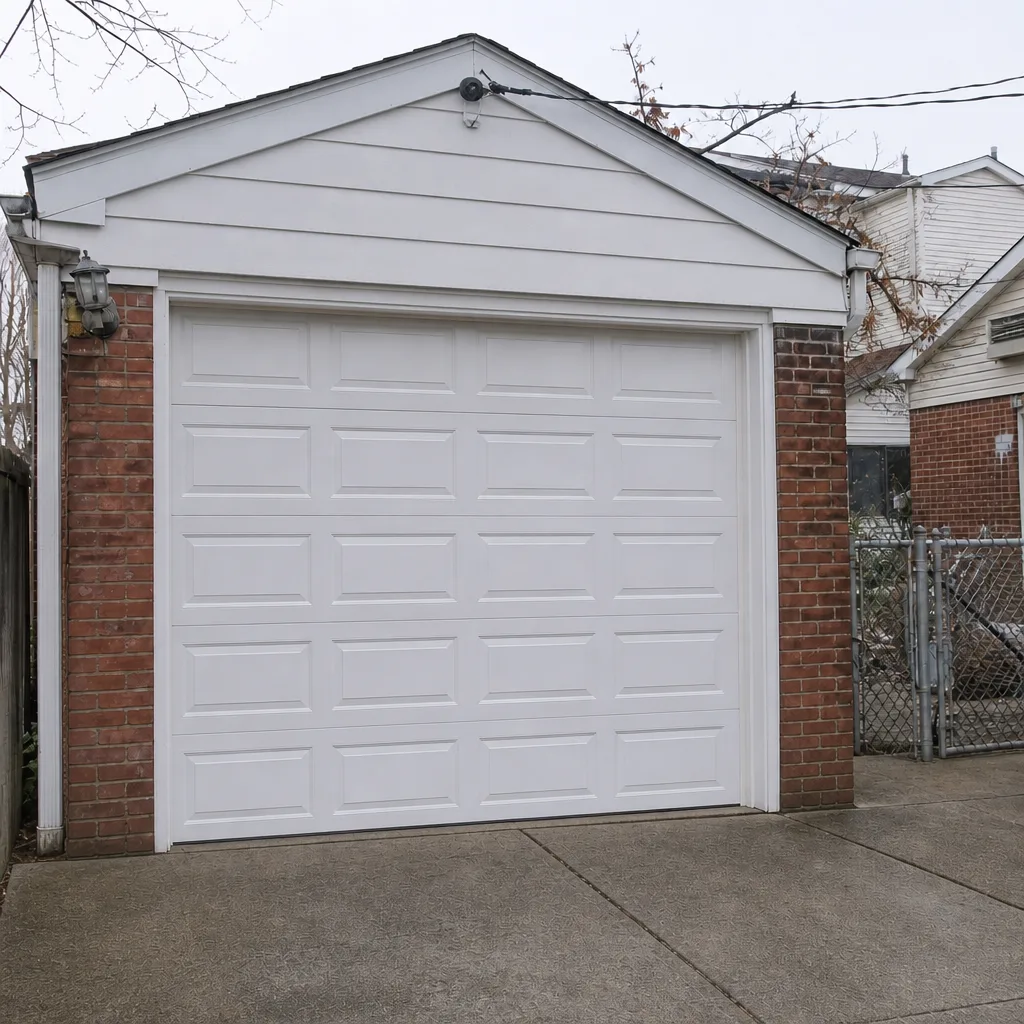 After
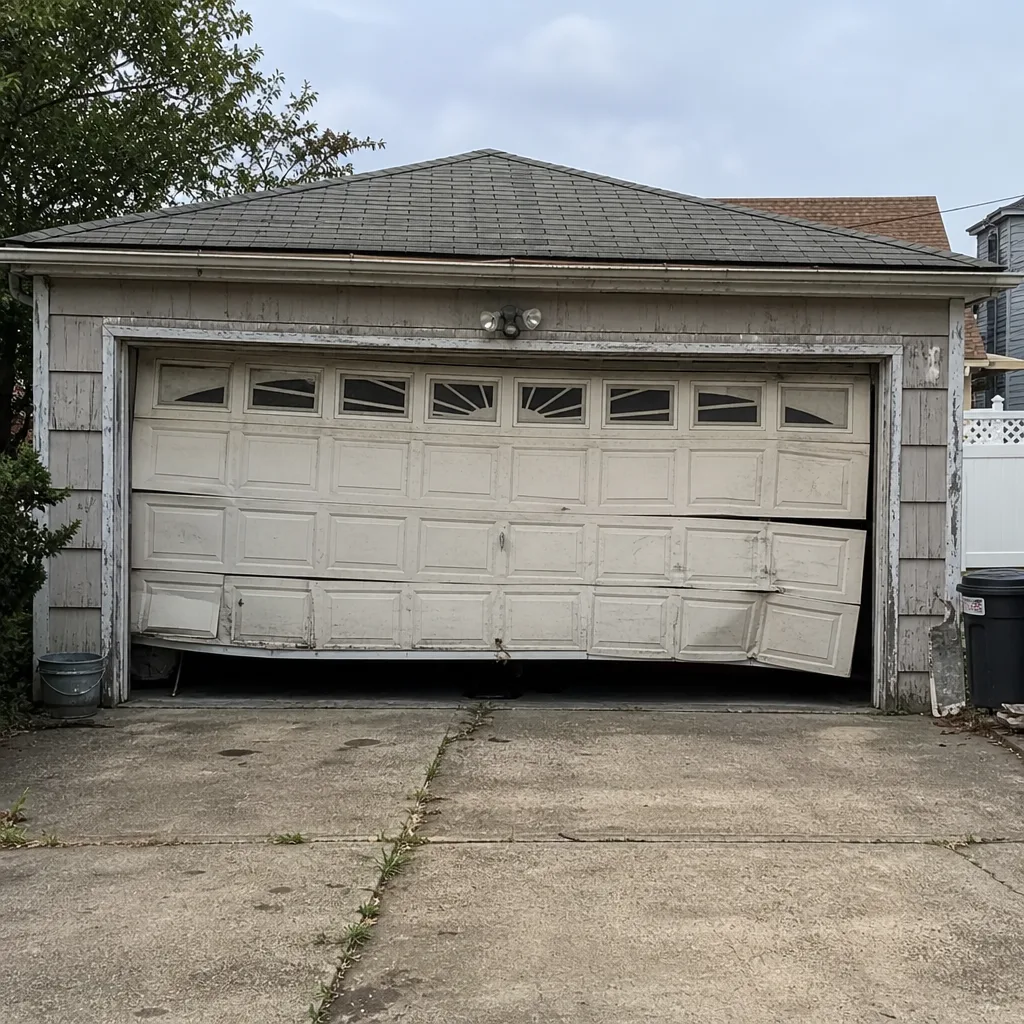 Before
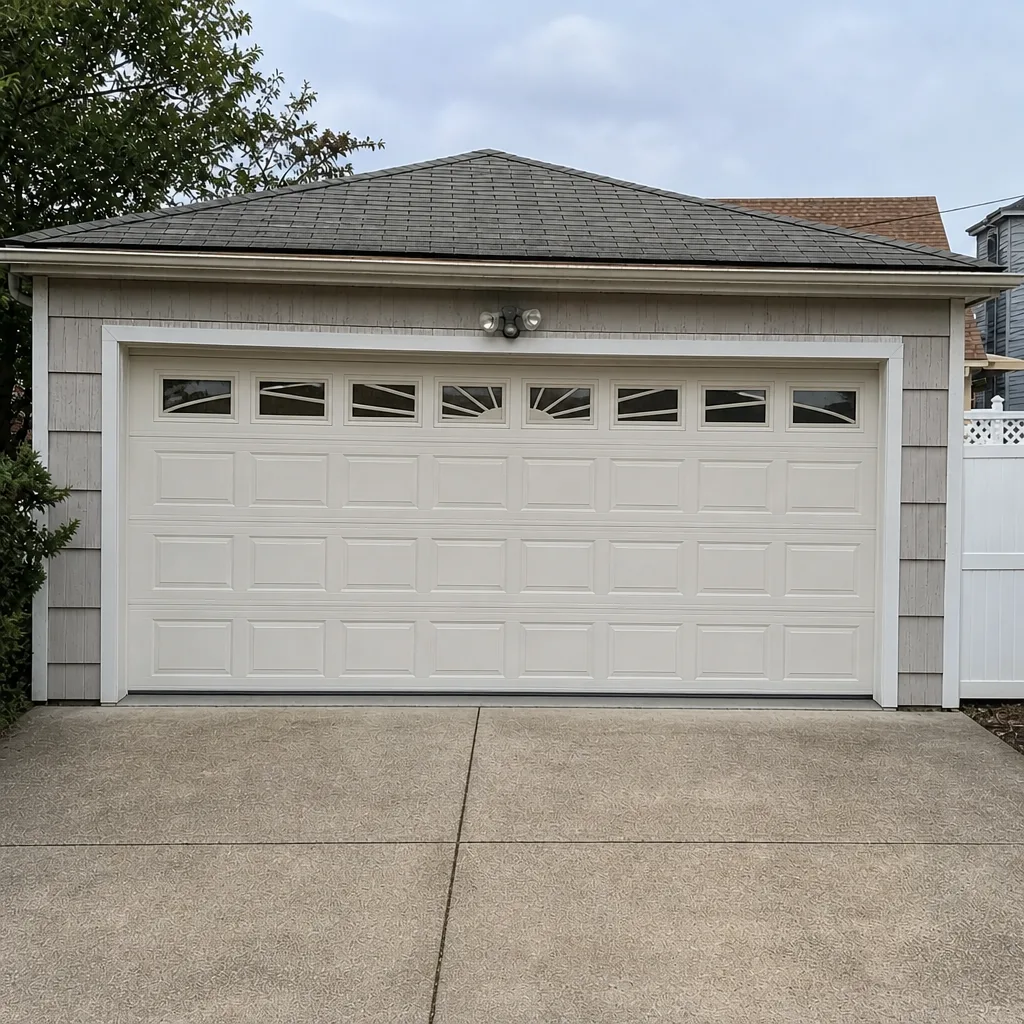 After
When to Call a Professional
Most garage door maintenance you can do yourself: clear the tracks, test the release, replace a weather seal, watch the battery indicator. But some failures belong to a trained technician, and it’s worth knowing where that line is. Call a professional when a spring breaks or the door won’t stay up, when the door is off its tracks or hanging unevenly after wind or impact, when the opener got wet or smells like burning, or when a door won’t secure and you can’t leave it open overnight. Springs and cables carry enough tension to injure, and opener electronics and wiring are an electrical safety concern. Far Rockaway Garage Door Repair offers free estimates in Far Rockaway. Call (877) 492-1997.
Frequently Asked Questions
Yes, by pulling the manual release cord that hangs from the opener’s trolley, which disconnects the door from the motor so you can lift it by hand. Test it once on a normal day so you know how it feels before an outage. If the door feels very heavy once released, the springs need attention; call (877) 492-1997 for an assessment.
Usually yes, because a closed door is your best barrier against wind and flying debris. In a flood zone, though, the answer depends on your elevation: if your garage floor is low, plan for water pressure against the door no matter what you do. Decide your approach before the storm. For door repairs after the weather clears, call (877) 492-1997.
Spring repair is priced per spring, and a matched pair is usually replaced together, so a pair runs about twice a single spring. The exact range depends on your door’s size and spring type, and the written estimate sets the final price before any work starts. Call (877) 492-1997 for a free estimate.
Emergency service is a real, available option, so a door that won’t secure can often be handled the same day. We answer 24/7, and a call outside dispatch hours is booked into the next opening, Sunday through Friday, 7am to 7pm. Call (877) 492-1997 and we’ll get you scheduled.
We work on the major brands homeowners actually have, including LiftMaster, Chamberlain, Genie, Clopay, Amarr, Wayne Dalton, Craftsman and Raynor. That matters after a storm, when you need the right part for your exact model without guesswork. Call (877) 492-1997 for opener repair.
No. The price is quoted and agreed before any work starts, and the written estimate sets the final number. If our technician finds something that changes the scope, you’ll know before anything is done. Call (877) 492-1997 for a free estimate.
The Bottom Line
Garage door emergency preparedness in Far Rockaway comes down to four habits: learn the manual release before you need it, run a pre-storm check of the door and its seal, do a careful visual inspection after any storm before you operate the door, and know which failures can wait and which need a same-day call. Battery backup on your opener is the single best upgrade for outage-prone blocks, especially in flood-zone neighborhoods like Edgemere and Arverne. None of it is complicated, and all of it is easier before the storm than after.
If your door needs a repair, a spring fixed, an opener upgraded, or a full replacement planned before hurricane season, call (877) 492-1997 for a free estimate. We answer 24/7. Fast dispatch from 7am to 7pm, Sunday through Friday. We work across the major brands, so one call resolves the issue without a second contractor.
Written by the team at Far Rockaway Garage Door Repair.